








Colored Contacts vs Natural Eyes: Will Anyone Actually Notice?
The real question behind half of all lens searches. Five variables decide whether anyone notices — opacity, diameter, color distance, ring and light — and you control all five.
"Will people be able to tell?" is the quiet worry behind most first-time lens purchases. The honest answer is: entirely up to you, because being noticed is not random — it's five specific variables, each of which you choose at checkout. Optimize them and lenses become genuinely undetectable; ignore them and you get the tell-tale "contacts look." Here's the whole formula.
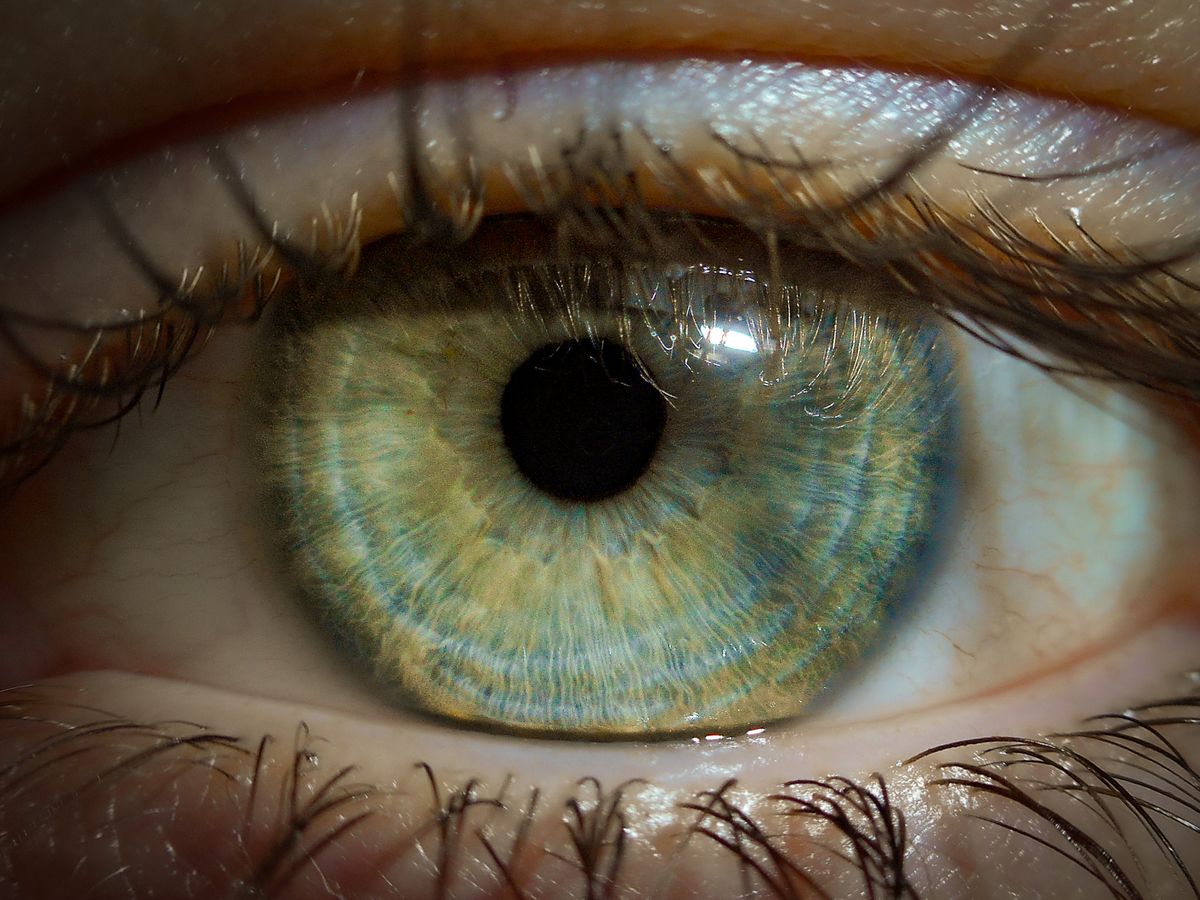
Variable 1: opacity match to your base
The biggest one. On dark brown eyes, a thin enhancement tint barely shows (safe but pointless), while a bright opaque lens shows perfectly — but if the opaque color is far from natural, it reads as lenses. The sweet spot for "undetectable" is an opaque lens in a plausible color. On light eyes the reverse: even sheer tints show, so subtlety comes easily. Full mechanics in the dark eyes guide.
Variable 2: diameter
Natural human iris coverage is about 14.0–14.2mm on camera. Stay there and no one clocks the size; go 14.5mm+ and the eye reads subtly (or overtly) enlarged — the doll effect that says "circle lens." For undetectable, natural diameter is non-negotiable (diameter guide).
Variable 3: color distance from your natural eye
The further the lens color travels from your real one, the more scrutiny it invites. Brown eyes → hazel is one step, undetectable; brown eyes → ice blue is six steps, noticeable. This isn't "don't go bold" — it's "know which one you're doing." One step for stealth, several steps for statement (the tiering in the color guide).
Variable 4: the limbal ring
Real irises have a soft, slightly irregular outer ring that fades with age. Lenses with a hard, perfectly circular black ring look artificial up close — the eye reads "printed." Soft, graduated rims (tricolor designs) pass; stark rings don't. This is the single most common tell on otherwise good lenses — the pattern guide shows the difference, and why contacts look fake goes deeper.
Variable 5: lighting
Lenses shift with light — a color that's natural indoors can flare under sun or flash. Bright direct light exposes the pigment layer's edge and any texture mismatch; soft light hides everything. If undetectable is the goal, test your pick in daylight and indoor light before committing, and expect camera flash to be the harshest judge (the full behavior is in the photography guide).
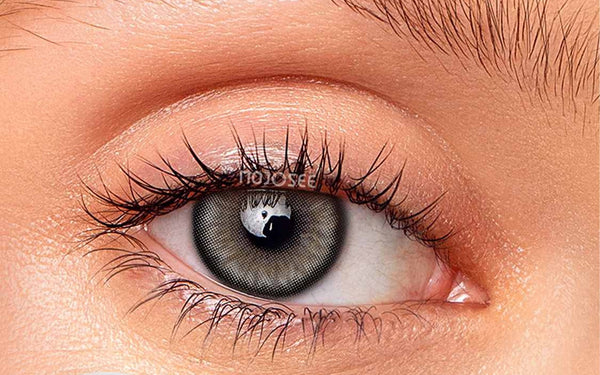
New York N Gray is a fair one to run that test on: it is cool and believable enough to pass in daylight, which is where most grays give themselves away.

The undetectable recipe, in one sentence
Opaque lens (if dark-eyed) or any lens (if light-eyed), 14.0–14.2mm, one color-step from natural, soft graduated rim, checked in real light. That's a lens nobody clocks — like a well-chosen Pure Hazel on brown eyes. Want to be noticed instead? Invert any variable on purpose.

The three dead giveaways (and how to kill each)
When people do clock that you're wearing lenses, it's almost never the color — it's one of three mechanical tells. Tell 1 — the hard ring. A crisp dark circle where lens meets your natural iris reads as printed plastic. Kill it with soft-rimmed tricolor designs, not solid-ring lenses. Tell 2 — the too-big diameter. A lens that spans lid-to-lid with no white showing on the sides is the "anime doll" tell in real life; stay 14.0–14.2mm and keep natural white space. Tell 3 — the flat, textureless disc. Real irises scatter light in radial streaks; a lens that's one uniform block of color looks pasted on up close. Choose designs with visible iris texture. Nail all three and the honest answer to "will they notice" becomes: only if they're inches away in daylight looking for it. The color can be bold — it's these three structural things, not the shade, that separate "striking eyes" from "obviously contacts."
See it worn on camera
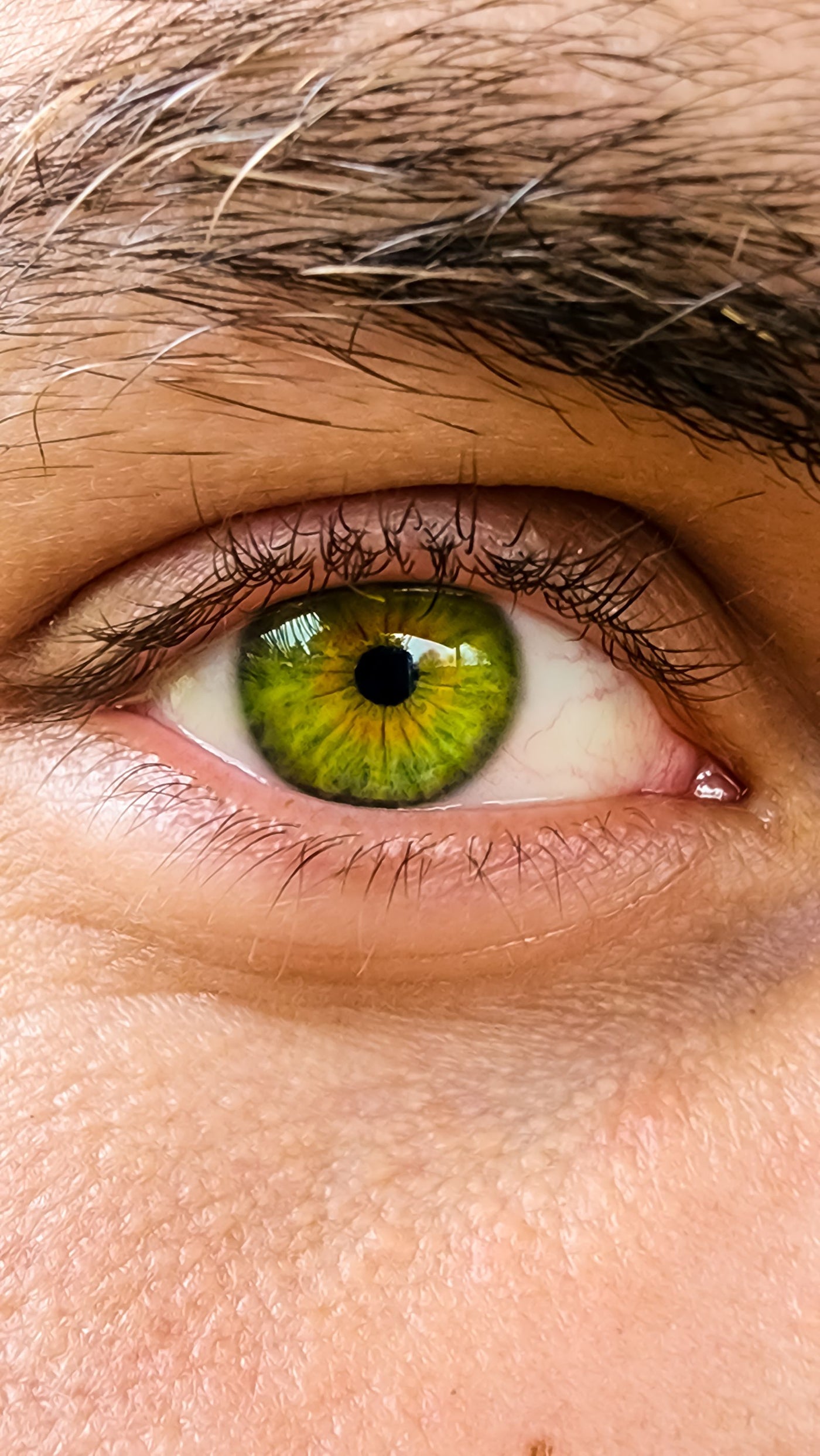
Field test: Magnificent Amazonia Green for men on dark brown eyes, no makeup, indoor light. Olive and moss greens sit close enough to naturally light irises that they pass at conversation distance — the palm-reveal at the end shows how much pigment it takes to pull that off honestly.
See the olive green that read as natural on a date
What people actually notice, in order
Ask anyone who has been caught wearing lenses what gave them away and the answers are consistent, and they are not "the colour".
- Size. A 14.5mm lens on an eye that is not styled to support it. This is the giveaway on men, on bare faces, and in daylight, and it is visible from across a room.
- The edge. A print with no outer ring shows where it stops, and a lens that has drifted shows a crescent of your own iris at one side. Both read as "something on the eye" before anyone processes colour.
- The halo. A translucent print on a dark iris lets your own brown through around the pupil — a muddy ring that looks like nothing in nature.
- Colour distance. Only fourth. A shade one to two steps from your own reads as lighting; three or more reads as a decision. Even then, a well-sized, dense, ringed lens in a distant colour is noticed as "nice eyes" far more often than as a lens.
The practical order for buying is the reverse of how people shop: size first, print density second, ring third, colour last.
Detectability by setting
| Setting | What shows | Undetectable choice |
|---|---|---|
| Daylight, bare face | Size and edge, instantly | 14.0mm, fine ring, one to two shades from your own |
| Office lighting | Cool shades go grey; edge still shows | 14.0mm warm brown or warm gray |
| Phone camera, no flash | Colour distance more than size | 14.2mm is safe here; keep the shade close |
| Flash | Flat prints go disc-like; texture survives | A design with iris texture, any size up to 14.2mm |
| Evening, warm low light | Almost nothing | This is where 14.2mm and a lighter shade get away with it |
The one-week test
There is a reliable way to know whether a pair is undetectable, and it is not the mirror. Wear it for a normal week and count the comments. "You look well" or "your eyes look nice" means the lens changed the impression without being identified — that is the goal. "Are you wearing contacts?" means one of the four variables above is off, almost always the size. Nobody saying anything at all means the pair is either perfect or too close to your own eye to matter, and only you can say which you wanted.
The two situations where you will be noticed anyway
People who see you every day. A partner, a sibling, a colleague at the next desk — anyone who has looked at your eyes a few thousand times will register a change at one shade, not three, regardless of how well the lens is built. The honest expectation is that close people notice and strangers do not; the lens's job is to make what they notice a compliment rather than a question.
Close-up cameras. A phone held at arm's length for a selfie resolves the edge of any printed lens. Undetectable in that frame is not a realistic target; "looks like a nice eye" is. A lens with iris texture and a fine ring survives a close-up far better than a flat print does, and no lens survives a macro shot.
Colour distance, with examples
On a dark brown base, one step is a lighter warm brown; two steps is a warm gray or a muted green; three steps is a true gray, a blue or a light hazel. One and two read as lighting — "have you been sleeping better?" — and three reads as a decision. That does not make three wrong; it makes it a choice about being seen. The undetectable brief is one to two steps at 14.0mm with a fine ring, and it has a name in this catalogue: the natural browns and warm grays for dark eyes.
Ordering for a date you want to be undetectable on
We ship standard only — 14 to 20 days door to door, with tracking issued about five days after you order — so for a wedding, an interview or a first date count backwards three weeks and add time for a week of practice wear. Undetectable is a skill as much as a lens: the first few insertions are off-centre, the first day you will touch your eye, and by the end of a week the pair is part of getting dressed. Buy it early enough to get there.
Fixing a pair that is being noticed
Before buying another colour, check the cheap things. Is the lens centred? A crescent of your own iris at one edge is the most common giveaway and it is handling, not the lens. Is it the right way round? An inverted lens sits badly and shows its edge. Is it 14.5mm? Then the size is the problem and no colour will fix it. Only after those three does the shade come into it — and if it does, go one step closer to your own, not one step lighter.
Live examples of the undetectable recipe
These are in-stock designs at the natural sizes that fit the recipe — 14.0 to 14.2mm, dense print, defined ring, a shade close to a dark brown base. Prices per pair at the time of writing.


Both come from the dark-eyes collection, which is curated for print density; the same designs often exist at 14.5mm under the same name, so check the size line before you add to cart.
FAQ
Can people tell if you're wearing colored contacts?
Only if a variable is off — oversized diameter, hard black ring, or a color far from your natural eye. Nail opacity, size, color-distance, rim and lighting and they're undetectable.
What colored contacts look the most natural?
One-step shifts with soft rims: brown eyes in hazel or honey-brown, light eyes in an adjacent shade. Tricolor textures beat flat solids for realism every time.
Do colored contacts look obvious in photos?
Flash and bright light are the harshest test — they expose pigment edges. In normal light, a well-chosen natural lens photographs as real eyes. Solids look flatter on camera than tricolors.
Will my friends notice new eye color?
With a one-step natural shift, they'll sense you look different without placing it ("new haircut?"). With a multi-step statement color, they'll know instantly — which is the point of that tier.
Will my family notice if I wear colored contacts?
People who see your eyes daily are the most likely to sense "something's different" even when they can't name it — so for undetectable wear around family, stay within a shade of your natural color and avoid the three tells above. Strangers and coworkers almost never notice a well-chosen natural lens.
What gives colored contacts away most often?
Size, not colour. A 14.5mm lens on an unstyled eye reads as enlarged from across a room; a drifting or ringless lens shows its edge; a translucent print shows a halo of your own iris. Colour distance comes fourth.
Can I wear colored contacts to work without anyone noticing?
Yes, with a 14.0mm lens, a defined outer ring, and a shade one to two steps from your own — a warm brown or warm gray on a dark iris. Under office lighting cool shades go grey, so lean warm.
How do I test whether my colored contacts are noticeable?
Wear them for a normal week and count the comments. "You look well" means the lens is working; "are you wearing contacts?" means the size or the edge is off. The mirror is the least reliable judge.
You might also like
Picked to match this guide — every pair in stock now.
 Vika Tricolor Blue Colored Contact Lenses$21.98per pair (2 lenses)
 Polar Lights Blue Gray Prescription Colored $19.98per pair (2 lenses)
 Starry sky Gray Prescription Colored Contact$22.98per pair (2 lenses)
 Polar Lights Brown Prescription Colored Cont$21.98per pair (2 lenses)
Explore more: Natural Colors → · Natural Contacts →