







Colored Contacts for Dark Eyes: What Actually Shows Up (2026 Guide)
Most colored contacts are designed for light irises and disappear on brown eyes. Here is how opaque lens construction works, which colors pay off, and how to pick your first pair without wasting money.
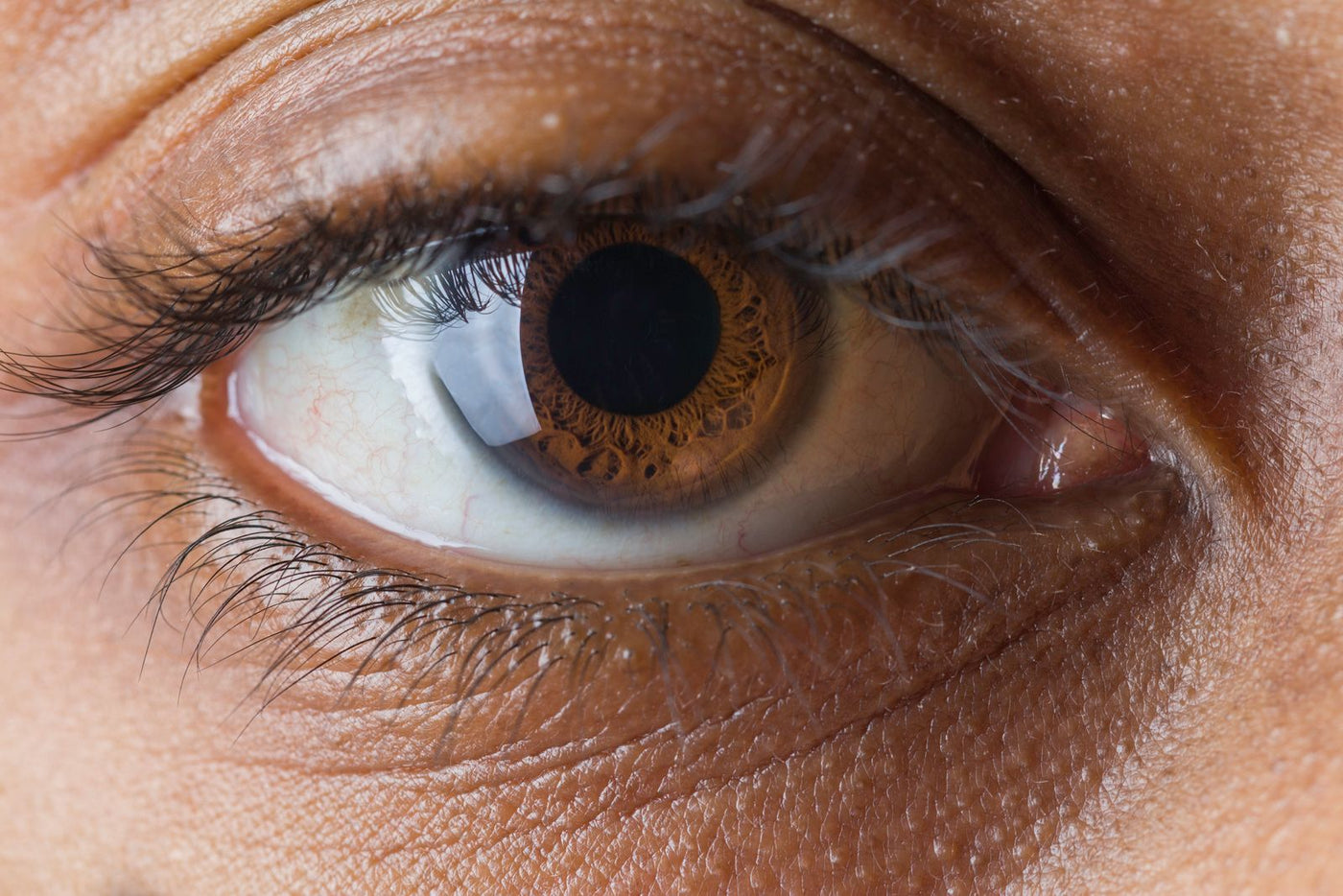
If you have dark brown eyes, you have probably bought a pair of colored contacts that looked vivid in the product photo and did absolutely nothing on your eyes. That is not bad luck — it is lens construction. This guide explains why it happens and exactly what to buy instead.
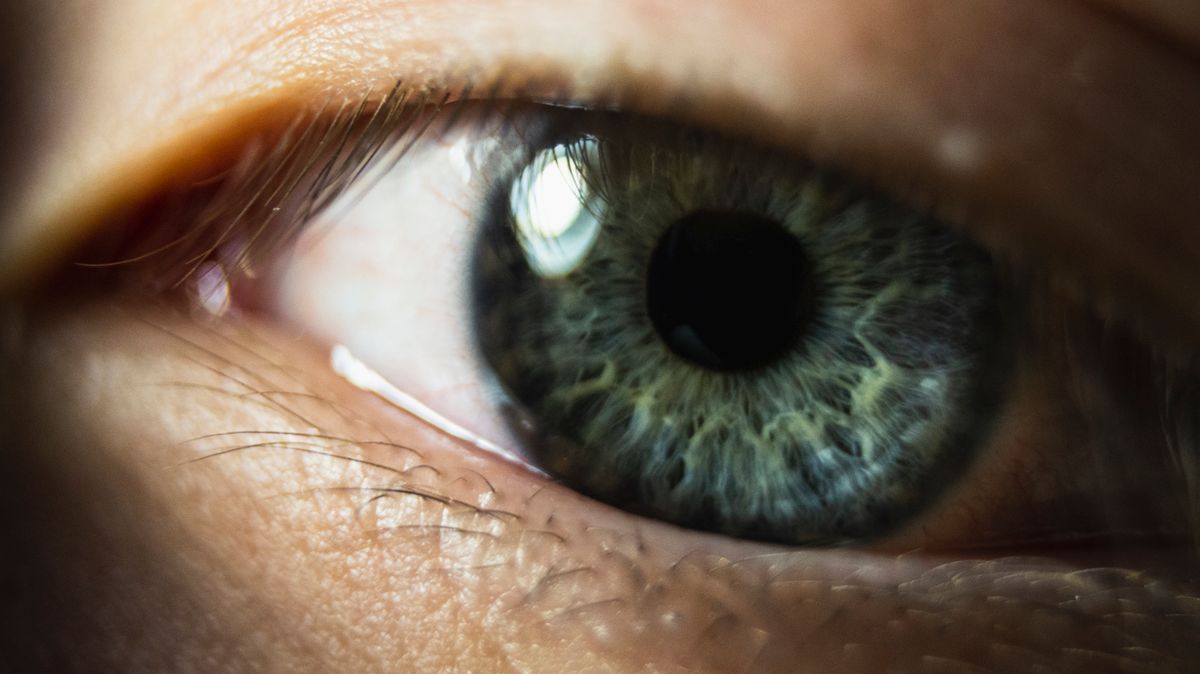
Why most colored contacts fail on dark eyes
Colored lenses come in two fundamentally different builds. Enhancement tints are translucent: they let your natural iris color shine through and only shift its tone. On a pale blue iris they look stunning; on a dark brown iris the pigment underneath simply swallows them. Opaque lenses print a solid pigment layer over your iris, so what you see in the product photo is close to what you get — regardless of your natural color.
The rule is simple: dark eyes need opaque or semi-opaque construction. If a product page does not show the lens photographed on a dark brown eye, assume it was shot on a light iris and discount the effect accordingly. Every lens we stock at Mojosee is selected and photographed with dark irises in mind — that is the whole point of the store.
What each color really looks like on brown eyes
Gray — the highest payoff
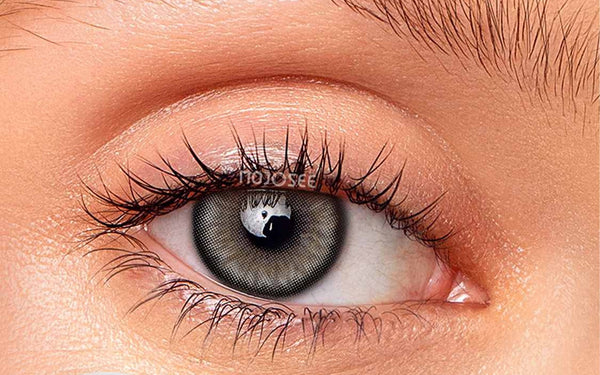
Gray is the single most reliable color on dark eyes: high contrast against brown, but still plausible as a natural eye color. Cool grays read icy and editorial; warm grays with a brown limbal ring read soft and believable. Start here if it is your first pair. Browse the gray contacts for dark eyes collection — Ocean Cyan Gray and Athena Sugar Gray are long-running favorites.
Brown and hazel — the subtle upgrade
It sounds counterintuitive to put brown lenses on brown eyes, but lighter caramel and hazel shades brighten the whole face without anyone spotting the lens. This is the everyday, office-safe option. See brown contacts for dark eyes — Rainbow Bassia Brown and Pure Hazel are the classic picks.
Blue — choose gray-blue hybrids
Pure saturated blue over a dark iris can look flat, like a sticker. Blends with gray or a darker outer ring look dramatically more natural. The blue contacts for dark eyes collection is curated around exactly these hybrids — Rain Forest Gray-Blue is the safest first blue.
Green — maximum contrast, still wearable
Green sits far enough from brown on the color wheel to pop hard, yet it exists as a natural eye color, so it never reads as costume. Rain Forest Green and DNA Taylor Green in the green contacts for dark eyes collection are our best-reviewed greens.

Diameter and the limbal ring
Most natural-look lenses run 14.0–14.5 mm. At 14.0–14.2 mm the lens matches a typical iris and passes unnoticed; 14.5 mm adds a subtle doll-eye enlargement that suits makeup looks. A printed limbal ring (the dark outer rim) makes almost any color read more natural on dark eyes because it recreates the definition your own iris has.
How to buy your first pair without wasting money
- Start with one gray or hazel pair, not five colors at once — you are testing how opaque lenses sit on your eye, not building a wardrobe yet.
- Check the replacement cycle. Yearly lenses are the best value if you wear them weekly; daily disposables make sense for occasional wear. Cycle and specs are listed on each product page.
- Get a prescription. In the US, contact lenses are medical devices and require a valid prescription even at 0.00 power. An eye exam also confirms your base curve fits — comfort depends on it.
Not sure where to start? Take the dark-eyes umbrella collection for the full 900+ lens catalog, or read our safety and materials guide before your first order.
Why opacity beats color choice every time
If you take one thing from this guide, make it this: on dark brown eyes, the opacity of a lens matters more than which color you pick. Here's the mechanism. A dark iris absorbs light; a translucent "tint" lens lets your natural darkness show through and mixes with it, so a sheer blue over brown eyes reads as murky grey-brown, not blue. An opaque lens lays down a solid pigment layer that blocks your base color entirely, so the printed shade shows true — that's why the exact same "sapphire blue" looks vivid on one person and invisible on another: one bought opaque, one bought tint. This single variable explains most "the color didn't show up" disappointment. When you shop, opacity is the spec to check first and color second — a perfectly-chosen shade in a tint lens will still fail on dark eyes, while a merely-okay shade in a fully opaque lens will at least show. Every natural style in our range is built opaque for exactly this reason.
The dark-eyes range, colour by colour, right now
Every colour here has its own curated collection for dark eyes — designs selected for print density, not just shade. Live figures at the time of writing; prices per pair, one order is two lenses. "Share with powers" is the proportion of designs in that colour with corrective powers.
| Colour | In stock | Price per pair | Share with powers | On dark brown, reads as |
|---|---|---|---|---|
| Brown | 97% | $16.98 – $34.98 | 17% | your eyes, lit — the invisible upgrade |
| Gray | 98% | $18.98 – $88.98 | 10% | the strongest cool change; cleaner than blue |
| Blue | 96% | $12.88 – $88.98 | 16% | a real colour change only when the print is dense |
| Green | 97% | $12.88 – $34.98 | 18% | contrast without costume, if muted |
| Hazel | 100% | $18.98 – $34.98 | 11% | the visible warm upgrade; a short list |
| All colours for dark eyes | 94% | $9.90 – $34.98 | 43% | the master collection |
Read the depth of each column before the colour: brown, gray, blue and green each run to dozens of designs, hazel to a handful. If the exact hazel you want is out of stock, the nearest substitute may be noticeably different; in the other four colours you can be specific about warmth, ring weight and diameter.
Four first pairs, at the natural sizes


All four are the cheapest in-stock 14.0–14.2mm designs in their colour at the time of writing — the sizes that read as your own eye rather than as an enlargement. The 14.5mm versions of most of these exist for photographs and cosplay, and are the wrong first pair.
Reading the product photo when your eyes are dark
Most lens photography in the industry is shot on light irises, which tells a dark-eyed buyer nothing. Three checks that transfer.
The pupil edge. On an on-eye photo taken on a dark iris, look at the ring immediately around the pupil. A dense print holds its colour right up to the clear window; a translucent print shows the wearer's own brown as a halo. That halo is the single most reliable predictor of "it looked nothing like the picture".
The outer ring. A darker limbal ring hides the transition where the print stops and gives the iris an edge that reads as real. On dark eyes it also does something else: it separates the printed colour from your own iris so the two do not blend into mud.
The base the photo was shot on. A gray photographed on a hazel eye is not evidence. Where a product page shows an on-eye photo on a dark iris, judge from that; where it shows only the flat lens against white, assume the real result is one to two shades darker and less saturated.
Why "for dark eyes" is a print decision, not a colour decision
A dark brown iris is not a blank canvas; it is a strong colour that sits under whatever you put on it. A translucent lens is designed to let the wearer's own iris show through and mix with the print — which on a light eye produces a natural blend and on a dark eye produces mud. An opaque lens is designed to cover the iris completely and show only the print. Every design in the dark-eyes collections is selected for the second behaviour, and it is why a gray from this range and a "gray" from a light-eye brand can be different colours on the same face.
The practical consequence is that the usual colour advice runs backwards for you. On light eyes the advice is "stay close to your natural colour so it blends"; on dark eyes a lens that stays close to your natural colour disappears, and a lens that is meant to show has to be dense enough to hold its own. Density first, then colour.
Two mistakes that cost dark-eyed buyers a first pair
Buying a light-eye brand's "natural" shade. The big clear-lens brands tune their colour lines for light irises, and their dark-eye result is a faint tint. If a branded lens disappointed on your eye, that was the reason, not your eye.
Buying 14.5mm because that is what the photo showed. Most lens photography is 14.5mm on a made-up eye. On a bare face the same lens reads as enlarged. Filter for 14.0 or 14.2mm before you look at colour, and buy the 14.5mm version — if you want it — as a second, occasion pair.
Ordering, and the practice wear
We ship standard only — 14 to 20 days door to door, with tracking issued about five days after you order — so for a specific date count backwards three weeks and add a few days for a practice wear at home. That rehearsal matters more on a dark iris than a light one: the first insertion is rarely centred, and on a dense print an off-centre lens shows a crescent of your own brown at one edge — the exact thing a lens for dark eyes is supposed to hide. Twenty minutes in daylight with a mirror tells you whether the pair is right before the day it has to be.
Powers, and the one honest limit
Roughly 43% of the dark-eyes master collection carries corrective powers — from 0.00 to -8.00 in quarter or half steps, no plus powers, no toric lenses — which is enough to choose by colour and size first and filter for power second. The power selector on each product page is generated from stock and is the authority for that design. If your prescription has a meaningful cylinder, no spherical colored lens will give sharp vision; the honest answer is a clear toric, and colour becomes an occasion lens.
Shipping to Canada, the UK or Australia?
We ship worldwide with tracked standard delivery, 14–20 days door to door, free over US$49. These country guides cover local delivery times, customs and duties, and the designs that sell best in each market:
- Colored contacts in Canada — delivery windows, duties, and why Canadian shoppers search colour names differently
- Colored contacts in the UK — delivery windows, import VAT, and the designs UK buyers pick most
- Colored contacts in Australia — delivery windows, GST, and the character and effect lenses Australia buys
FAQ
Do colored contacts work on very dark, almost black eyes?
Yes — as long as the lens is opaque. The pigment layer covers the iris completely, so the base color underneath stops mattering. Semi-transparent "enhancer" lenses will not work.
Which color looks most natural on brown eyes?
Hazel and light brown are undetectable; warm gray is the best balance of visible change and believability.
Why do the same lenses look different on my friend?
Iris darkness, pupil size and eye shape all change how much pigment shows. Photos on our product pages are taken on dark irises so the result you see is realistic for you.
Can I wear colored contacts every day?
Yes, with proper hygiene and the replacement schedule respected. Give your eyes lens-free hours daily and never sleep in them. More in the safety guide.
Which colour has the most designs for dark eyes?
Brown, then green, blue and gray, each running to dozens of designs at the time of writing; hazel is a short list. Depth matters because it lets you be specific about warmth, ring and diameter instead of taking the nearest thing.
Can I get colored contacts for dark eyes with a prescription?
Yes — roughly 43% of the master collection carries corrective powers from 0.00 to -8.00. There are no plus powers and no toric lenses. The power selector on each product page is the authority for that design.
What size colored contacts look natural on dark eyes?
14.0mm, which stops at your natural iris edge and changes only the colour. 14.2mm is a fractional lift; 14.5mm is a visible enlargement built for cosplay and photographs, and the wrong first pair.
You might also like
Picked to match this guide — every pair in stock now.
 Vika Tricolor Blue Colored Contact Lenses$21.98per pair (2 lenses)
 Polar Lights Blue Gray Prescription Colored $19.98per pair (2 lenses)
 Starry sky Gray Prescription Colored Contact$22.98per pair (2 lenses)
 Polar Lights Brown Prescription Colored Cont$21.98per pair (2 lenses)
Explore more: Colored Contacts for Dark Eyes →