





















SEE A BRIGHTER YOU
Premium Colored Contact Lenses
for a More Colorful World.

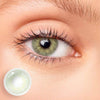
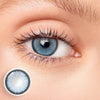
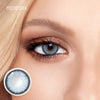
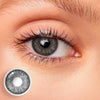
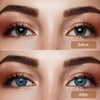
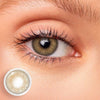
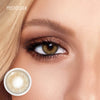
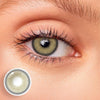
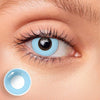
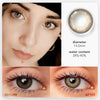
This is our master collection for dark eyes - hundreds of designs across every colour, all using opaque sandwich-pigment prints that cover a dark iris instead of blending into it. Strong starting points with prescription powers: DNA Taylor Blue Gray ($26.98, 14.0mm), Himalaya Green ($18.98, 14.0mm) and Glass Ball Gray ($28.00, 14.2mm). Photos across the site are shot on brown-eyed models, so what you see is what dark eyes actually get.
Colored colored contacts made to show on dark brown eyes. Fully opaque and available in your prescription — plano (0.00) up to -8.00.
Yes — these are opaque and designed to cover dark brown eyes.
Yes — plano (0.00) through -8.00.
FDA-cleared materials; a valid prescription is required (US FTC Contact Lens Rule).
All Mojosee lenses use FDA-cleared materials. A valid prescription is required to purchase in the US (FTC Contact Lens Rule); prescription verification is available.
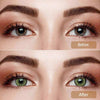
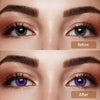
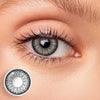
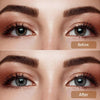
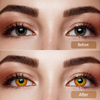
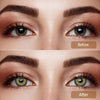
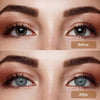
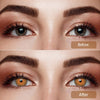
If you have dark brown eyes, most colored contacts on the market will disappoint you — sheer tints designed for light irises simply vanish over brown. Every lens in this collection is different: opaque and semi-opaque prints engineered to cover a dark iris completely, so blue looks blue, green looks green, and grey looks like you were born with it.
Lens color lives in a printed pigment layer. On a dark iris, that layer must be dense enough to block the brown underneath — what manufacturers call opaque or full-coverage. Enhancement tints (transparent washes of color) only work on already-light eyes. Everything at Mojosee is selected and tested for dark irises first, because that is who we design for.
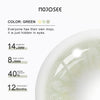
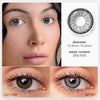
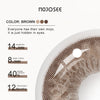
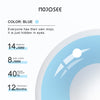
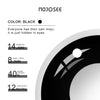
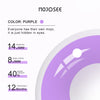
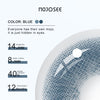
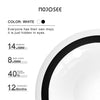
Three specs predict how a lens will look on you. Opacity: full-coverage = complete color change; semi-opaque = your iris texture shows through slightly (more natural). Diameter: 14.0mm = realistic; 14.2–14.5mm = subtly enlarged. Limbal ring: a dark outer ring defines the eye and photographs well. When in doubt, start with a semi-opaque natural tone in 14.0mm.
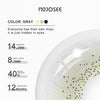
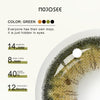
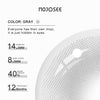
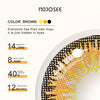
All lenses: HEMA hydrogel, approximately 40% water content, rounded comfort edges, 8.6mm base curve, 14.0–14.5mm diameters. Pigment is sealed in a 3-layer sandwich so it never touches your cornea. Materials are FDA-cleared, lenses are CE-marked, and production follows ISO 13485. Most styles are yearly replacement (12 months from opening); daily disposables are available. Nearly every design comes in plano (0.00) and minus prescription powers. Contact lenses are medical devices: get a proper fitting, wash hands before handling, never sleep or swim in lenses, and replace on schedule.
What colored contacts show up best on dark eyes? Opaque grey and blue lenses give the most visible change; hazel gives the most natural one.
Can dark eyes wear light-colored contacts naturally? Yes — choose semi-opaque prints with warm undertones and realistic texture rather than flat solid colors.
Do I need a prescription? For vision correction, yes; plano (0.00) lenses need no power but professional fitting is still recommended.
New to colored lenses? Read the full dark-eyes color guide for how opaque lenses work and which shades pay off, and the safety & materials guide before your first order.
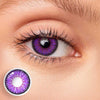
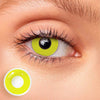
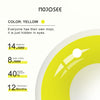
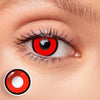
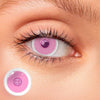
More shades for dark eyes: pink, purple, yellow, hazel and red.
Feeling bolder than a single color? Our rainbow contacts put the whole spectrum on dark eyes at once.
Shopping from the UK, Canada or Australia? These are the coloured contact lenses you are looking for — we use the American spelling across the site, but every design on this page is built for dark brown eyes and ships to all three countries. Free standard shipping over US$49, 14–20 days door to door. Shipping details → Prices are in US dollars — your card is charged in USD wherever you order from.
Opaque, full-coverage lenses show best on dark eyes. Grey and blue give the most visible transformation, green offers a striking but wear...
Colored contacts for dark eyes need one thing above all: genuinely opaque printed pigment. A dark brown iris absorbs translucent tints — which is why so many lenses "disappear" on brown eyes. Every design in this collection (1,100+ styles) layers opaque color over the iris, so the shade you see in the photos is close to what you get in the mirror.
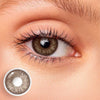
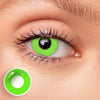
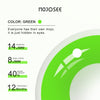
How to choose: for an everyday, nobody-can-tell result, stay one or two steps lighter than your iris in a warm tone — brown-hazel, caramel and honey shades blend at the edges. For a visible change that still looks plausible, soft grays and warm greens work best. For a statement, cool blues and pale grays announce themselves — pick them on purpose. Our editors keep two tested shortlists: the 5 best colored contacts for dark brown eyes and the 5 best grays that don't wash out.
Most styles are $12.88–$34.98 per pair. Many are offered in Prescription & 0.00 (plano) options — each product page lists the exact powers for that design. Orders ship with Standard Shipping (14–20 days); US orders of $49+ ship free, and we deliver to the UK, Canada, Australia and many other countries.
SEE A BRIGHTER YOU
Premium Colored Contact Lenses
for a More Colorful World.

Google Store Insights · US Checked


