








How Long Do Colored Contacts Last? Wear Time vs Shelf Life vs Replacement
"How long do they last" has three answers people constantly mix up: hours per day, weeks per opened pair, years sealed. Get all three straight so you never over-wear or waste a pair.
Quick answer: daily disposables last one day, monthlies 30 days from opening, yearlies 12 months — and any lens should stay in your eyes no more than 8–12 hours a day. "How long do colored contacts last?" is really three questions wearing one coat, and confusing them leads to both dangerous over-wear and pointless waste. There's a daily clock, a per-pair clock, and a shelf clock — here's each, and how to read the numbers on your box.
Clock 1: hours per wear (the daily limit)
Regardless of the pair's lifespan, cosmetic lenses are day lenses: 8–10 hours is the sensible ceiling, less if your eyes run dry. This clock resets every day and has nothing to do with how "new" the pair is — a brand-new lens worn 16 hours is worse for your eye than a properly-cycled one worn 8. Never sleep in them (that's its own guide), and if dryness caps your day early, the dryness fixes extend comfortable wear time.
Clock 2: months per opened pair (the replacement cycle)
Once you first wear a pair, its usable life is set by its replacement cycle, not by how many times you've worn it: a "monthly" lens is done ~30 days after first use even if you only wore it twice, because deposits and material breakdown are about time-in-rotation, not wear count. Yearly lenses (the catalog default) run about a year of occasional wear with proper cleaning. Daily disposables reset this clock to zero — one wear, bin it. Full breakdown in replacement cycles explained. Deposits also cause the "week-three haze" people mistake for a bad lens (blur guide).
Clock 3: years sealed (shelf life)
An unopened, sealed lens is sterile until its printed expiry — typically a few years out. That date is about the sterile saline and packaging seal, not the plastic; past it, sterility isn't guaranteed, so don't wear expired lenses even if they look fine. This is the clock that lets you stock up on a favorite without worry. Storage rules and what the date really means are in do colored contacts expire.
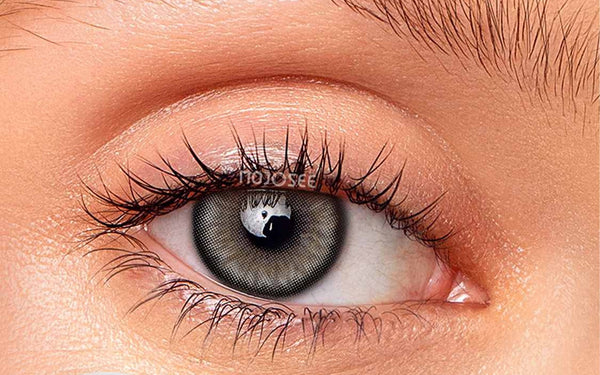
Daily Disposable Glitter Gray sidesteps the clock entirely — a smoky gray you open fresh and bin the same night, with no shelf-life arithmetic at all.

Reading your box
Three markings map to the three clocks: the replacement cycle (daily/monthly/yearly — Clock 2), the expiry date (Clock 3), and sometimes a recommended daily wear note (Clock 1). If a listing shows none of these, that's a sourcing red flag — the quality guide covers what a legitimate listing must display.
The one-line summary
Wear a pair up to 8–10 hours a day, replace it when its cycle says (not when it "looks" old), and never open one past its sealed expiry. Three clocks, no overlap — track all three and you get maximum life with zero risk.
Two clocks run at once — and the earlier one wins
The single most misunderstood thing about lens lifespan is that two independent clocks are always ticking, and whichever hits zero first ends the lens. Clock one — the sealed shelf life (EXP): how long the unopened vial stays sterile, usually years. Clock two — the in-use replacement cycle: daily, monthly or yearly, starting the moment you open it. A yearly lens with a 2028 EXP that you open today dies in one year (2026), not 2028 — the in-use clock beat the shelf clock. Flip the scenario and it's just as real: a lens well within its replacement cycle but past its sealed EXP is also done, because the solution is no longer guaranteed sterile. People get burned at both ends — wearing an opened lens "because the box says 2028," or opening a long-hoarded vial "because I've only worn it twice." Check both dates, obey whichever is sooner, and you'll never be wrong.
Which clock applies to which lens here
The catalogue splits into two kinds of lens and the clocks are different for each. The daily disposables have one clock: hours. Open, wear for the day, discard — the replacement and shelf-life clocks never start on a lens you have not opened. Everything else is a longer-cycle lens, mostly yearly, and it runs all three clocks at once: hours per wear, months from the day the seal is broken, and years sealed on the shelf before that. If the word "daily" appears on a listing, check whether it means daily disposable or daily wear; the second is any lens worn during the day and removed at night, on any cycle.
The wear-time clock, by print
| Lens | Sensible session | Why |
|---|---|---|
| Natural 14.0–14.2mm, clear optical zone | A normal day | Least print, most oxygen; behaves like a clear lens |
| Cosplay 14.5mm, dense print | Six to eight hours | More pigment, slightly less oxygen; dryness arrives sooner |
| Mesh (grid over the pupil) | Two to four hours | The dimming tires you before the lens does |
| 22mm sclera | Three to four hours, with drops | Covers far more eye; tear exchange is limited |
In every row the rule that overrides the number is the same: take the lens out at the first sign of discomfort that gets worse rather than better. The American Academy of Ophthalmology's care guidance treats the replacement schedule and the daily limit as hygiene rules, not manufacturer preferences.
What shortens a lens's life before any clock runs out
A nick or crease in the edge; a print that has started to break into dots; cloudiness that survives a proper clean; a lens that has been in water, on a floor, or in an eye during an infection. Any of those retires the lens on the spot. Colored lenses hide deposits better than clear ones — a brown print conceals a film a light gray would show — so the check is the edge and the print under good light before each wear, not how the lens looks in the case.
Reading the box, line by line
Three dates and one duration live on a lens box, and people confuse them. The expiry date on the seal is the shelf life: how long the sealed, sterile lens is good for before it is opened — usually years. The replacement cycle printed on the box or the product page — daily, monthly, yearly — is how long the lens is good for once opened. The wear time is hours per day, and it is not printed anywhere because it depends on the eye more than the lens. A yearly lens with an expiry two years away is still retired twelve months after the seal breaks; a daily disposable with an expiry three years away is still retired at bedtime.
The mistakes that shorten a lens's life fastest
Topping up old solution instead of replacing it. Rinsing under the tap "just this once". Sleeping in a lens after a late night. Keeping a case for a year. Storing a costume pair in its case "for next Halloween". Each of them shortens the real life of a lens well below the printed cycle, and none of them shows in the case — the lens looks fine right up until it does not. The fix for every one of them is the same boring routine: fresh solution, a rub, a clean case, out before sleep, and the daily disposable version for anyone who knows the routine is not going to happen.
Making a pair last its full cycle
The lens does not wear out from wearing; it wears out from storage. Fresh multipurpose solution every time and never topped up; the case rinsed with solution and left open to dry each day and replaced every three months; never water; never overnight. A yearly lens kept that way reaches twelve months looking like it did at one. A yearly lens in a case that has never been replaced is finished by month six whatever the calendar says — and the calendar started the day the seal broke, not the first day you wore it.
Colored lenses versus clear: does the print change the clocks?
The shelf life and the replacement cycle are the same for a printed lens as for a clear one of the same type; the pigment is sealed inside the lens and does not degrade on its own. What changes is the wear-time clock, and only slightly: a printed lens is a little thicker and lets a little less oxygen through, so dryness arrives sooner and the sensible session is shorter for dense prints — the table above reflects that. The other thing that changes is what "worn out" looks like. On a clear lens the sign is haze; on a printed lens it is a print that has started to break into dots or fade unevenly, and a lens whose print is going is a lens whose edge is thinning too.
A practical calendar for a costume pair
Buy in September, open the vial on the night, wear for the evening, clean and store properly, wear again the following weekend. That is the whole safe life of a longer-cycle costume lens: a few wears inside the same season. The pair that gets stored "for next year" is past its cycle at the second Halloween regardless of how it looks — and a print that has sat in solution for twelve months is usually visibly faded by then anyway. Buy a new pair next autumn; it costs less than the appointment.
The short version, by lens type
Daily disposable: one day, then the bin — the only clock is hours. Yearly natural: a normal day per wear, twelve months from the day the seal breaks, years sealed before that. Cosplay 14.5mm: six to eight hours per wear, the same twelve months, and a print that tells you when it is done. Mesh: two to four hours per wear. Sclera: three to four hours per wear with drops, and a lens that is finished at the first nick. Whatever the type, the earliest clock wins, and the calendar clock started at the seal.
FAQ
How long do colored contacts last once opened?
By their replacement cycle from first wear, not by wear count: dailies one day, monthlies ~30 days, yearlies about a year of occasional use with cleaning. Time in rotation ends the pair, even with light use.
How many hours a day can I wear colored contacts?
8–10 hours for most people, less if dry-prone. This daily limit is independent of the pair's overall lifespan, and you should never sleep in them.
Do unopened colored contacts expire?
Yes — sealed lenses carry an expiry date (usually a few years out) tied to packaging sterility. Don't wear them past it even if they look normal.
Can I wear yearly lenses every single day for a year?
"Yearly" assumes occasional wear with diligent cleaning, not 365 all-day sessions. Heavy daily use shortens the practical life; if you wear lenses daily, a shorter cycle or dailies may serve better.
How long do unopened colored contacts last in the package?
Typically one to four years from manufacture, printed as the EXP on each sealed vial or blister. As long as the seal is intact and it's been stored at room temperature (not a hot car), the lens is factory-fresh right up to that date. Heat is the one thing that ages a sealed lens early.
Do daily disposables expire too?
Yes — the sealed blisters carry an EXP date like any lens. The difference is there's no "in-use cycle" to track: you wear each one once and bin it, so the only date that matters is the sealed shelf life. Just don't hoard a stockpile past its EXP.
Does the replacement clock start when I open the lens or when I first wear it?
When you open it. A lens absorbs deposits and degrades in solution whether or not it is on an eye, so a yearly opened in September and worn twice is still retired the following September.
How long can I wear costume contacts in one session?
Six to eight hours for a standard 14.5mm print with a clear optical zone, two to four for mesh, three to four for 22mm sclera with drops along the way. In every case, out at the first sign of discomfort that gets worse rather than better.
You might also like
Picked to match this guide — every pair in stock now.
 Vika Tricolor Blue Colored Contact Lenses$21.98per pair (2 lenses)
 Polar Lights Blue Gray Prescription Colored $19.98per pair (2 lenses)
 Starry sky Gray Prescription Colored Contact$22.98per pair (2 lenses)
 Polar Lights Brown Prescription Colored Cont$21.98per pair (2 lenses)
Explore more: Colored Contacts for Dark Eyes →