







Are Cheap Colored Contacts Safe? How to Tell Good From Risky
Price is a weak signal — verifiable specs are the real one. Pigment sandwiching, the 60-second listing check, and where cheap actually goes wrong (hint: it's the channel).
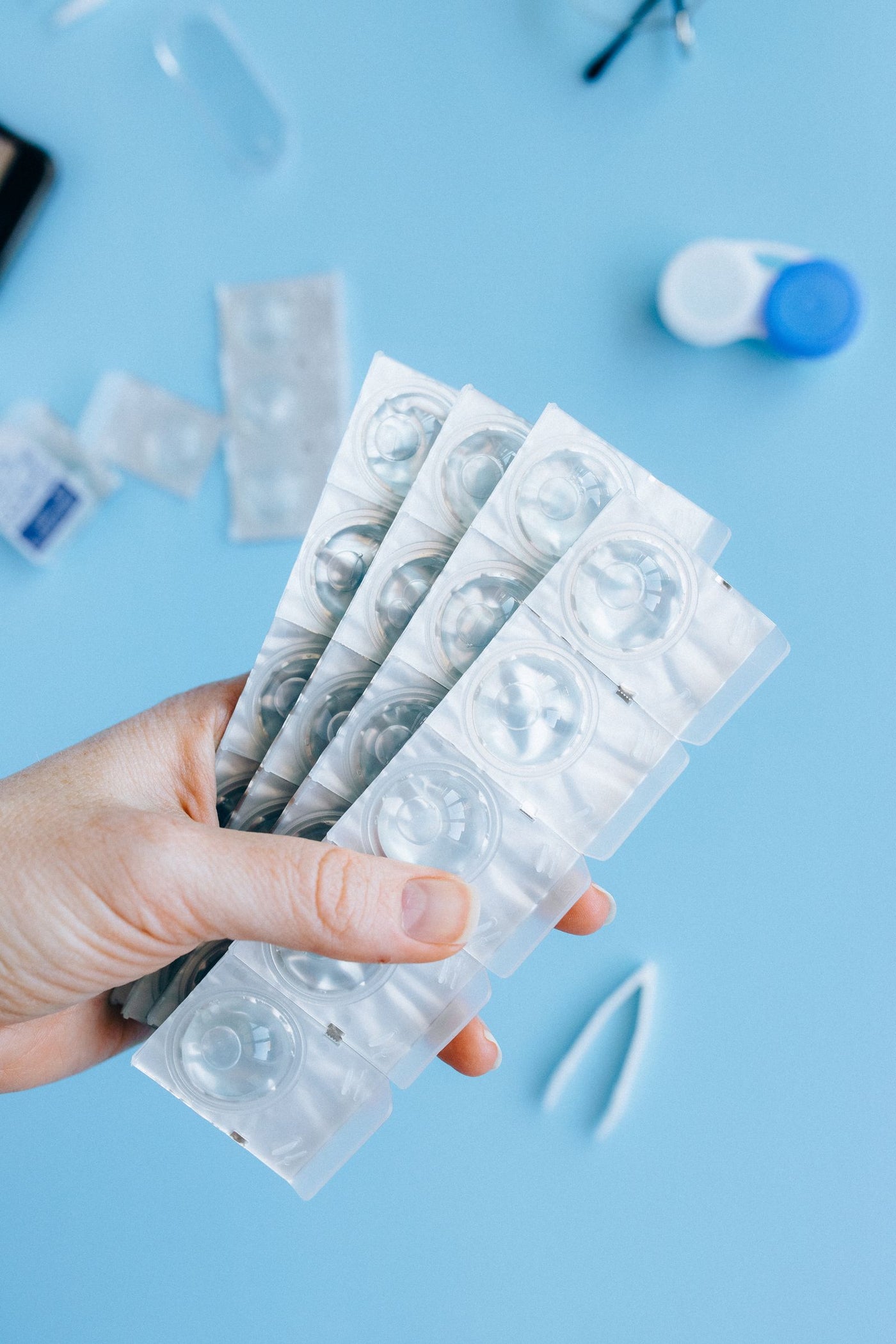
A colored lens can cost $3 on a marketplace or $25 from a specialist shop, and the product photos look identical. So are cheap colored contacts dangerous, is expensive automatically safe, and what actually separates a fine budget lens from the one that lands people in an eye clinic? The honest version: price is a weak signal. Verifiable specs are the real one. Here's the checklist.
What actually makes a lens safe
Sandwiched pigment. In a properly made colored lens, the color layer is sealed inside the lens material — pigment never touches your eye. In the worst cheap lenses, color is printed on the surface, where it can rub off onto the cornea. This is the single biggest quality difference and it's invisible in product photos.
A named material with numbers. Legitimate lenses tell you their specifications — plus base curve and diameter. Ours state diameter, cycle and powers on every page; the material and moisture lines are under re-verification, as explained below. Listings with no diameter, no cycle and no stated powers aren't hiding premium engineering.
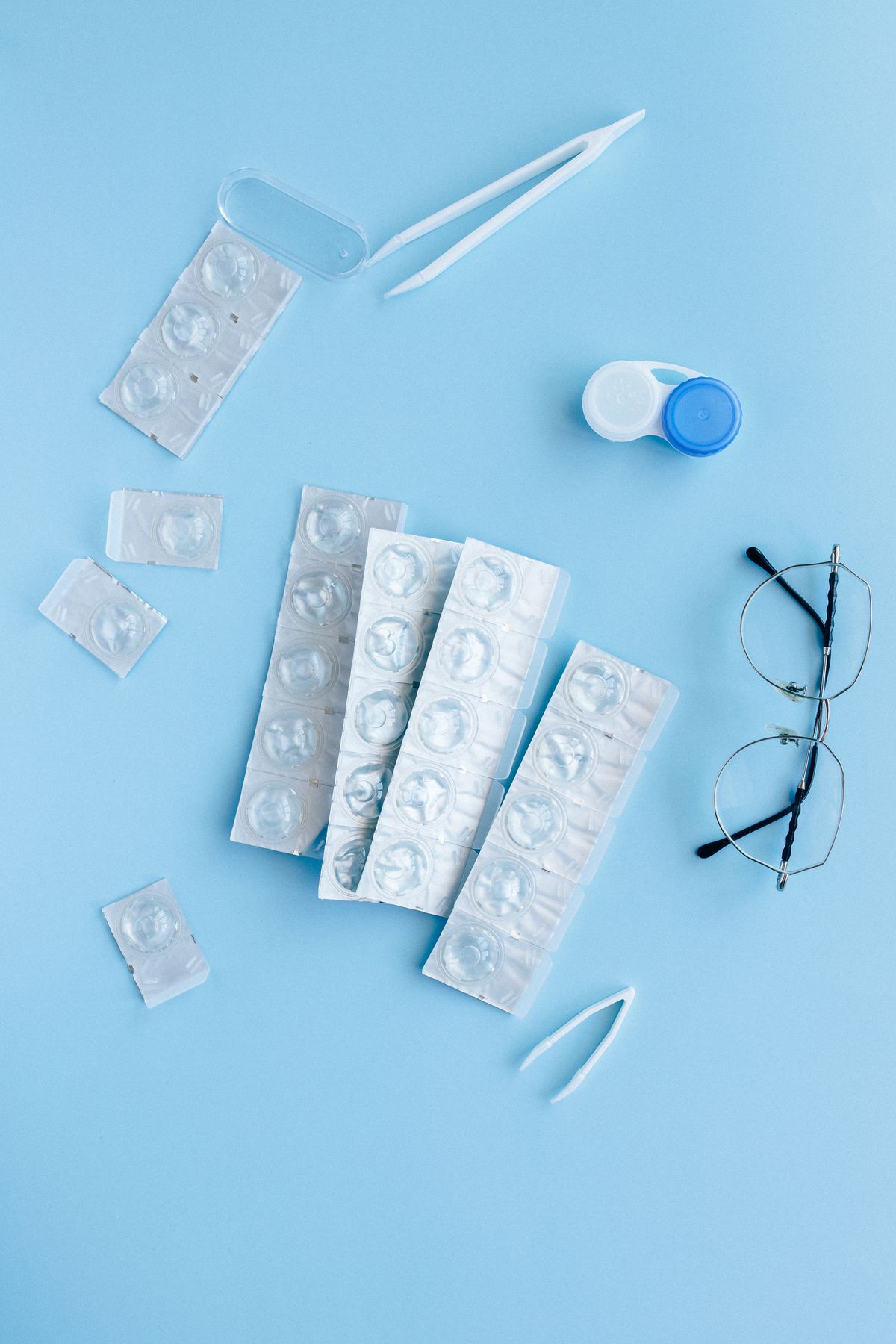
Sterile, sealed, dated packaging. Individual sealed vials or blisters with lot numbers and expiry dates (why those dates matter: expiry guide). Loose lenses, resealed containers, or "no date on the vial" are disqualifying, whatever the price.
Where cheap goes wrong (it's not always the lens)
The horror stories cluster less around price and more around channel: novelty-shop impulse racks, costume kiosks in October, and marketplace sellers with no traceable identity. The same $5 that buys a defensible basic lens from a real vendor buys a no-name, no-date, surface-dyed lens from a kiosk. And the other half of the risk isn't purchased at all — it's habits: water contact, overnight wear, and lenses kept past their cycle turn even excellent lenses into problems (the safety guide covers the full picture).
What the extra money buys at a specialist shop
Real differences, in order of importance: pigment sandwiching as standard rather than luck; consistent quality control across a lot (cheap lenses vary vial to vial — one comfortable, its twin scratchy); designs with larger clear optical zones (why bargain costume lenses often ghost at the edges of your vision — see the blur guide); honest spec sheets; and a seller who answers when something's wrong. What extra money does not buy: immunity from the three unbreakable rules. A $30 lens slept in is worse than a $8 lens cared for.
For a sense of scale: a lens like Himalaya Brown sits right in the middle this article argues for — FDA-cleared materials and a full spec sheet, at a price that says factory discipline rather than luxury markup.

The 60-second listing check
Before buying from anywhere — us included — a legitimate listing shows: diameter, replacement cycle, available powers, base curve where fitted, sealed packaging with expiry, plain-English care instructions, and a real business behind the page. Six checks, one minute. A listing failing two or more isn't a bargain; it's a sample of unknown plastic for your cornea.
Cheap-but-safe vs cheap-and-dangerous: the sorting question
The word "cheap" hides two completely different products, and one question sorts them: can the seller show you the specs? A cheap-but-safe lens comes from a real vendor who lists the diameter, the replacement cycle, the available powers and the base curve it was fitted to, and ships it sealed and dated — it's inexpensive because of volume and sourcing, not corner-cutting on safety. A cheap-and-dangerous lens comes from a kiosk or anonymous marketplace listing with none of that: no material named, no dates, no specs, pigment possibly printed on the surface where it can rub your cornea. The price can be identical; the risk is night and day. So "are cheap lenses safe" is the wrong question — "are these lenses verifiable" is the right one. Run the check on any listing regardless of price: diameter listed, replacement cycle stated, powers listed, sealed dated packaging, a real business behind the page. A lens passing all five is fine at $8; a lens failing two is a gamble at any price. Cheap isn't the danger — untraceable is, and the two just happen to overlap at the bottom of the market.
What the regulators say about cheap lenses
The FDA's guidance on decorative lenses does not use the word "cheap" at all. Its warning is about where a lens is sold — costume shops, beauty supply stores, street vendors, and websites that do not ask for a prescription — and about what it has seen from lenses bought there: corneal scratches, infection, and in the worst cases permanent loss of sight. The American Academy of Ophthalmology makes the same point from the clinical side: the injuries come from lenses that were never fitted, not from lenses that were inexpensive.
That reframes the question. A $15 lens from a seller that asks for your prescription and ships it sealed is inside every rule the regulators care about. A $40 lens from a stall is outside all of them. Price is a weak proxy; the seller's behaviour is the strong one.
Price versus safety: what the money actually buys
| What you pay for | Affects safety? | Notes |
|---|---|---|
| Fitting and prescription check | Yes | The single thing that separates a safe purchase from an unsafe one. Costs the seller time, which is why bad sellers skip it. |
| Sealed, dated, individually packed lenses | Yes | A lens that arrives loose or undated has an unknown history. |
| Print complexity | No | A three-tone iris costs more to print than a flat colour; it is not safer. |
| Diameter (22mm sclera) | No — harder to wear, not less safe | The price jump is moulding and small runs. |
| Brand marketing | No | A well-known name is not a fitting. |
| Replacement schedule | Yes, in use | A daily is safer than a yearly for anyone who will not keep a cleaning routine — and often cheaper per wear once you count solution and cases. |
What we do and do not print on a listing
Since this article tells you to check a seller's specifications, it should be straight about ours. Every product page states the diameter, the replacement cycle, the available powers, and the price per pair, and every order goes through a prescription check for US customers. The material and moisture lines shown on product pages are currently being re-verified against supplier documentation; we will not defend a number we cannot trace, so until that is done, treat those two lines as provisional and fit to your prescriber's measurements. And if a competitor's numbers look suspiciously uniform across hundreds of designs, ask where they came from.
Where cheap lenses come from, and why that matters less than you think
Most colored lenses at every price point are made by a small number of factories in East Asia, and the same factory often supplies both a $12 marketplace listing and a $30 specialist-shop listing. The lens can be physically identical. What differs is the chain between the factory and your eye: whether anyone checked the fit, whether the packaging was sealed and dated, whether the storage conditions were controlled, and whether there is a business you can reach if something is wrong. The extra money at a specialist shop buys that chain, not a different lens. A marketplace listing with none of it is not a bargain on the same product; it is a different product with the checks removed.
What should arrive in the box
The listing check protects you before you pay; the box check protects you before the lens goes near your eye. From any legitimate seller, at any price, you should be able to tick all of these on arrival.
- Each lens individually sealed — a blister or vial with an intact foil, not two lenses loose in one case.
- An expiry date printed on the seal, and it is in the future. No date is a reason to stop.
- The power, diameter and base curve printed on the packaging match what you ordered and what you were fitted for.
- The lens is submerged in clear solution when you open it. A dry or cloudy blister means the seal failed.
- Care instructions in a language you read, and a way to contact the seller printed somewhere.
A single failed line is a reason not to wear the lens and to contact the seller. Two failed lines is a reason not to buy from that seller again.
Cheap, safe, and the one thing to spend on
If the budget is tight, spend it in this order. First, the fitting — a contact lens exam is the one purchase that makes every lens afterwards safe, and it lasts a year or two. Second, a daily disposable rather than a yearly lens if there is any doubt about the cleaning routine, because the cost per wear is close once solution and cases are counted and the safety margin is not close at all. Third, and only third, the lens itself — where a $17 plano lens from a verifying seller and a $30 one from the same kind of seller are both fine, and the difference is print and diameter, not safety.
What not to spend on: a brand name as a substitute for a fitting, a "premium" label with no specifications behind it, or a marketplace bargain from a listing that never asked what your eye needs.
Refunds and returns as a safety signal
Contact lenses are sealed medical devices, so almost no seller accepts opened lenses back — that is normal and not a warning. What is a signal is what happens with an unopened or wrongly-supplied order. A legitimate seller has a stated policy for wrong power, wrong size, damaged seals and non-delivery, and honours it. A seller with no returns page at all, or one that only offers store credit for a wrong item, is telling you how it will behave when something goes wrong with a product that goes in your eye.
The 60-second check, rewritten for what actually matters
- Does the seller ask for a prescription? If not, stop here. Everything else is secondary.
- Is the diameter stated, and does it match what you were fitted for? A 14.5mm listing on an eye fitted for 14.0mm is the wrong lens at any price.
- Is the replacement cycle stated? Daily, monthly, yearly — if the listing does not say, the seller does not know.
- Is the packaging described as sealed and dated? Photos of loose lenses in a case are a warning.
- Is there a business behind the page? A registered name, an address, a way to reach a person. A listing with none of that is a listing you cannot come back to.
Run that on any listing, ours included. A lens that passes all five is safe to buy whatever it costs; a lens that fails the first is unsafe whatever it costs.
FAQ
Are cheap colored contacts from Amazon or eBay safe?
Marketplace listings are exactly where untraceable, undated, surface-dyed lenses live. If the seller can't show material, specs and sealed dated packaging, pass — the discount isn't worth an unverifiable product on your eye.
How can I tell if colored contacts are good quality?
Run the listing check: diameter listed, replacement cycle stated, powers listed, sealed and dated packaging, real seller. On arrival: intact seals, clear (not cloudy) solution, smooth lens edges.
Why are some colored contacts so expensive?
Sandwiched pigment, tighter quality control, bigger optical zones and licensed designs cost real money to make. Past a point you're also paying brand premium — which is why specs, not price, should decide.
Do cheap colored contacts damage your eyes?
A cheap lens with verifiable specs, cared for properly, is generally fine. Damage comes from surface-dyed no-name lenses, contaminated or expired stock, and rule-breaking habits — any of which can happen at any price.
Are cheap colored contacts from marketplaces safe?
Only if verifiable. Marketplace listings are where untraceable, undated, surface-dyed lenses live — if the seller can't show material, specs and sealed dated packaging, pass. The discount isn't worth an unverifiable product on your cornea.
How can I tell if cheap lenses are good quality?
Run the five-point check: diameter listed, replacement cycle stated, powers listed, sealed and dated packaging, a real business behind the page. On arrival, confirm intact seals, clear (not cloudy) solution and smooth lens edges.
Does the FDA say cheap colored contacts are unsafe?
No — its warning is about where a lens is sold, not its price: costume shops, beauty stores, street vendors and websites that do not ask for a prescription. An inexpensive lens from a seller that verifies your prescription and ships it sealed is inside the rules; an expensive one from a stall is not.
Is a daily disposable safer than a cheap yearly lens?
For anyone who will not keep a strict cleaning routine, yes — a daily is never stored, so the case-and-solution failures that cause most infections never happen. Counted per wear, it is often no more expensive once you add solution and cases.
You might also like
Picked to match this guide — every pair in stock now.
 Vika Tricolor Blue Colored Contact Lenses$21.98per pair (2 lenses)
 Polar Lights Blue Gray Prescription Colored $19.98per pair (2 lenses)
 Starry sky Gray Prescription Colored Contact$22.98per pair (2 lenses)
 Polar Lights Brown Prescription Colored Cont$21.98per pair (2 lenses)
Explore more: Colored Contacts for Dark Eyes →


