







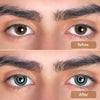
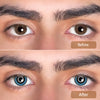
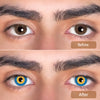
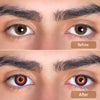
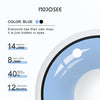
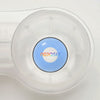
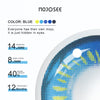
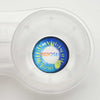
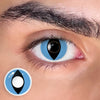
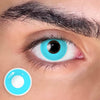
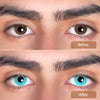
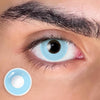

Men's Blue Contacts
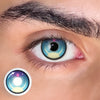
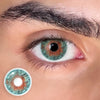
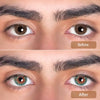
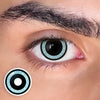
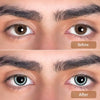
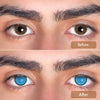
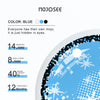
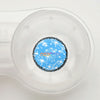
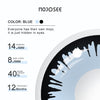
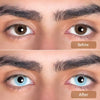
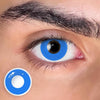
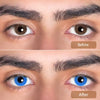
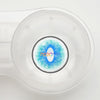
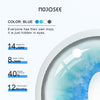
Blue contacts made for men — desaturated denim and gray-blues for an everyday look that passes up close, plus icy and royal blues when you want the change to be obvious. Every l...
Do blue contacts look natural on men?
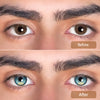
Yes — if you pick a desaturated, gray-leaning blue in 14.0mm. Those tones mimic real light irises and hold up to close conversation. Satu...
Blue Contacts That Don't Look Like Contacts
The number one worry men have about blue lenses: looking like you're wearing a costume. The fix is tone selection, not avoidance. Desaturated, gray-leaning blues read as natural light eyes — coworkers register that something changed before they can name it. Saturated royal and icy blues are a deliberate statement: gym mirror selfies, nights out, content. Both live in this collection; know which job you're hiring the lens for.
Picking Blue by Skin and Hair
Fair to medium skin, dark hair: almost any blue works — the dark-hair contrast keeps it believable. Olive and tan skin: steel and denim blues look the most expensive; skip pale baby blues. Deep skin: vivid royal blues photograph exceptionally well and stay visible in low light — this is where opaque printing earns its keep. If it's your first pair, take the gray-blue middle path in 14.0mm.
Will Blue Show on Dark Brown Eyes?
Only if the pigment layer is dense enough to cover your natural iris — that's what every lens here is printed for. Transparent-tint blues (common in cheap lenses) vanish on brown eyes. Ours are semi-opaque to fully opaque, so the shade you see in the photo is what shows on your eye.
Fit, Wear and the Practical Stuff
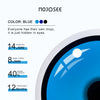
HEMA hydrogel around 40% water, 14.0–14.5mm diameters, 8.6mm base curve. Most styles are yearly lenses: up to 8–10 hours a day with clean hands and fresh solution, replaced within 12 months of opening. Available in plano (0.00) and minus prescription powers — U.S. orders require a valid prescription either way. One order unit = 1 pair (2 lenses) of the same power.
Frequently Asked Questions
Do blue contacts look natural on men?
Yes — if you pick a desaturated, gray-leaning blue in 14.0mm. Those tones mimic real light irises and hold up to close conversation. Saturated royal or icy blues read as intentionally bold, which suits photos, events and content.
Which blue should a first-timer choose?
Start with a denim or gray-blue tone in the standard 14.0mm diameter. It gives a clear change without the costume effect, and works in daylight as well as indoor lighting.
Will blue contacts show up on my dark brown eyes?
Yes. Every blue in this collection uses a semi-opaque or opaque pigment print made to cover dark irises — unlike transparent-tint lenses, the color won't disappear over brown.
Can I get blue contacts with my prescription?
Most styles come in plano (0.00) and a wide range of minus powers. Select your power on the product page. In the U.S., a valid prescription is required even for plano lenses.
How long do they last and how long can I wear them daily?
Most are yearly lenses: replace within 12 months of opening and wear up to 8–10 hours a day with proper cleaning and fresh solution.
Which blue contacts work best with darker skin tones?
Deeper, muted blues — denim, steel, and gray-blue — complement darker skin naturally and read as believable. Very pale ice blue creates maximum contrast, which photographs dramatically but looks less realistic in person. If you want daily wear, go muted; if you want impact for events, go ice.
What's the difference between gray-blue and bright blue lenses?
Gray-blue designs mimic naturally light eyes — desaturated, multi-tonal, believable indoors and out. Bright or sapphire blues are statement lenses: they clearly change your look and people will notice. First-timers who want 'plausibly real' should start gray-blue.
Will blue contacts look right with dark hair and a beard?
Yes — dark hair with blue eyes is a striking but natural combination, and a beard actually strengthens the effect by framing the face. The key is choosing a blue with dark limbal edges and some depth in the print, so it reads as pale eyes rather than colored plastic.
Are blue contacts too flashy for everyday wear?
Only the bright ones. A muted denim or gray-blue at 14.0–14.2mm passes as natural at work and in daylight. Keep high-saturation royal or ice blue for nights out, photos, and events where you want the change to be seen.
Do blue contacts photograph well?
Blue is one of the most camera-friendly lens colors — it catches light and reads clearly in both daylight and flash photography. For photos, a slightly brighter blue than you'd wear daily usually pays off, since cameras mute lens color a little compared to what you see in the mirror.
How much is shipping on blue contacts?
US orders over $49 ship free — that's typically two pairs — and international orders ship free over $69. Standard delivery runs about two to four weeks, with an Express option ($10.99) at checkout. Order ahead if you need them for a specific date.
How do I care for blue contacts after wearing?
Rub and rinse each lens with fresh multipurpose solution after every wear, store submerged in a clean case, and refill with new solution each time. Never rinse with water. With consistent care, yearly-rated lenses stay comfortable for months of regular use.
Can I sleep or nap in blue contacts?
No — remove them before any sleep, including short naps. Sleeping in lenses cuts oxygen to the cornea and sharply raises infection risk. Keep a lens case and travel-size solution in your bag so you're never stuck keeping them in.
Can I wear blue lenses with astigmatism?
These are spherical lenses and don't correct astigmatism. If yours is mild, a plano blue lens for style is usually comfortable; if it's moderate or higher, ask your eye doctor before wearing — lens rotation on an astigmatic eye can cause blur or awareness of the lens.
How long do blue contacts last once opened?
Most designs here are yearly-replacement lenses: up to 12 months from opening with nightly cleaning and proper storage. Frequent wearers should realistically plan on replacing around six months for best comfort. Toss any lens that's damaged or hazy, whatever its age.


