







Circle Lenses vs Colored Contacts: What's Actually the Difference?
Every circle lens is a colored contact; not every colored contact is a circle lens. The enlargement design explained, the ulzzang history, and how to choose between them.
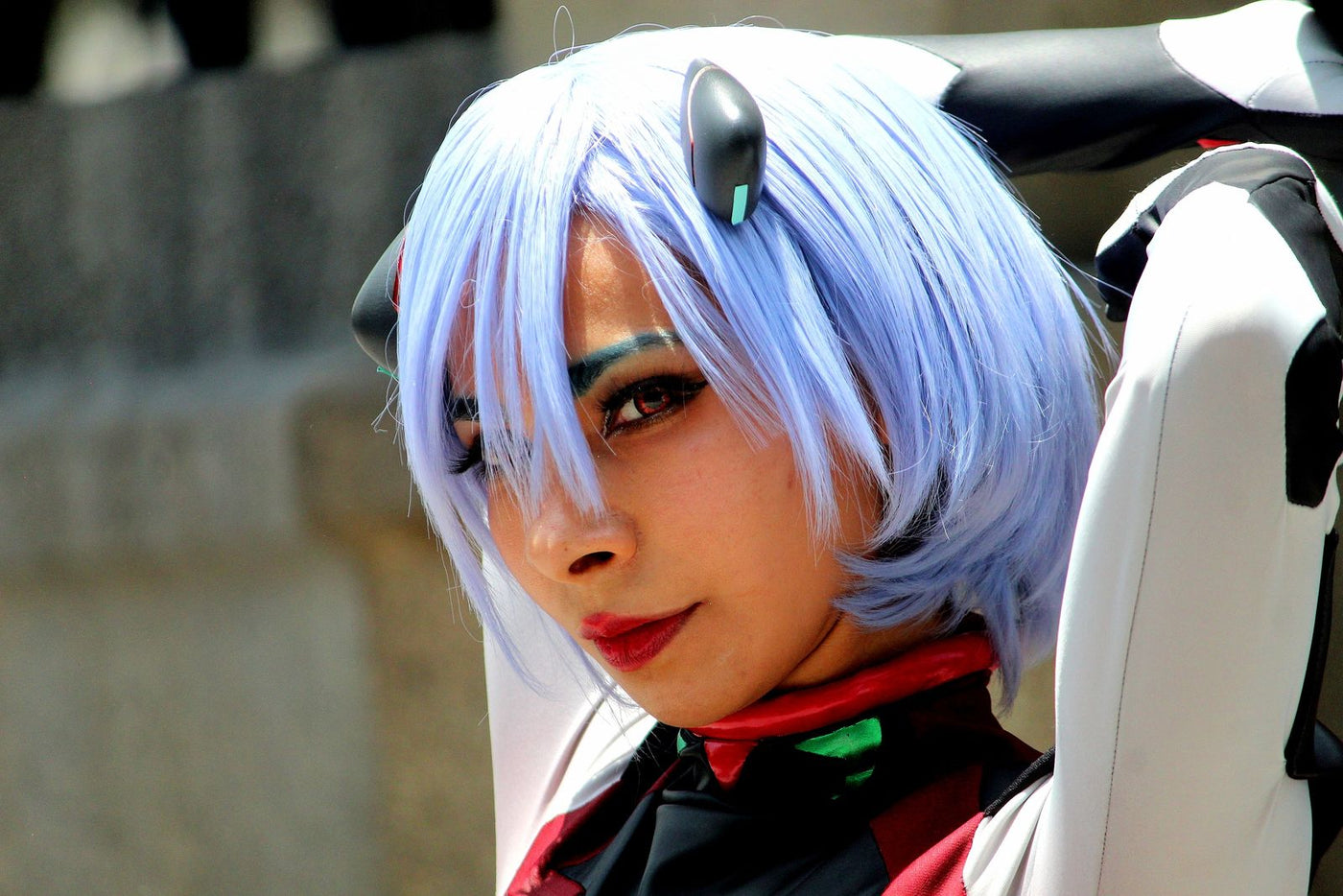
Shop for lenses long enough and you'll hit both terms — often on the same product page — plus "circle lens vs colored contact" threads full of confident, contradictory answers. The real answer is simple: every circle lens is a colored contact; not every colored contact is a circle lens. The difference is a design goal, and knowing it tells you exactly which to buy.

What makes a lens a "circle lens"
Circle lenses are colored contacts engineered for one effect: making the iris look bigger. Two design levers do it — a dark, defined outer rim (the "circle") that extends the apparent iris edge past your real one, and larger printed diameters so the color zone covers more of the visible eye. The result is the doll-eye look: bigger, rounder, more luminous eyes. Regular colored contacts, by contrast, aim to change color while keeping natural proportions — same technology, opposite relationship with size.
Where the look comes from
Circle lenses grew up in East Asian beauty culture — the late-2000s ulzzang aesthetic, K-pop styling, and anime's enormous-eyed visual language all fed the same ideal of large, high-contrast eyes. That lineage is why circle lenses like Anime Brown remain the backbone of cosplay: anime characters literally have circle-lens proportions drawn on. The look then went global, softened, and split into today's two lanes — subtle enlargement for beauty wear, full doll-eye for character work.

The design math that actually matters
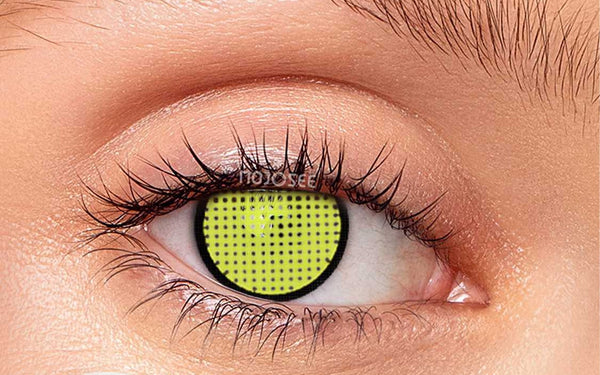
Ignore marketing diameters; watch two things. Printed vs total diameter: many "16mm effect" lenses are 14.2–14.5mm lenses whose pattern is printed to the very edge — the enlargement is graphic design, not extra plastic, which is good news for comfort. Rim thickness: a thin soft rim like Genshin Anime Brown enlarges politely; a thick black band like Green Block shouts it. The full pattern vocabulary is in the pattern guide, and the size logic in the diameter guide.
Which should you buy?
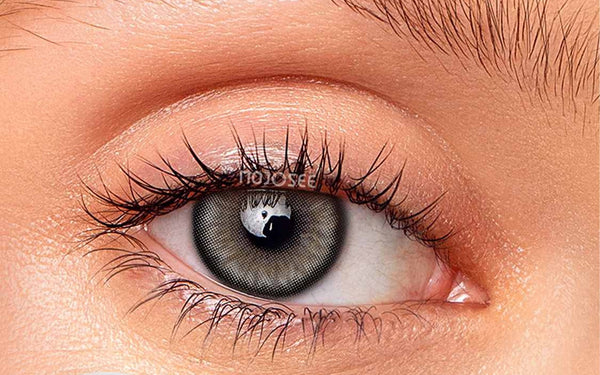
Natural color change, office-safe: regular colored contacts, no rim emphasis. Bigger-looking eyes that still pass in daylight: a moderate circle lens — defined-but-brown rim, 14.2mm, like Anime Red Brown. Anime/cosplay accuracy: full circle lens, thick rim, edge-printed — that's what the character's face is drawn with. Small or hooded eyes: counterintuitively, the moderate circle lens beats the huge one — the rim does the enlarging without the sticker effect (the sizing guide explains why). Care rules are identical for both — same materials, same cycles, same water rules.

The comfort myth: bigger doesn't mean it hurts more
A persistent worry keeps people away from circle lenses: "won't a bigger lens be less comfortable?" The reassuring reality is that most "circle" enlargement is printed, not physical — a 14.2mm lens whose dark pattern extends to the very edge photographs as "16mm effect" while sitting on your eye exactly like any standard lens. The base lens diameter is what your eye feels, and that's usually well within normal range. The genuine comfort variable isn't the printed size at all — it's clear-zone size: heavily patterned circle lenses have a smaller clear optical center, so in dim light your dilating pupil can reach the pattern edge and you'll notice haloing (covered in the blur guide). That's a vision note, not a comfort one. So the real question isn't "will a circle lens hurt" — it's "how much edge-of-vision awareness will I accept for the enlargement I want." Match the printed drama to your tolerance, and comfort takes care of itself.
The two categories, by the numbers
The distinction is mostly diameter, so here is the catalogue by diameter at the time of writing — prices per pair, one order is two lenses. "Share with powers" is the proportion of designs at that size with corrective powers.
| Size | Usually called | In stock | Price per pair | Share with powers |
|---|---|---|---|---|
| 14.0mm | Colored contacts (natural) | 99% | $8.88 – $34.98 | 18% |
| 14.2mm | Either, depending on the ring | 97% | $18.98 – $34.98 | 12% |
| 14.5mm | Circle lenses (enlarging) | 95% | $9.90 – $34.98 | 22% |
Two things the table settles. Circle lenses do not cost more — the three sizes share almost the same band, and enlargement is not a premium feature. And circle lenses are not a plano-only category: a meaningful share at 14.5mm carries corrective powers, in the same 0.00 to -8.00 range as the naturals, with no plus powers and no toric lenses at any size.
Which to buy, decided by one question
Will the eye be seen bare, in daylight, by people who know you? If yes, a colored contact at 14.0mm — the enlargement of a circle lens reads as a doll's eye on an unstyled face and is the single most common reason people say lenses look fake. If the eye will be seen made-up, in photos, or in a cosplay where the character's eyes are drawn large, a circle lens at 14.5mm is the right tool and a 14.0mm lens will look too small for the look. Many designs exist at both sizes under the same name; the size line on the product page is the decision, not the name.
Two of each, with live prices


Those are the natural side — in-stock 14.0mm designs at the time of writing. The circle side is the enlarging circle lens collection, sorted by availability; the same shades at 14.5mm are usually there.
Circle lenses in Canada, practically
Health Canada regulates cosmetic contact lenses as medical devices and they are legal to buy and wear; the practical rule is the same as everywhere — get fitted, keep a copy of the prescription, buy from a seller that asks for it. Shipping is the real difference: standard delivery from overseas runs 14 to 20 days door to door, with tracking issued about five days after you order, and standard shipping is free on Canadian orders over US$49. There is no faster service, so count backwards from a date rather than expecting to speed it up later. Prices are in US dollars and your card converts at checkout.
The cosplay case for circle lenses, without the myth
Anime eyes are drawn large, so a 14.5mm lens is doing the job the character design asks for — that is the whole reason cosplayers reach for circle lenses, and it is a good reason. The myth is that the enlargement is "cute" on everyone; on an unstyled face in daylight it reads as a doll's eye, and on a hooded eye the lid clips the top of the print and the eye reads as a dark half-disc. Use the circle lens for the cosplay and the photos, and a 14.0mm colored contact for the day after.
Safety is the same, with less margin
A circle lens is a soft lens with more material than a 14.0mm one; it moves slightly more on a blink and covers slightly more of the eye, so dryness arrives sooner and centring matters more. The rules are identical — fitted and prescribed including plano, never water, never overnight, never shared — applied with a shorter session. Neither category is inherently safer; the unsafe lens is the unfitted one, at any size.
The three names people mix up
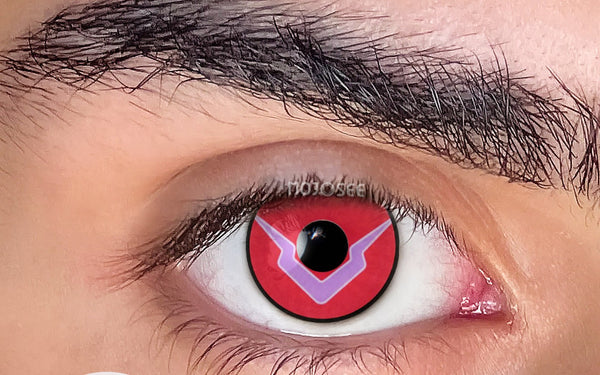
Circle lens — an enlarging lens, usually 14.5mm, with a dark limbal ring; the name comes from the ring, not from the shape of the lens. Colored contact — any lens with a printed colour, at any size; a circle lens is one kind of colored contact. Cosplay contact — a colored contact with a character or effect print, most often at circle-lens size. So every circle lens is a colored contact, most cosplay lenses are circle lenses, and the natural 14.0mm brown that nobody notices is a colored contact that is not a circle lens. When a listing uses one of these words, check the size line rather than the name.
Men and circle lenses
Yes, and the same rule with less margin: the enlargement reads as a doll's eye on a bare male face faster than on a made-up one, so a man buying a circle lens is buying it for a cosplay or a photo, and buying a 14.0mm colored contact for everyday. The men's collections are curated on that split; the size line is the decision.
FAQ
Are circle lenses safe compared to regular colored contacts?
Same materials, same safety profile, same rules — the "circle" is printed design, not different plastic. Safety comes from sourcing and habits (see the quality guide), not from which style you pick.
Do circle lenses actually make eyes look bigger?
Yes — typically by 1–2mm of apparent iris diameter, via the dark rim illusion. The effect is strongest on lighter irises and smaller natural apertures.
Why do anime cosplayers prefer circle lenses?
Anime faces are drawn with oversized, high-contrast irises — circle lens proportions. A natural lens under an anime wig reads oddly small; the circle lens matches the art style.
Can men wear circle lenses?
For cosplay, absolutely — the character decides. For daily wear, most men prefer natural proportions (rimless or soft-rim); the enlargement effect reads distinctly feminine in Western styling.
Are circle lenses and colored contacts the same thing?
Circle lenses are colored contacts — a subtype engineered for eye enlargement via a dark rim and larger printed pattern. Every circle lens is a colored contact; not every colored contact is a circle lens. Same materials, same care, same safety rules; the only difference is the enlargement design.
Do circle lenses make your eyes look bigger in real life or just photos?
Both — the dark-rim illusion works in person and on camera, typically adding 1–2mm of apparent iris. The effect is strongest on lighter eyes and smaller natural apertures, and reads more dramatically in photos where the contrast is exaggerated.
Can you buy circle lenses in Canada?
Yes. Orders ship to Canada from our fulfilment centre in Asia, so plan on roughly 14–20 days end to end on standard shipping — worth knowing if you are buying for a convention or a costume date. Standard shipping is free on orders over US$49 and a flat US$10.99 below that, and prices are listed in USD. Customs handling can add a few days at the border.
Are circle lenses legal in Canada?
They are legal to buy and wear. Health Canada regulates contact lenses as medical devices — zero-power cosmetic and circle lenses included, on the same footing as prescription ones — so what deserves your scrutiny is the seller, not the style. Buy where diameter, replacement cycle and available powers are printed on the product page and the seller asks for a prescription; a listing that offers nothing but a colour swatch is telling you it does not know what it is shipping. And a Canadian optometrist will fit you and measure your base curve even for plano lenses, which does more for day-eight comfort than any spec you can read online.
Do circle lenses cost more than colored contacts?
No. The three standard sizes share almost the same price band; enlargement is not a premium feature. Only 22mm sclera costs more, because it is a larger moulding in small runs.
Can I get circle lenses with a prescription?
Yes — a meaningful share of 14.5mm designs carry corrective powers from 0.00 to -8.00, with no plus powers and no toric lenses. The power selector on each product page is the authority for that design.
You might also like
Picked to match this guide — every pair in stock now.
 Niffty Prescription Cosplay Contact Lenses –$34.98per pair (2 lenses)
 Makima Yellow Prescription Cosplay Contact L$34.98per pair (2 lenses)
 Panty Prescription Cosplay Contact Lenses – $34.98per pair (2 lenses)
 Stocking Prescription Cosplay Contact Lenses$34.98per pair (2 lenses)
Explore more: Circle Block → · Cosplay Contacts → · COSPLAY →