








Why Won't My Colored Contacts Go In? (And Why They Pop Out)
Watering eyes, folding lenses, the finger they won't leave — and the ones that slide out at dinner. Every mechanical cause, in the order that fixes it fastest.

Nine times out of ten, a lens that won't go in comes down to one of two fixes: dry your fingertip, or pin your eyelids properly. Ten minutes at the mirror, one watering eye, a lens that folds, flips or leaps off your finger — and its evil twin: the lens that finally went in and then slides out at dinner. Both problems are mechanical, both are fixable, and neither means "my eyes just can't do contacts." Here's the complete troubleshooting list, in the order that solves it fastest.
Why the lens won't go in
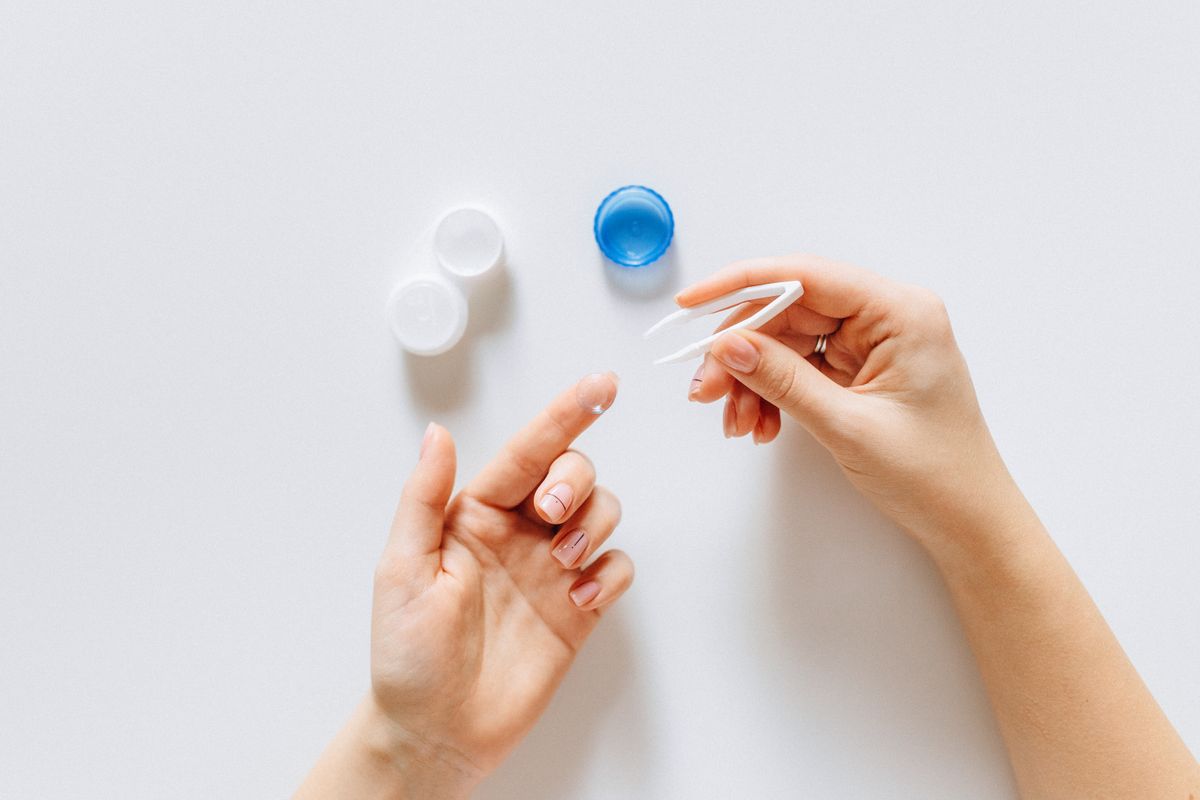
Your finger is too wet. The number-one cause. A lens sticks to whichever surface is wetter — soaked fingertip beats slightly-damp eye every time, so the lens stays on your finger. Dry your fingertip completely, keep the lens bowl full of solution, and it will prefer your eye.
You're fighting the blink reflex, not the lens. Hold the upper lashes firmly against the brow bone with one finger and pin the lower lid down with another — not gently, firmly. The reflex can't fire if the lids physically can't close. Then look slightly up and place the lens on the lower white of the eye; it centers itself when you release and blink slowly.
The lens is folding. Overloaded with solution or balanced on a fingertip that's too curved. Set it on the pad of your index finger, edges up like a bowl, with a single drop inside. If it collapses on approach, it's too wet.
It's inside out. Sits fine for a second, then irritates and un-centers. Do the profile check before every insertion — a true bowl, not a flared soup plate. This one also causes half of all blur complaints (see why contacts go blurry).
The lens dried out. A lens left out of solution even briefly stiffens and won't seat. Soak it in fresh solution for a few hours before trying again; if it dried completely, it's done — a rehydrated crisp is never safe (details in shelf life rules).
Why the lens pops out or slides around
Rubbing. The top reason a seated lens leaves. Itchy eyes with lenses in get drops (contact-safe ones), never knuckles.
Dryness. A dehydrated lens loses suction and edges lift, especially late in the day — the full fix list is in the dryness guide. A dry-lifted lens usually folds into the corner of your eye rather than falling out; blink with drops and it comes home.
The fit is genuinely loose. Base curve (BC) is the lens's curvature — most colored lenses are BC 8.5–8.7, which fits most adults. If every lens of one brand slides no matter what, your cornea may be flatter or steeper than average; that's worth a fitting session with an eye doctor rather than another brand roulette spin.
Oversized costume lenses move more. Big-diameter and sclera styles shift with strong blinks by design — they're heavier and cover more ground. Expect some movement at a con; unexpected movement in a 14.2mm natural lens is a dryness or fit flag. Size logic lives in the diameter guide.
The 60-second pre-flight that prevents all of it
Wash and fully dry hands → lens on dry fingertip, bowl up, one drop of solution inside → profile check (bowl, not plate) → pin both lids → look up, place on the lower white → release lids, look down, slow blink. Do it the same way every time; insertion is a motor skill, and consistency is what makes it a five-second job by week two. Full illustrated walk-through: how to put in colored contacts.
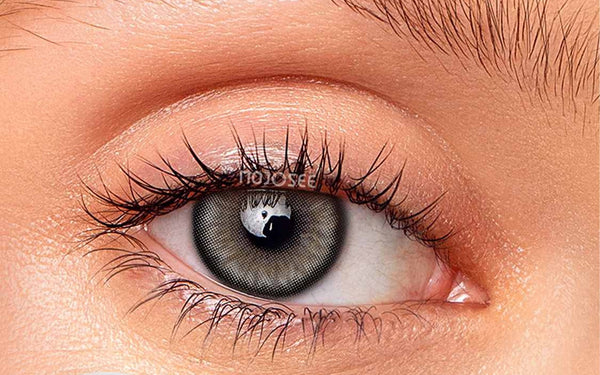
Lens choice is part of the fight, too. A soft, standard-diameter pair with a thin profile — Polar Lights Gray is the shape this pre-flight was written around — folds less on the fingertip and settles faster than oversized styles.

The 7-day beginner curve — what's normal on each day
Insertion is a motor skill with a very predictable learning curve, and knowing what's normal stops you from concluding you're "bad at this." Days 1–2: 10–15 minutes per eye, watering, several folded-lens restarts — completely standard; your blink reflex is at full alert. Days 3–4: under five minutes; the reflex is habituating and your lid-hold is getting firmer. This is also when most people discover their personal error (too-wet finger or timid lid control) and fix it. Days 5–7: one to two minutes, occasional first-try successes. Week two onward: 15–30 seconds without thinking, which is where it stays for life. If you're past two weeks of daily practice and still fighting at day-one levels, stop brute-forcing: something specific is wrong — usually inside-out lenses, a slippery technique, or genuinely unusual lid anatomy — and one appointment with an eye-care professional to watch you insert will fix in ten minutes what another month of frustration won't.
FAQ
Why does my contact lens keep sticking to my finger?
Your fingertip is wetter than your eye. Dry the finger completely and keep the lens wet — the lens always transfers to the wetter surface.
Why do my eyes water so much when inserting lenses?
It's the blink reflex firing, and it fades with repetition. Pin the lids properly (lashes to brow bone), breathe out slowly as you place the lens, and expect visible improvement within a week of daily practice.
Can a contact lens get lost behind my eye?
No — the conjunctiva is a closed pocket; there's physically nowhere to go. A "lost" lens is folded under the upper lid: add drops, close the eye, massage the lid downward gently and it reappears.
Why does my lens pop out when I blink hard?
Usually late-day dryness lifting the edges, occasionally a loose fit. Rewetting drops on schedule fix the first; if a well-hydrated lens still dislodges routinely, get a base-curve fitting.
You might also like
Picked to match this guide — every pair in stock now.
 Vika Tricolor Blue Colored Contact Lenses$21.98per pair (2 lenses)
 Polar Lights Blue Gray Prescription Colored $19.98per pair (2 lenses)
 Starry sky Gray Prescription Colored Contact$22.98per pair (2 lenses)
 Polar Lights Brown Prescription Colored Cont$21.98per pair (2 lenses)
Explore more: Colored Contacts for Dark Eyes →