








Why Every Mojosee Lens Is Photographed on Deep Brown Eyes
Open any colored contact store and count how many lenses are photographed on pale gray or blue irises. The answer is usually "almost all of them" — and it is why so many first pairs end in disappointment. At Mojosee we photograph on deep brown eyes on purpose, and this article is the reasoning, the trade-off we accept for it, and how to use our photos to predict what a lens will do on your eyes.
The industry's best-case habit
Shooting a lens on a pale iris is showing you its ceiling: minimal natural pigment underneath, so even a sheer tint photographs vividly. It is not lying, exactly — it is auditioning the lens under the easiest possible conditions. But most of the world's eyes are brown, and a large share of our customers have deep brown, nearly black irises. For them, the pale-eye photo is a promise the lens may not keep, a mechanism we unpack in why colored contacts disappear on dark eyes.
Dark eyes are the test, not the exception
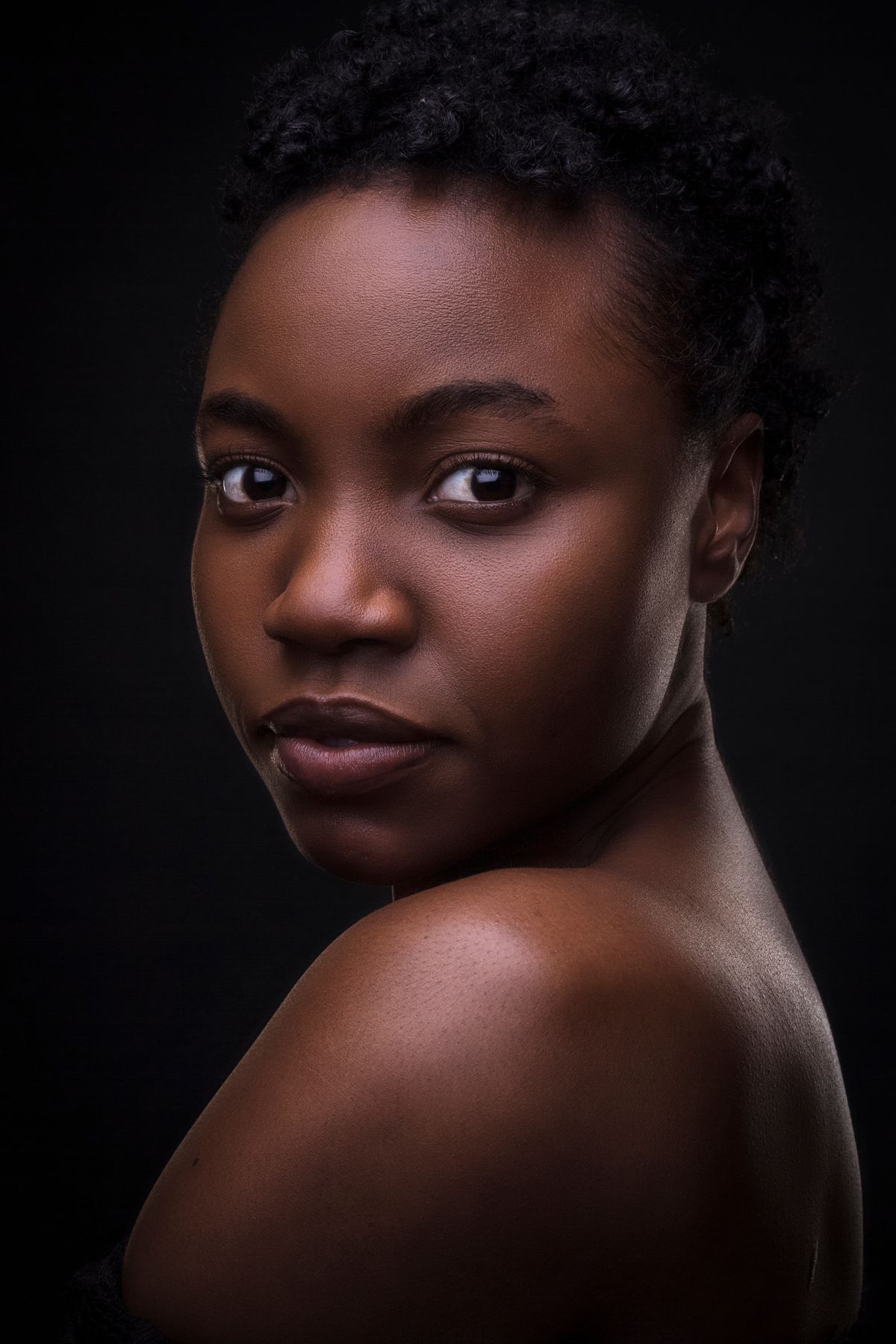
Our rule is simple: if a lens shows on deep brown, it shows on everything. Shooting on dark irises makes the photo a floor instead of a ceiling — what you see is close to the minimum the lens will deliver, and lighter eyes only get more. It also quietly filters what we stock: a design that cannot survive a dark-eye photoshoot does not have much business in a store whose promise is color that actually shows.

The trade-off we accept
Honesty photographs quieter. A soft hazel on a deep brown iris looks subtler in our product shots than the same lens blasted on a pale gray eye in someone else's store — side by side, their listing "pops" more. We take that loss deliberately, because the alternative is winning the click and losing the customer at the mirror. If our photo looks natural rather than electric, that is the point: it is what natural looks like on the eyes most of our customers actually have.
How to read our photos for your eyes
Calibrate against your own iris. If your eyes are deep brown like our models', expect essentially what the photo shows. Medium brown or hazel: expect slightly brighter, with more of your own texture in the blend zone. Light eyes: expect the most vivid version, especially from semi-opaque designs. From there, shade-level picks live in the dark eyes buying guide, and skin-tone pairings in the dark skin guide.
Sun-kissed Bella shows the gap plainly: what you see on the product page is deep brown eyes, so that is the floor of its performance rather than the ceiling.

Where the promise gets audited
Product photos are our claim; the review section is the audit. Our reviews skew heavily toward dark-eyed wearers reporting whether the color actually showed — which is exactly the evidence a pale-eye product photo can never give you. When you order, leaving a photo review on your own eye color is genuinely useful to the next person standing where you are now.
What "shot on dark eyes" means in practice
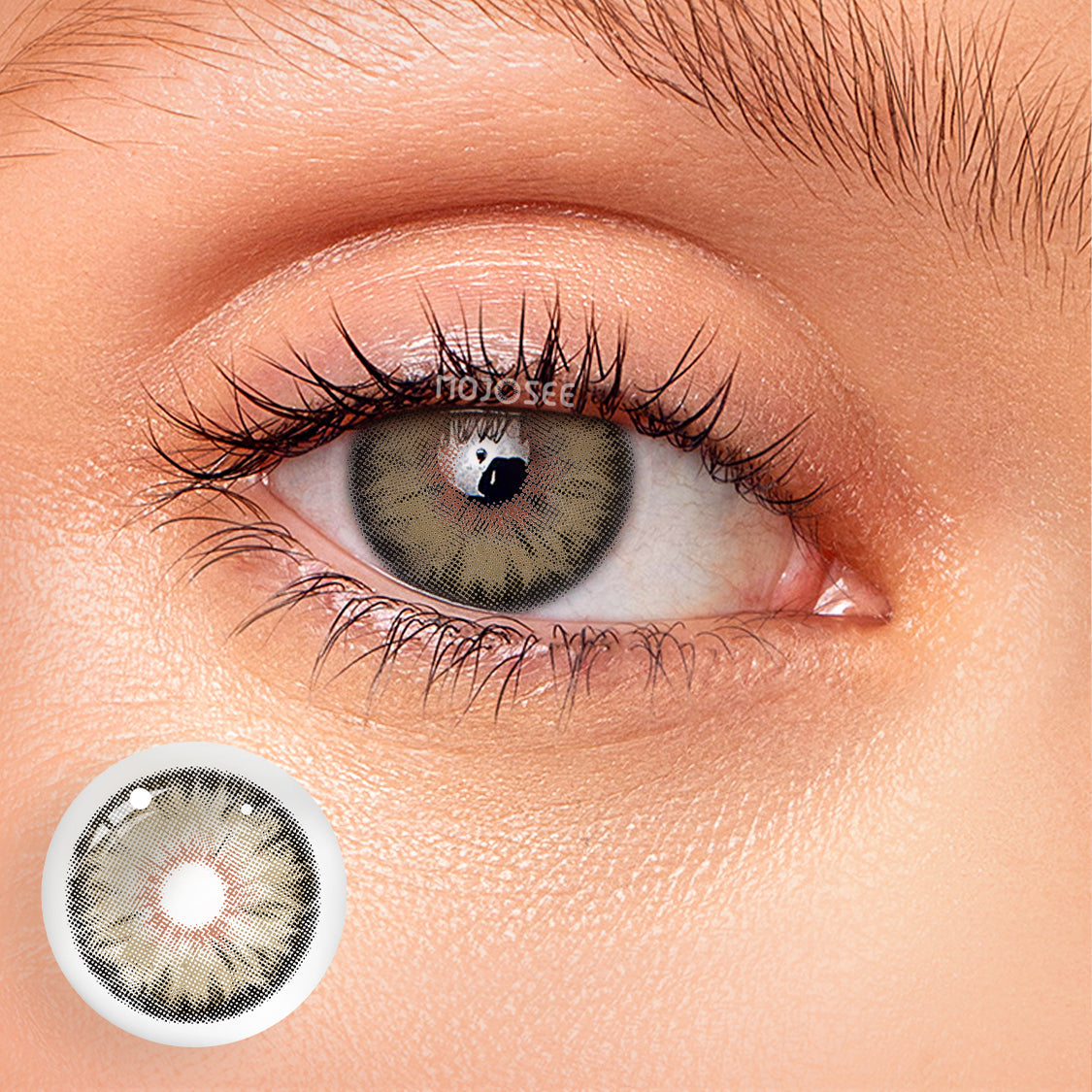
The standard behind the photos is boring on purpose. Wearing shots are real lenses on real deep-brown irises, taken as close-up macro so you can see how the print blends at the pupil and where the model's own color participates. Each listing pairs the wearing shot with a flat lens swatch — the small circle in the corner — so you can compare the raw print against what it becomes on an eye; the distance between those two images is exactly the "your mileage" gap this whole article is about. Post-processing stays at the lighting level: we do not repaint irises to make a lens perform better than it did on set, because a prettier photo that oversells coverage just becomes a return. If a design cannot pass this shoot looking like something you would want on your own eye, it does not go live.
FAQ
Will the lens look like your photo on my eyes?
If your eyes are deep brown, yes — that is who we shoot on. Lighter eyes will see the same design slightly brighter and more translucent.
Why do other stores' photos look more vivid than yours?
Many shoot on pale irises, which shows a lens at its maximum. We shoot on dark irises, which shows it near its minimum — a floor you can rely on rather than a ceiling you might not reach.
Do you have photos on light eyes too?
Some products include them, but the dark-eye shot is our standard because it is the harder, more honest test.
My eyes are nearly black — will anything show?
Yes: opaque printed designs cover the iris rather than filtering it. Every lens in our dark-eyes collection is chosen on exactly that standard.
How can I help other dark-eyed buyers?
Leave a photo review with your natural eye color mentioned — real-eye evidence is the most useful content in this entire category.
Explore more: For Dark Eyes → · Brown → · Gray →
You might also like
Picked to match this guide — every pair in stock now.
 Polar Lights Brown Prescription Colored Cont$21.98per pair (2 lenses)
 Smoky Marble Prescription Colored Contact Le$21.98per pair (2 lenses)
 Starry sky Brown Prescription Colored Contac$22.98per pair (2 lenses)
 Muses Brown Colored Contact Lenses$22.98per pair (2 lenses)
Explore more: Brown Contacts → · Brown Halloween Contacts → · Brown Contacts for Dark Eyes →


