








Colored Contacts for Dark Skin: Natural & Noticeable Looks
Choosing colored contacts for dark skin? Compare brown, hazel, gray and green by eye color, desired contrast and occasion, with options for men and women.

Color & styling guide · Updated September 2026
For colored contacts on dark skin, start with your natural eye color and the amount of contrast you want—not a rule that one skin tone must wear one shade. Brown, hazel, gray, green and blue can be comparison options. The exact lens, your starting iris, lighting and personal taste matter more than a universal “best color” list.
This guide is for men and women choosing between a low-key everyday change, a noticeable look without makeup, or a more intentional style for portraits and events. Deep skin does not automatically mean dark brown eyes, and a product photo on someone with a different starting iris is not a reliable preview of your result.

Separate three decisions before choosing a color
- Your starting iris: look for comparison photos of the exact product on a similar eye color.
- Your desired contrast: do you want a small change, an obviously different color, or a deliberately bold effect?
- Your full-face look: compare the lens with your own skin tone, hair, clothes and makeup choices under ordinary light.
Undertone can be a styling preference, not a prescription. You do not have to avoid gray because you prefer gold jewelry or choose brown because your skin is deep. There is also no single color that makes every dark-skinned wearer look more natural or more attractive.
Brown or hazel for a smaller change?
If your eyes are brown and your goal is a small color shift, brown and hazel are useful starting families to compare. Ask whether the specific hazel has the amount of gold, green or contrast you want, and whether the brown changes the eye noticeably in everyday lighting.
The label alone is not enough: two hazel designs may look very different. Look for the same wearer, a similar camera distance and consistent light. See the brown-versus-hazel comparison before deciding which product details to inspect.
Can gray or blue look right on deep skin?
They can be intentional styling choices, but “right” is personal. A gray or blue that creates a large change from your original eye color may be exactly what you want for a portrait—and more noticeable than you want for an ordinary workday. Neither result is a failure if it matches your goal.
Compare the center transition, texture and edge at full-face distance. Do not treat a heavily lit eye close-up as proof that a lens will look the same in conversation. For dark brown eyes, start with the gray, blue and green comparison guide.
What about green or a bold fashion color?
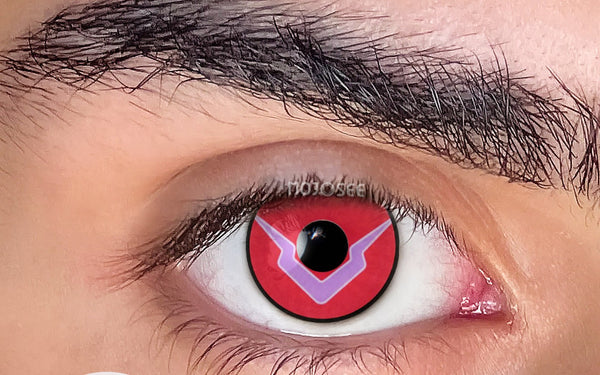
First decide whether you want the eye color to blend with the rest of the look or be its focal point. A green design can vary from a small shift to a strong contrast; a violet or character design may be deliberately visible. Skin tone does not impose a limit, but the exact lens still needs to match your visual goal and fitting needs.
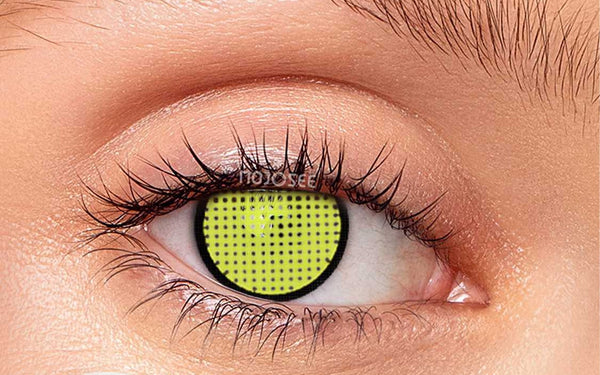
If you want a costume pattern rather than a natural iris-style design, use a dedicated special-effect collection. Do not select a small-pupil or character effect merely because it appears in a generic “recommended for dark skin” list.
Choose for the setting where you will wear them
Everyday life without makeup
Ask for a full-face comparison without a filter, with clothing and grooming similar to yours. The useful question is not “Which shade must my skin tone wear?” but “Does this exact lens create the amount of change I want under ordinary light?”
Brown and hazel starting points for a smaller shift
These are color-family comparisons, not a claim that one lens is universally natural on deep skin. Compare the exact print on an iris like yours.
 Natural Brown Contact Lenses for Dark Eyes - Rich Girl
 Pure Hazel Colored Contact Lenses
 Polar Lights Brown Prescription Colored Contact Lenses
Vacation photos, portraits and weddings
Compare the result in the intended lighting and with the camera you expect to use. Check it in person as well if the event involves close conversation. Allow time for professional fitting, delivery and a separate trial; a lens arriving before the date does not mean you are ready to wear it comfortably or correctly.
Gray and blue choices to test on camera
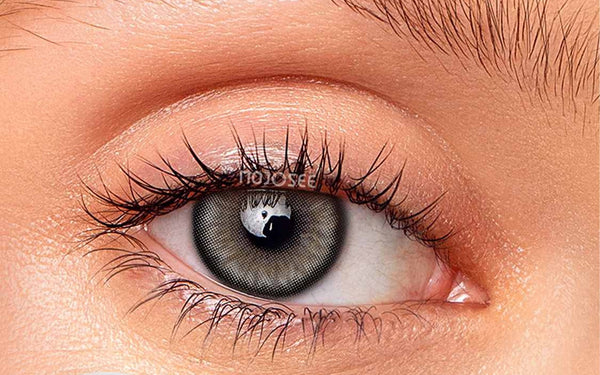
Use these when you want to compare a clearer color change in photos. Test the exact lens under the light and camera conditions you expect.
 Athena Sugar Gray Colored Contact Lenses
 Vika Tricolor Blue Colored Contact Lenses
 Polar Lights Blue Gray Prescription Colored Contact Lenses
Makeup coordination or a more visible event look
Build the comparison around your complete styling choice, such as the makeup and clothing you actually plan to wear. Take comparable photos rather than relying on a supposed warm-versus-cool rule. There is no need to turn a personal preference into a claim that one shade flatters an entire group.
Green and blue-green focal-point options
These pages give three different visible directions to compare. The group describes styling intent, not guaranteed coverage on every dark eye.
 Rain Forest Green Colored Contact Lenses
 Vika Tricolor Green Colored Contact Lenses
 Sun-kissed Tiffany Colored Contact Lenses
Men choosing their first pair
The same decisions apply: starting iris, desired contrast and the occasion. Men do not need a more conservative palette simply because they are men. Use the men's first-pair guide to compare subtle, visible and bold directions.
Men’s brown, hazel and soft-gray starting points
A men’s page changes the styling context, not the anatomy of the lens. Compare the exact product details and available options before choosing.
 Soft Brown Contact Lenses for Men - Almond Murmur
 Halo Hazel Colored Contact Lenses for Men
 Natural Silver Gray Contact Lenses for Men - Soft Rim Everyday
How to judge a try-on photo or video
- Identify the exact lens rather than a similar color name.
- Compare the starting eye color; a match in skin tone alone is not sufficient.
- Look at a full-face view as well as a close-up, in daylight and ordinary indoor light.
- Check whether a filter, camera exposure or editing may change the appearance.
- Use a creator's result as an example—not proof that everyone will get the same coverage, comfort or appearance.
A recorded styling example
The existing video below shows one recorded look. Lighting and individual eyes can change the result; it is not a guarantee for every wearer.
Questions about colored contacts and dark skin
Does dark skin mean I need opaque contacts?
No. Skin tone alone does not determine that choice. Start with the original iris color, the desired amount of change and evidence for the exact lens; do not assume any lens called opaque delivers identical results on every dark eye.
What is the most natural color for dark skin?
There is no universal answer. If you have brown eyes and want a smaller change, compare brown and hazel first, but inspect the exact print and full-face result. Someone wanting a visible look may prefer a different direction.
Can dark-skinned men and women use the same lens design?
Gender does not determine a lens fit or a permitted color palette. Check the exact product and professional fitting advice; styling images can help you judge the appearance, but they do not establish suitability.
Should I buy a natural, an event and a bold pair together?
Only if each option is appropriate for you and serves a real need. You do not need a three-pair “capsule” to start. A discount should follow a suitable selection, not drive you to buy an unverified lens.
What if the seller only shows light-skinned models?
Ask for the same product on a similar starting iris and, where possible, a full-face example with similar skin tone. If those comparisons are unavailable, keep the uncertainty explicit rather than assuming the result will match.
Check the lens before the look
Colored contacts are contact lenses, including when they have no corrective power. In the United States, a valid prescription is required for decorative contacts; an eye-care professional should assess fit. Follow the exact product instructions, and do not choose an approximate power just to get a preferred color. See the FDA's consumer guidance and our care guide. This is not a product-specific FDA clearance claim.
Ready to compare your options?
Browse colored contacts for dark eyes or men's colored contacts. When you have found a suitable lens, check current first-order and multi-buy offers for the complete usage conditions.
You might also like
Picked to match this guide — every pair in stock now.
 Starry sky Brown Prescription Colored Contact Lenses$22.98per pair (2 lenses)
 Gem Brown Colored Contact Lenses$22.98per pair (2 lenses)
 Himalaya Green Colored Contact Lenses$23.98per pair (2 lenses)
 Siri Gray Colored Contact Lenses$23.98per pair (2 lenses)
Explore more: Lenses for Dark Eyes → · Colored Contacts for Men →