








Gray vs. Green vs. Hazel: Which Color Gets the Most Compliments on Dark Eyes?
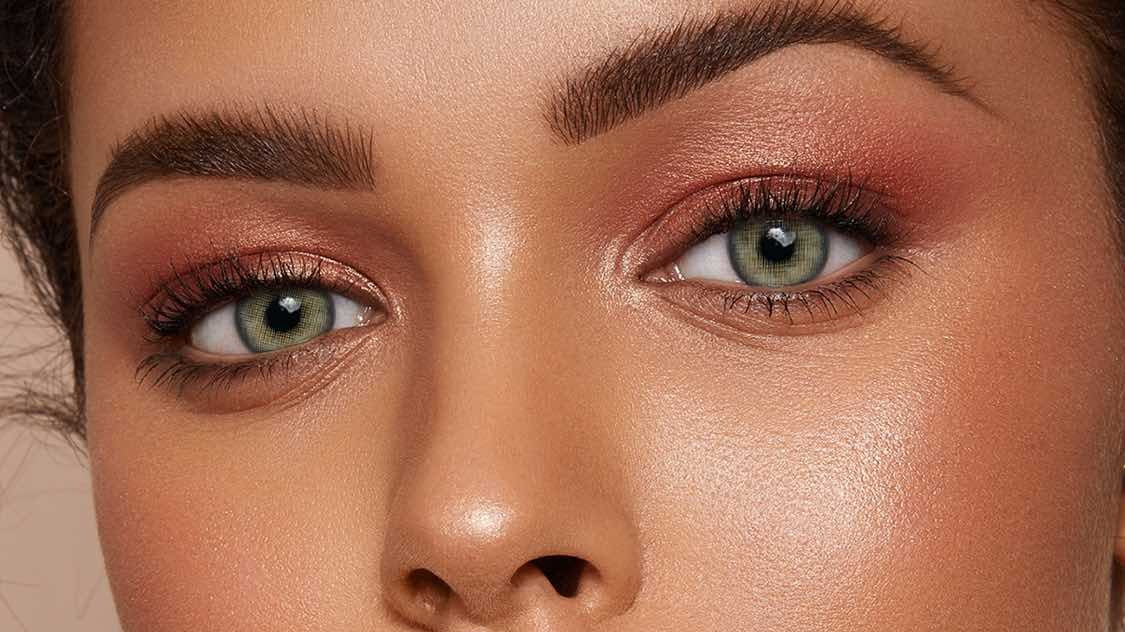
Ask any lens community "which color got you the most compliments?" and the answers cluster hard: gray first, green second, hazel close behind. Not blue, not violet — the three shades that sit one believable step away from dark brown. That's not a coincidence; it's how compliments actually work.
Why these three, specifically
A compliment happens when someone notices something is different but can't immediately explain what. Go too subtle and nobody registers a change; go too loud and the reaction shifts from "your eyes are gorgeous" to "are you wearing contacts?" — which is a question, not a compliment.

Gray, green and hazel all live in that noticing zone for dark brown eyes. Each one changes the eye's temperature rather than fighting its base: gray cools it, green adds movement, hazel warms and brightens. Blue, by contrast, has to fully paint over a dark iris to show at all — which is exactly why it tips into costume territory faster (we tested that separately in the blue-on-brown honest review).
Gray: the low-risk high-reward pick
On dark brown eyes, a multi-tone gray reads as "striking" from across a room and "naturally light-eyed" up close. The trick is a warm undertone in the print — pure cool grays can look glassy under office lighting, while smoky gray with a soft brown inner ring blends into your own iris at the pupil edge. Under afternoon daylight it picks up almost silver; indoors it settles into a quiet slate.
If you want the compliment-magnet version of this effect, a defined-but-soft limbal ring matters more than the shade itself — it's what makes people read the eye as born, not worn.
Himalaya Gray is the shelf example of that soft ring — the gray reads as depth in the iris rather than as a circle printed on top of it.

Green: rare enough to get noticed
Real green eyes are the rarest natural color, so a believable green earns a double-take almost automatically. The catch: flat single-tone greens read like glass. What works on dark eyes is a gray-green with visible radial texture — it shifts between moss and sage as the light moves, which is exactly the kind of motion that draws a second look.

Hazel: the "did you do something different?" shade
Hazel is the stealth option. On dark brown it doesn't announce a new color at all — it lifts your own by two steps, adds a gold flicker around the pupil, and makes the whole face look lit slightly warmer. People compliment your skin, your makeup, your "glow" — and it's the lenses. If your goal is compliments without anyone suspecting contacts, start here.


How to maximize the effect (whatever color you pick)
- Stay 14.0–14.2mm. Enlargement past that reads as styled; the compliment zone is natural-plus (full sizing logic in the diameter guide).
- Match your undertone. Warm skin → hazel or warm gray; cool or olive skin → gray-green. Fighting your undertone is the #1 reason a "pretty" lens photographs oddly.
- Let one thing talk. The days you wear a statement lens, keep eye makeup minimal — liner and lenses compete for the same attention.

One-day lighting test before you commit
Whichever shade you shortlist, give it the three-light audition on day one: morning window light (the most honest), office fluorescent (the harshest — cool grays can go glassy here), and evening warm light (where hazel glows and green goes mossy). A lens that survives all three is a keeper; a lens that only works in one is a special-occasion lens, and knowing which is which saves the "why does it look different today?" spiral. Take a phone photo in each light the first day — your camera roll becomes your own before/after archive, and it's far more reliable than mirror memory when you're deciding whether to reorder or try the next shade.
FAQ
Which colored contacts get the most compliments on dark skin tones?
Warm hazel and gray-green top the list — both harmonize with melanin-rich skin instead of contrasting against it. Cool solid grays can work but are more lighting-dependent.
Do people notice colored contacts in person?
They notice the effect before the lens. A multi-tone print in a natural size usually passes conversation distance; single-tone opaque colors are what get clocked as contacts.
Gray vs green vs hazel — which should a first-timer pick?
Hazel for zero-risk warmth, gray for maximum visible change that still reads natural, green if you want rarity. We compared all three side by side in the gray vs blue vs green test.
Will these show on very dark, almost black eyes?
Yes — all three of these families rely on opaque multi-tone printing, so the shade you see in the photos is what displays over a dark iris. More on the mechanics in the dark eyes guide.
Explore more: Gray contacts · Green contacts · Hazel contacts
You might also like
Picked to match this guide — every pair in stock now.
 Dawn Colored Contacts – 4 Natural Shades for$24.98per pair (2 lenses)
 Stunna Girl Colored Contact Lenses$24.98per pair (2 lenses)
 Polar Lights Blue Gray Prescription Colored $19.98per pair (2 lenses)
 Starry sky Gray Prescription Colored Contact$22.98per pair (2 lenses)
Explore more: Greenery → · cos-Gray → · cos-Green →


