








Colored Contacts for Men: The No-Makeup Guide (2026)
For men the goal is not a dramatic new eye color — it is an upgrade nobody can put their finger on. Here is the no-makeup playbook: colors, sizes, and what to avoid.
Women's colored contacts are usually styled with makeup that blends the lens into a whole look. Men wear lenses with nothing else on the face — which means the lens has to do all the work and stay undetectable. The standard is different: if someone can tell you are wearing colored contacts, the lens failed.

The arm's-length rule
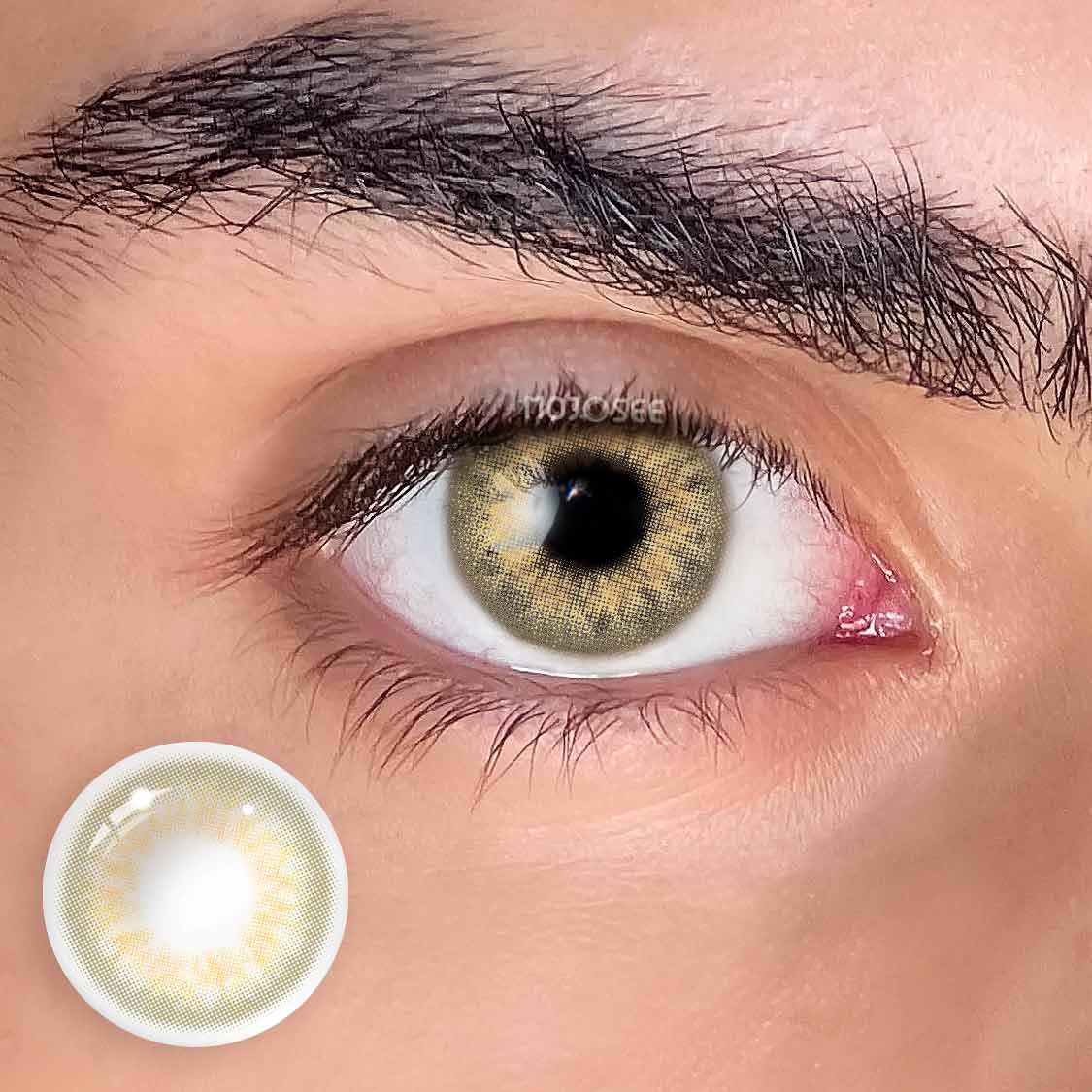
A good men's lens passes two tests. At arm's length in daylight, the eye looks naturally lighter or sharper — not "colored". Up close, the pattern should mimic a real iris: fine radial texture, a darker outer ring, no flat cartoon color. Everything in our men's colored contacts collection is picked against those two tests on dark irises.
The three looks that work
1. Dark gray — the default
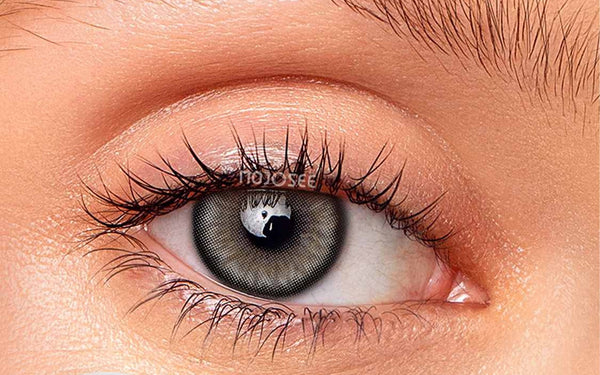
Charcoal and steel grays over brown eyes read as "intense", not "fake". This is the most-bought men's category for a reason. Start with Cocktail Vodka Lime or Polar Lights Gray from the men's gray contacts line.
2. Brown-hazel — the invisible upgrade
One shade lighter than your natural color brightens the eye area the way a good night's sleep does. Nobody will guess why you look sharper. Hidrocor Ocre and Smoky Tea in men's brown contacts are the picks here.
3. Muted green — for contrast without costume
Desaturated, gray-leaning greens like Stunna Girl Kamille (men's green contacts) give real contrast on dark eyes while staying inside the range of natural eye colors.

What to avoid
- Bright opaque blue. On dark eyes with no makeup it is the single most detectable choice. If you want blue, pick a gray-blue like Starry Sky Blue in men's blue contacts.
- Large diameters. Enlarging lenses (14.5 mm+) create the doll-eye effect that suits made-up looks and reads odd on a bare male face. Stick to 14.0–14.2 mm.
- No limbal ring. A lens without a defined dark rim floats visually. Every recommendation above has one.
Care, in one paragraph
Wash hands before touching lenses, store them in fresh solution (never water), respect the replacement cycle printed on the page, and take them out before sleep. You need a valid prescription in the US even for 0.00 plano lenses — an eye exam also verifies the base curve so the lens actually sits comfortably. Full details in the safety guide.
For costume season
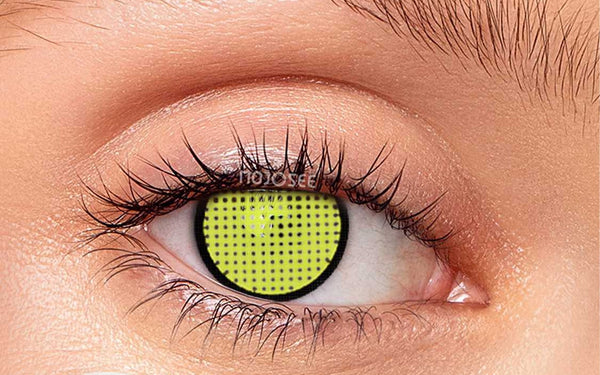
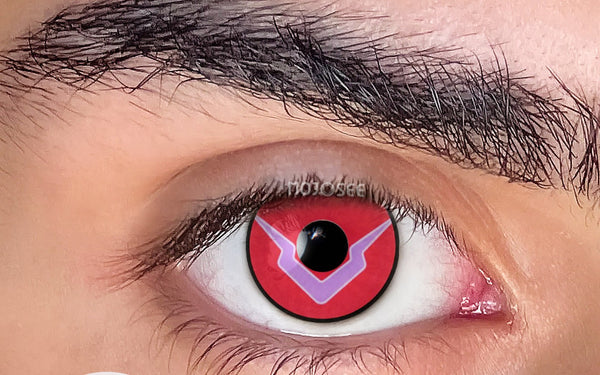
Halloween and cosplay are where men's rules invert — maximum impact wins. Browse crazy contacts for men for effect lenses that need zero makeup to land, and see the Halloween effects comparison for what each style does to your vision.
The starter progression: what to buy first, second, third
Men new to lenses do best with a deliberate progression rather than a bold first buy. First pair — the invisible upgrade: a warm brown or smoke gray enhancer within a shade of your natural eye. It deepens and defines without announcing itself, so you learn how lenses feel and look with zero risk of "obvious." Most men are surprised how much this subtle change does. Second pair — the confident step: once you're comfortable, a clearer gray, green or hazel that's a visible change but still natural-diameter and believable. This is where you find your signature. Third and beyond — situational: a bolder color for events or content, or costume lenses for Halloween. The progression matters because men's lenses read stronger socially than they do in your mirror, so building up lets your eye (and your confidence) calibrate. Two constants at every step: keep diameters natural (14.0–14.2mm — enlargement reads feminine on most men) and go one notch more conservative than feels necessary. The shade-by-shade specifics for the most-wanted men's color are in the men's gray guide.
The men's range, by the numbers
"Colored contacts for men" is mostly the same catalogue photographed on men — the lens does not know who is wearing it. What differs is which designs are curated as unisex or men's, and the numbers below are live from that curation at the time of writing. Prices are per pair; one order is two lenses.
| Range | In stock | Price per pair | Sizes | Share with powers |
|---|---|---|---|---|
| All men's designs | 93% | $8.88 – $84.98 | 14.0mm/14.2mm/14.5mm/22.0mm | 29% |
| Gray | 98% | $18.98 – $120.00 | 14.0mm/14.2mm/14.5mm/22.0mm | 12% |
| Brown | 98% | $16.98 – $34.98 | 14.0mm/14.2mm/14.5mm | 8% |
| Blue | 100% | $8.88 – $34.98 | 14.0mm/14.2mm/14.5mm | 26% |
| Green | 100% | $12.88 – $34.98 | 14.0mm/14.2mm/14.5mm | 23% |
| Prescription range | 92% | $19.98 – $34.98 | 14.0mm/14.2mm/14.5mm | 92% |
| Costume / crazy | 93% | $8.88 – $120.00 | 14.0mm/14.2mm/14.5mm/22.0mm | 9% |
Two things to read off that table. First, the men's range is deep — nearly two hundred published designs with almost all of it in stock — so there is no reason to settle for a colour that is nearly right. Second, corrective powers cover about a third of it, a far better ratio than the costume range and the reason a glasses-wearer can treat this as an everyday option rather than a party one.
Size is the decision that matters
Men worry about the colour. The thing that actually gives a lens away on a man is the diameter, because a visibly enlarged iris reads as a doll's eye, and that read is the whole reason people say colored contacts look wrong on guys.
14.0mm sits at the natural iris edge with no enlargement. This is the office-safe size and where most of the natural gray and brown designs for men live. If you have never worn a colored lens and want no one to notice, this is the number.
14.2mm is a fractional lift — read as a brighter eye rather than a bigger one. Fine for most faces; noticeable on a smaller eye opening.
14.5mm extends past the iris edge and is designed to be seen. It is the costume and anime size, and it is where the men's range has the most designs because that is where the demand is. It is the wrong choice for a first everyday pair.
The range runs 14.0 through 14.5mm plus 22mm sclera in the costume lines, and the same shade often exists at two sizes. Check the size before the colour.
Starter pairs, with live prices


Both are the cheapest in-stock 14.0–14.2mm entries in their colour at the time of writing. The men's gray and men's brown collections carry the rest, and the men's prescription range filters to designs that carry powers.
If you wear glasses
Nearly all of the men's prescription collection carries corrective powers — about 92% of it, mostly from 0.00 to -8.00 in quarter or half steps. Across the whole men's range the share is closer to 29%. That is enough choice to pick by colour and size first and then check the power selector, rather than starting from the handful of powered designs and accepting whatever colour they come in.
The power selector on each product page is built from real stock, so if a design has no selector it genuinely has no powers. And a plano lens is still a medical device in the US: a fitting and a prescription are required even for 0.00, which is the part of the process that makes the size advice above apply to your eye rather than to the average one.
Brown or gray for a first pair: decided
Every version of this question ends the same way, so here is the short form. If the goal is that nobody should know, buy a brown one to two shades lighter than your own eye at 14.0mm. It changes the depth of the eye without changing the colour family, so nothing on the face has to be adjusted to match, and the compliment you get is "you look well", not "are you wearing contacts". If the goal is visibly lighter eyes that still read as real, buy a warm mid gray with a defined outer ring at 14.0mm. Gray on a dark brown iris is the cleanest cool change available because there is no warmth in the print to fight your own.
Do not buy blue first. Blue on dark eyes needs a dense opaque print to read cleanly, and a dense blue on a bare male face reads as costume unless everything else — size, shade, ring — is exactly right. Get one pair of brown or gray in first, learn how a lens sits on your eye, and let blue be the second pair.
What the first week is actually like
Day one: the lens is more noticeable to you than to anyone else. You will feel the edge for an hour, and you will look at your own eyes more than you have in years. Nobody comments.
Day two to three: insertion drops from ten minutes to two. The trick that makes the difference is looking at a fixed point past the mirror rather than at the lens, and placing it on the white of the eye then letting it slide to centre rather than aiming for the iris directly.
By the end of the week the lens is part of getting dressed. If it is still uncomfortable after a week, the size or fit is wrong for your eye, not the concept — go back to the prescription and check the diameter against what was fitted.
Care, honestly, for someone who will not do a routine
If you know you will not clean a lens properly every night, do not buy a monthly lens. A daily disposable — one wear, then the bin — removes the case, the solution and every step you would skip, and the extra cost per wear is small next to the cost of an eye infection. If you do buy a longer-cycle lens: multipurpose solution only, never water, fresh solution every time, a new case every three months, and the replacement clock starts when you open the vial, not when you first wear it.
Three mistakes that make lenses obvious on men
Buying the size you saw on a woman. Most lens photography is 14.5mm on a made-up female eye with lashes doing half the work. On a bare male eye the same lens reads as enlarged. Drop to 14.0mm and the same shade disappears into the face.
Going two shades too light. A pale gray on a dark brown iris is a visible change; a near-white gray is a costume. The natural tier is one to two shades lighter than your own eye, not five. If you want the "why do you look different" effect rather than the "he's wearing contacts" effect, stay in that band.
Skipping the limbal ring. A lens with no dark outer ring shows its edge on a bare eye, and the edge is what people see. Every design worth wearing to work has a defined ring; it is the single feature that makes a printed iris read as real.
Costume season for men
The men's costume range is where the 14.5mm and 22mm designs live, and the rules invert: the lens is meant to be seen, the enlargement is the point, and the colour should be as saturated as the costume can support. The crazy contacts for men collection runs from $8.88 for a printed 14.5mm to $120.00 for full-eye sclera, with about 93% in stock at the time of writing. Standard tracked delivery takes 14–20 days. For an event, please order at least three weeks ahead.
FAQ
Can people tell I'm wearing colored contacts?
With the right pick — dark gray or hazel at 14.0–14.2 mm with a limbal ring — no. Detection almost always comes from oversized diameters or saturated blues.
Do I need a prescription if my vision is fine?
In the US, yes. All contact lenses are regulated medical devices; plano lenses still require a prescription confirming fit.
How long does shipping take?
US orders ship free over $49 and typically arrive in 14–20 days — order at least a month before an event.
Gray or brown for my first pair?
Brown-hazel if you want zero questions asked; gray if you want people to notice something changed without knowing what.
What colored contacts look most natural on men?
A warm brown or smoke gray enhancer within a shade of your natural color — it deepens and defines rather than replacing, so people read good genetics, not lenses. Keep the diameter natural (14.0–14.2mm); enlargement is what reads feminine, not the color.
Do colored contacts look obvious on guys?
Only if chosen like women's lenses — big diameters, pale high-contrast colors, hard rings. Natural-diameter, texture-driven, one-notch-conservative picks read as "sharp," not "made up." Men's lenses also read stronger socially than in your mirror, so err softer.
How many colored contacts are there for men?
Nearly two hundred published designs in the men's range at the time of writing, with almost all of it in stock, across gray, brown, blue, green and costume lines. Prices run $8.88 to $84.98 a pair — the top of that band is 22mm sclera, not an expensive natural lens.
Can men get colored contacts with a prescription?
Yes — about a third of the men's range carries corrective powers, and the men's prescription collection is nearly all powered designs. The power selector on each product page is the authority.
What size colored contacts should men wear?
14.0mm for an everyday lens that nobody notices; 14.2mm for a brighter eye in photos; 14.5mm only for costume and anime. Size gives a lens away on a man far faster than colour does.
You might also like
Picked to match this guide — every pair in stock now.
 Vika Tricolor Blue Colored Contact Lenses$21.98per pair (2 lenses)
 Starry sky Gray Prescription Colored Contact$22.98per pair (2 lenses)
 Polar Lights Blue Gray Prescription Colored $19.98per pair (2 lenses)
 Polar Lights Blue Gray Prescription Colored $19.98per pair (2 lenses)
Explore more: Men's Cocktail → · Men's DNA → · Men's DAWN →