








Clown Contacts: The Killer Clown Look, From White-Out to Spiral
Four lens styles that turn clown face paint into a horror look — dead-white mesh, full black-out, hypno spiral and bloodstained sclera — plus the face-paint order of operations.
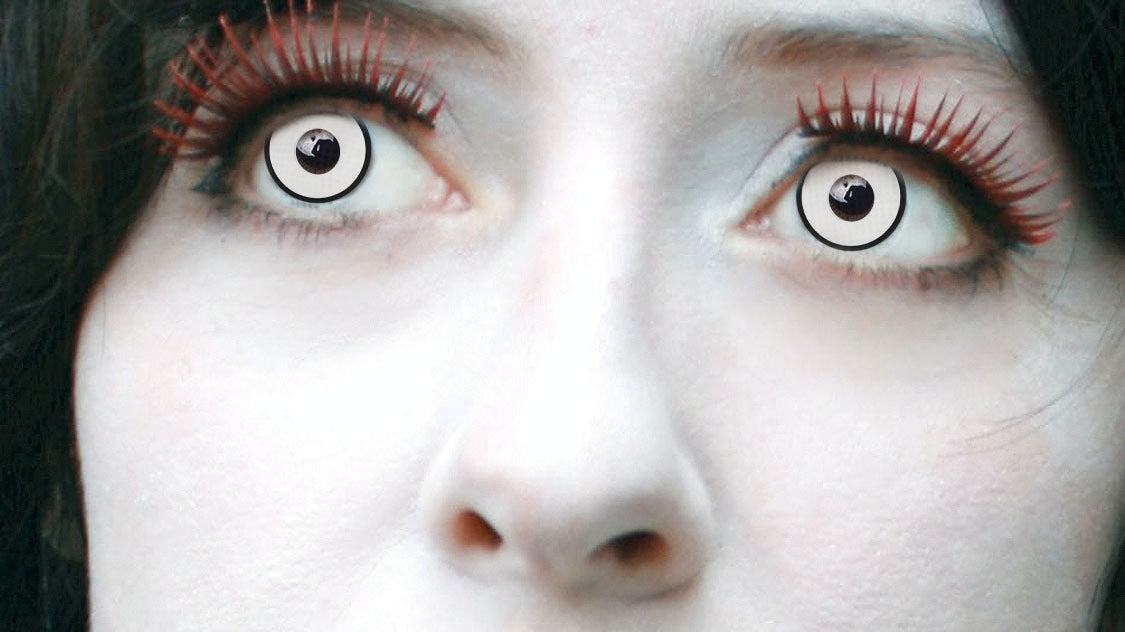
Short answer: a killer clown look lives or dies at the eyes. Face paint covers everything except the one part people instinctively check — and a white, blacked-out or spiral lens is what flips a costume from “party clown” to “why is it smiling at me.” Four lens styles do almost all of the work.
Worth seeing before you commit: watch a candy-clown face built from bare skin, rainbow lenses in — it shows how much of the effect is the eyes rather than the paint.
It works because clown paint weaponizes the uncanny: a face that is almost right. Painted skin hides pores, blush, every human tell — but untouched eyes stay warm and alive, and they quietly ruin the illusion. Swap them for something pale, void-black or spinning, and the last human signal is gone. That is the whole psychology of the look, and it costs exactly one pair of lenses.

The reason is mechanical, not aesthetic. Greasepaint flattens every other feature — it erases skin texture, blurs the mouth, turns the nose into a shape. The eyes are the only thing left with depth and movement, so that is exactly where a viewer's attention lands, and where a normal human iris quietly announces that there is an ordinary person under the makeup. Fix the eyes and the rest of the paint job suddenly reads as intentional; leave them and no amount of latex work will carry the illusion.
The dead-white stare
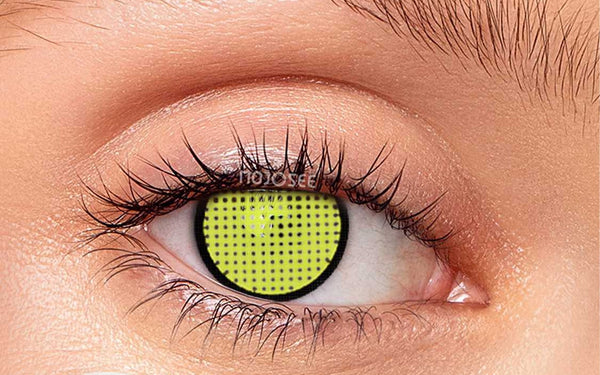
Every horror clown since the golden age of the circus has leaned on the same trick: eyes paler than the greasepaint. A white mesh lens fogs your whole iris into a blank, milky square-pattern haze — unsettling at conversation distance, downright wrong under a camera flash. Because the mesh sits over the pupil, treat it as a photos-and-parties lens: spectacular for the night, not for driving to it.


The void grin
The opposite move is all pupil: a full black-out lens turns your eye into a shark-dark disc with no visible iris at all. Against a chalk-white painted face it reads as two holes cut into a mask — the classic sewer-clown effect, no red balloon required. This one pairs especially well with a stitched or cracked-paint smile drawn wide, because the emptier the eyes, the harder the grin lands.


The hypno spiral
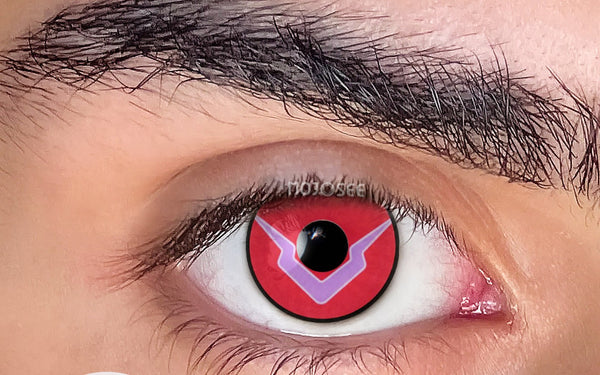
A spiral is the only clown lens that implies motion. For the carnival-gone-wrong angle, a spiral lens does something neither white nor black can: it moves. Every blink re-centers the swirl, and people catch it in their peripheral vision before they consciously see it. It is the jester’s pick — playful at first glance, deeply off once you hold eye contact for a beat too long.

Full-eye horror
When the costume deserves a final boss upgrade, a 22 mm sclera lens covers the white of the eye too. Bloodstained Sclera laces cracked red veins across a pale base, so the whole eye looks ruptured — the strongest single effect in the catalog and the one that makes people step back first. Budget extra practice time: full-eye lenses go in slower than regular sizes, and first-timers should rehearse before the day itself.

Matching the lens to the clown
Pick by the story your costume tells. A Victorian mime or sad-pierrot look wants the white mesh — soft, faded, wrong in an antique way. The slasher clown with the wide painted grin runs on black-out lenses. A ringmaster-gone-mad or jester reads best with the spiral, especially under moving party lights. And a “the makeup is the least scary part” final form — torn costume, staged blood — earns the bloodstained sclera. One more trick worth stealing: a single lens in one eye and a bare iris in the other is cheaper than two pairs and arguably creepier than either.
Making them work with face paint
Order of operations matters. Lenses go in first, on clean hands, before any greasepaint opens — pigment dust and lens surfaces do not mix. Keep the waterline clear of liner so the lens edge stays comfortable, set the paint around your eyes with powder so it will not flake, and take the lenses out the moment the night ends, before makeup remover comes anywhere near your face. If you normally wear glasses, both plano and prescription powers exist across most of these styles; run your numbers through the conversion chart first.
Standard delivery: 12–20 days. See order deadline guide.
FAQ
Can you see through clown contacts?
Black-out and sclera styles leave the pupil area clear, so vision is close to normal. White mesh covers the pupil with a fine grid — you can walk and pose, but expect fogged, screen-door vision. Plan to arrive before you put mesh lenses in.
Are clown contacts safe to wear with face paint?
Yes, with clean order of operations: lenses in before paint, hands washed between steps, and no paint or setting spray applied directly over open eyes. FDA-cleared lens materials, worn for one evening, are the easy part — contamination from pigments is what to avoid.
How long can you wear costume contacts in one night?
Six to eight hours is a comfortable ceiling for most wearers. Bring a case and solution to the party; if eyes feel dry or gritty, take the lenses out early rather than pushing through.
What clown contacts work on dark eyes?
All four styles here are fully opaque, so they cover dark brown irises completely — white mesh and black-out read identically on every eye color.
Do clown contacts come in prescription?
Most of these styles are available in plano and minus powers; sclera sizes are typically plano only. Check the power selector on each product page before ordering.
You might also like
Picked to match this guide — every pair in stock now.
 Circle Block Colored Contact Lenses$18.98per pair (2 lenses)
 Cat Eyes Colored Contact Lenses$17.99per pair (2 lenses)
 Mesh Colored Contact Lenses$18.98per pair (2 lenses)
 Red Cross Colored Contact Lenses$28.98per pair (2 lenses)
Explore more: White Halloween Contacts → · halloween → · Cosplay Contacts →