








Why Colored Contacts Disappear on Dark Eyes — and What Opaque Printing Does Differently
If every colored lens you have tried vanished on your dark brown eyes, nothing was wrong with your eyes — you were sold the wrong lens type. Translucent "enhancement" tints are designed to shift already-light irises; laid over dark brown, their dye plus your melanin just multiplies into mud. Lenses that show on dark eyes are built differently, and once you know what to look for, you can spot them from the product page.
The mud math of sheer tints
A sheer tint works like a colored filter: light passes through the lens, bounces off your iris, and comes back mixed. Bounce sky-blue dye off a pale gray iris and you get convincing blue. Bounce it off dark brown — which absorbs most light before it can return — and you get a faint muddy shimmer that disappears entirely indoors. No amount of "more dye" fixes this; the physics needs a different construction.
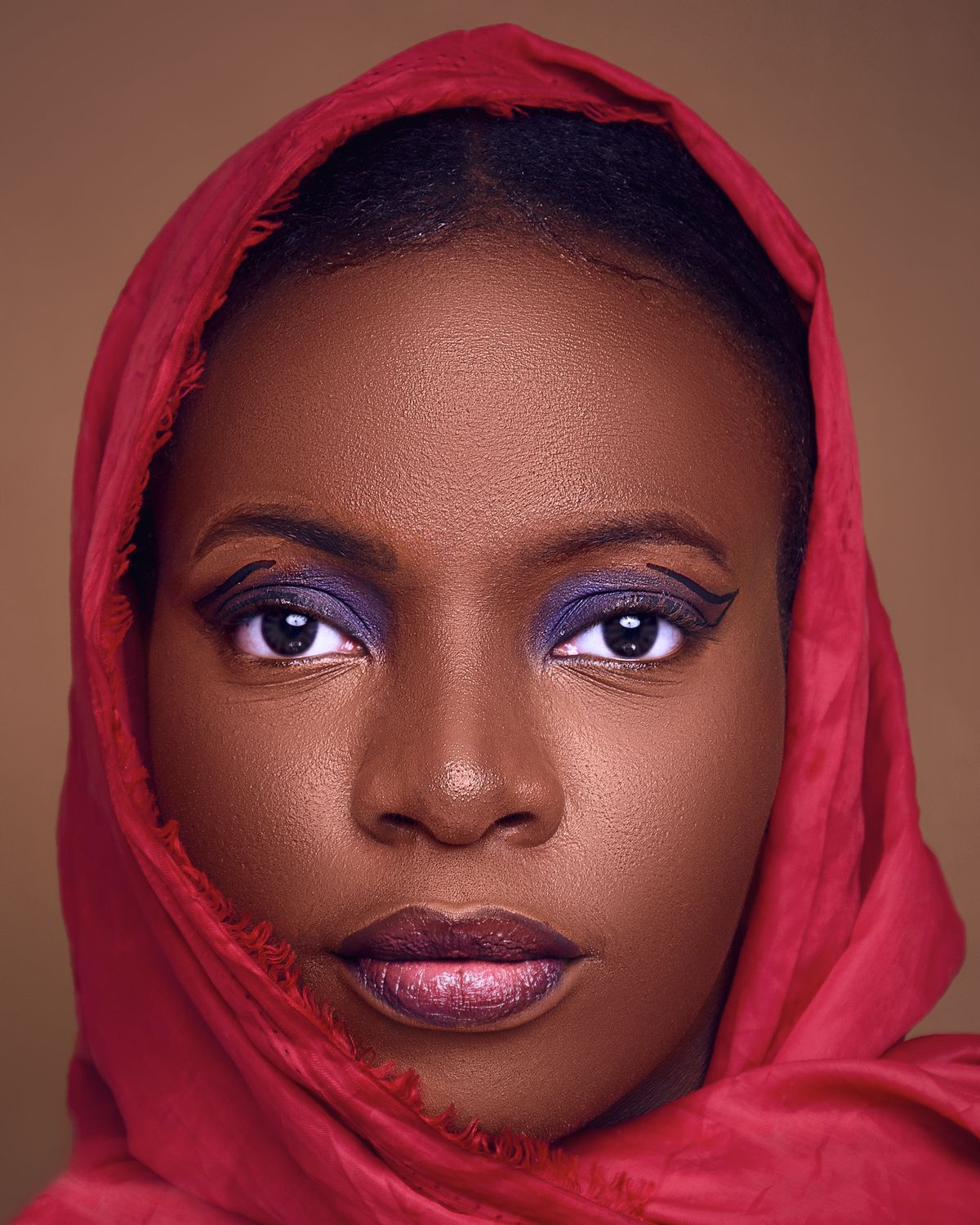
What opaque printing actually does
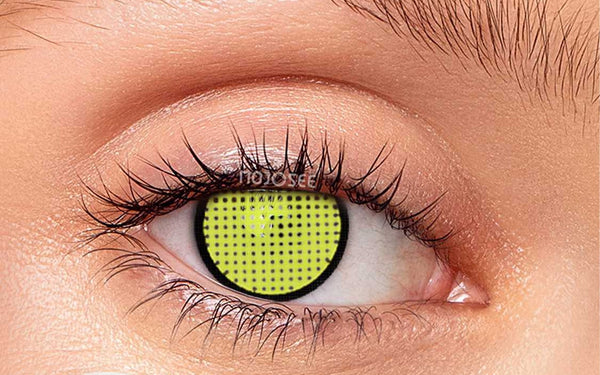
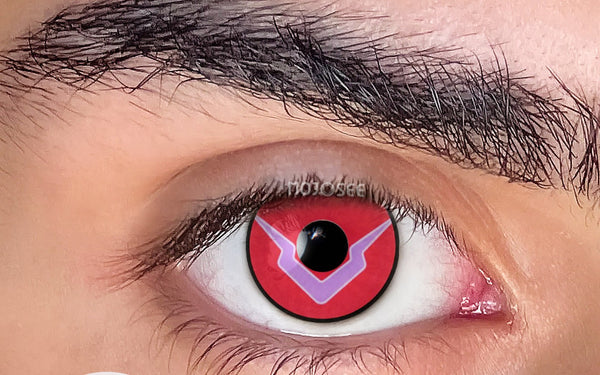
Opaque lenses do not filter your iris color — they cover it. Pigment is printed in a dense dot matrix and sealed between layers of the lens material, so the color you see is reflected off the print itself, not blended with what is underneath. (The sandwich construction also means pigment never touches your cornea — the lenses here use FDA-cleared materials with that layered build.) Density is the spec that matters: enough dots to block the brown, spaced finely enough to still look like an iris instead of a painted disc.
Why 100% coverage looks fake — and the three-tone fix
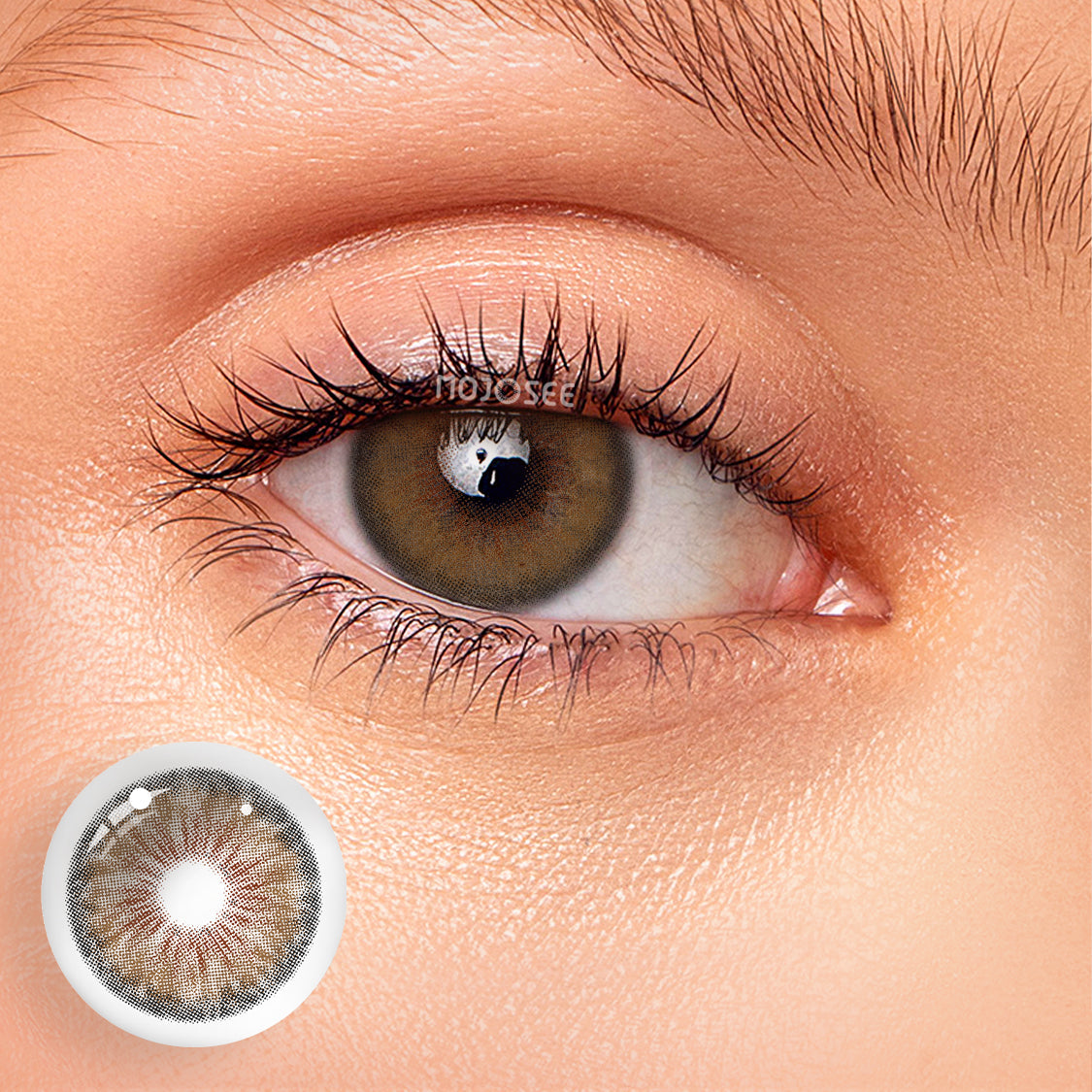
A solid, fully opaque single color reads doll-like because real irises are not one color: they have a darker outer ring, a textured mid-field, and warmth around the pupil. Well-designed lenses copy that anatomy — a printed limbal ring for definition, the main shade in the middle, and a warm honey inner ring that blends into your own brown where the print fades at the pupil hole. That inner blend is the entire trick: your natural color participates at the center, so the transition looks organic instead of pasted on. Our pattern anatomy guide breaks down each layer with examples.
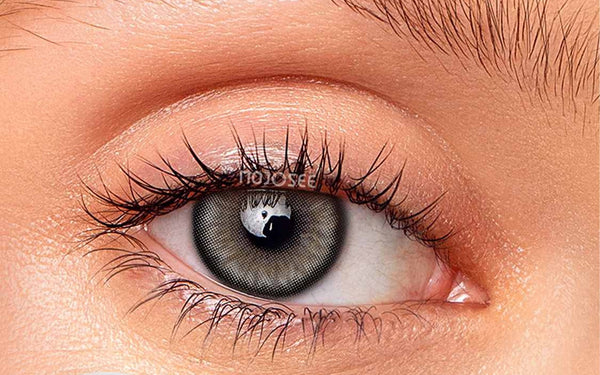
Cleopatra Gray is built on exactly that layering — an opaque base with a translucent center that lets your own color participate instead of burying it.

Read the product page like an engineer
Three signals tell you a lens will perform on dark eyes before you buy. One: the model photos — if every wearing shot is on pale blue eyes, the brand is telling you who the lens was designed for. (It is why we shoot ours on deep brown eyes.) Two: the words "opaque," "high-pigment" or a visible dot texture in the macro shot of the lens itself. Three: graphic diameter — the printed area of the lens. Two lenses can share a 14.2mm size while one prints 13.8mm of color and the other 13.2mm; the difference decides how much of your iris actually changes.
The honest difficulty ranking, color by color
Easiest: gray and hazel — they work with brown undertones instead of against them, which is why they are the standard first pair for dark eyes. Solid middle: green — high contrast but still natural-family, with the multi-tone builds carrying it well.

Needs full opacity: blue — the single most-returned color from sheer-tint buyers, and completely achievable with a dense print and warm inner ring. Hardest: pastels and light lavenders, which need near-total coverage and read boldest against deep skin tones when they land. Full shade-by-shade picks live in the dark eyes buying guide and the dark skin pairing guide.

The ten-second fingertip test
Already own a lens that underperformed? Balance it on a dry fingertip and hold it over something dark — a black sleeve works. If your skin or the fabric shows through the colored zone, that is a translucent tint, and your iris will show through it exactly the same way. An opaque print stays its own color over any background. Run the same logic when shopping: macro photos where the pattern looks dense and dotted over a dark backdrop are the honest ones; colors floating on white backgrounds tell you nothing about coverage.
FAQ
Do colored contacts work on very dark or black-brown eyes?
Yes — opaque printed lenses cover the iris rather than filtering it, so they display true color on the darkest natural eyes. Sheer enhancement tints are the ones that fail.
Which color looks most natural on dark brown eyes?
Gray and hazel, because they cooperate with brown undertones. Multi-tone builds with a warm inner ring look the most believable at conversation distance.
Why did my last colored contacts look muddy?
They were almost certainly translucent enhancement tints: their dye mixed with your dark iris instead of covering it. Look for "opaque" or "high-pigment" on your next pair.
Does a bigger lens mean more color?
Not necessarily — check graphic diameter (the printed area) rather than total diameter. A 14.2mm lens with a 13.8mm print shows more color than a 14.5mm lens with a 13.2mm print.
Are opaque lenses less comfortable than clear ones?
The pigment is sealed inside the lens layers, so nothing about the print touches your eye. Comfort comes down to fit, material and wear habits — same as any soft lens.
Explore more: For Dark Eyes → · Gray → · Green →
You might also like
Picked to match this guide — every pair in stock now.
 Vika Tricolor Blue Colored Contact Lenses$21.98per pair (2 lenses)
 Polar Lights Blue Gray Prescription Colored $19.98per pair (2 lenses)
 Starry sky Gray Prescription Colored Contact$22.98per pair (2 lenses)
 Polar Lights Brown Prescription Colored Cont$21.98per pair (2 lenses)
Explore more: Colored Contacts for Dark Eyes →