







Colored Contacts for Men: First-Pair Guide (2026)
First colored contacts for men: compare subtle and bold looks for everyday life, dates and photos. Choose by eye color, lens details and your occasion.

First-pair guide · Updated September 2026
For your first colored contacts, choose the amount of change before choosing the color: subtle, clearly noticeable, or intentionally bold. Compare the exact lens on an eye color similar to yours, check its available options, and use professional fitting advice. A men's product page is a styling entry point, not evidence of a different anatomical fit.
You might want a small change for everyday life, a glasses-free look in holiday photos, or a different eye color for a shoot. Those are different needs. This guide helps you choose a direction without promising that a particular shade makes everyone look better or that nobody will notice.

Why buy colored contacts in the first place?
Colored contacts are an optional styling choice. If you already use contacts for vision correction, you may want to explore whether a professionally fitted colored option also gives you the appearance you want. If your vision does not need correction, a zero-power lens still needs an appropriate fit; it is not simply an accessory that fits everyone.
Some shoppers want a low-key change that works without makeup. Others want a noticeable eye color in portraits, on stage, or with a particular outfit. Start by deciding whether the result needs to work in a normal conversation, on camera, or both. Do not buy a multi-pair offer just because it exists if you have not found a suitable first lens.
What style makes sense for a first pair?
A subtle change for everyday life
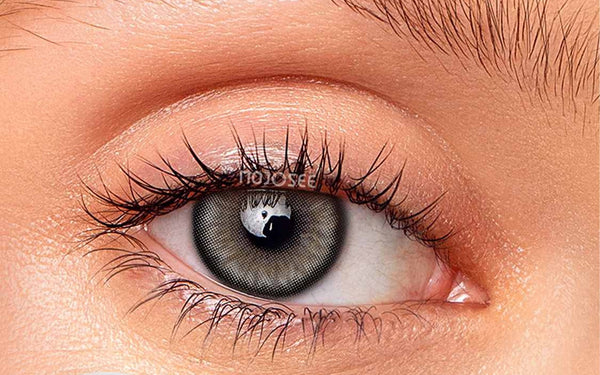
If you want a smaller change, begin by comparing shades close to your original iris color. On brown eyes, brown and hazel are useful families to compare. Look at the transition around the pupil, the outer ring and the printed pattern in a full-face image—not only a tightly cropped eye photo. A soft-looking image is not a guarantee that the lens will look the same on you.
A visible color change
If you want people to see a difference, compare gray, green or blue-gray alongside brown and hazel. A lens can be deliberately noticeable without being a character design. Compare products under similar lighting rather than assuming every gray is subtler than every blue. The exact print matters.
A character or special-effect look
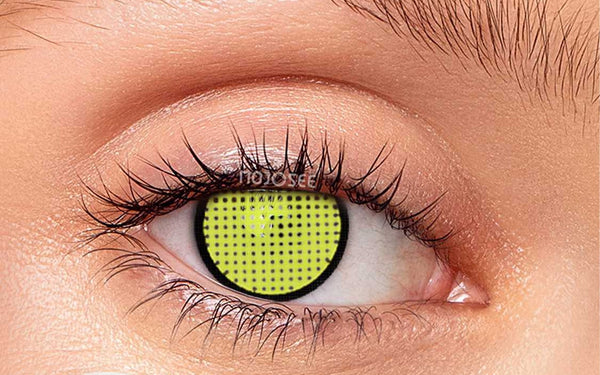
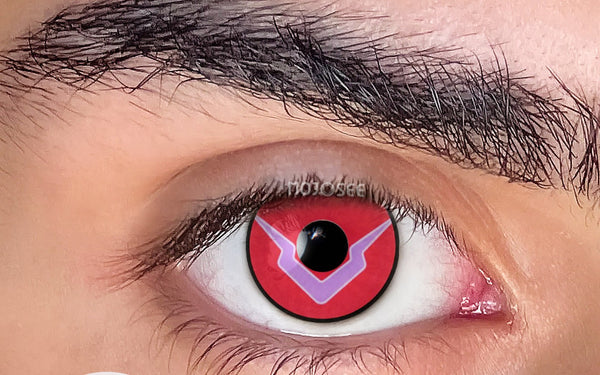
For a costume or character, choose by the visual pattern you need. Keep that shopping path separate from everyday natural-color browsing: see crazy and special-effect contacts for men. A bold pattern is not a reason to skip fitting, product instructions or a trial before the event.
Three deliberately bold effects
These are costume effects, not everyday natural-color recommendations. Choose the required pattern first, then verify product instructions and suitability before the event.
 Cat Eye Green Colored Contact Lenses for Men – Green Slit Pupil
 Blue Mesh Colored Contact Lenses for Men – Blue Grid Screen Eye
 Crimson Dragon Slit Pupil Colored Contact Lenses for Men – Red Dragon Eye
How does your starting eye color change the decision?
Dark brown eyes: ask two separate questions: will the shade create the change you want, and will the printed pattern look right at conversation distance? A color name alone cannot answer either. Compare brown versus hazel on dark eyes or gray, blue and green on brown eyes.
Light brown, hazel, green or blue eyes: do not use a dark-eye model as a prediction of your result. Look for the same product on a similar starting iris, including the center of the lens and its edge. If that comparison is unavailable, treat the result as uncertain.
Deep skin and dark eyes are not the same thing. Skin tone helps you judge the full-face appearance; starting iris color is a separate comparison. The dark-skin color guide covers both natural and noticeable looks for men and women without assigning a compulsory palette.
Choose by occasion: work, dates, travel and photos
Everyday wear or work, without makeup
Use an ordinary full-face photo as your reference. Compare the lens with your usual clothes and grooming, not a studio portrait with different lighting and heavy editing. If being noticed would make you uncomfortable, remember that no colored lens can promise invisibility.
Everyday brown, hazel and soft gray to compare
Use these as lower-contrast starting points. Compare each exact lens on an iris color like yours; placement here is not a fit or invisibility guarantee.
 Soft Brown Contact Lenses for Men - Almond Murmur
 Halo Hazel Colored Contact Lenses for Men
 Natural Silver Gray Contact Lenses for Men - Soft Rim Everyday
A date or an important social occasion
Choose the degree of change you are comfortable with at close range. A date is not a reason to choose an unfamiliar lens at the last minute. Plan a separate trial and keep a familiar backup option; do not make the success of the evening depend on nobody realizing you wear contacts.
Close-range color choices to compare
These three move from hazel to green and defined gray. Decide how visible you want the change to be at conversation distance.
 Cleopatra Hazel Prescription Colored Contact Lenses for Men
 Forest Fantasy Green Colored Contact Lenses for Men
 Graphite Gray Contact Lenses for Men - Night-Out Definition
Vacation photos when you normally wear glasses
First separate your vision needs from the styling choice. Check whether the exact colored lens has the options you need, then compare how it looks both in person and in photographs. Leave time before departure for fitting, delivery and practice. If it cannot be arranged, use your familiar fitted contacts or glasses rather than an approximate lens option.
Blue and silver-gray options for travel photos
Compare the same product in daylight, indoor light and a full-face photo. Check the exact power and fitting details before using any colored lens for vision.
 Hera Blue Colored Contact Lenses for Men
 High-Contrast Silver Gray Contact Lenses for Men - Evening Photos
 Blue-Gray Contact Lenses for Men - Defined Iris, Antarctic Blue
A wedding, portraits, video calls or content shoot
Check the look under the lighting and camera conditions you will actually use. A daylight eye close-up cannot establish what the lens looks like in an indoor full-face portrait. For a major event, have an alternative ready; the first wear should not be during the event itself.
Read these details before buying
- Check the exact product, power options for each eye, pack contents and replacement instructions.
- Overall lens diameter and printed or graphic diameter describe different things. Neither a gender label nor a diameter range proves a lens is suitable for you.
- Do not assume the same power range or materials across the whole collection. If a required detail is missing, ask before ordering.
- In the United States, decorative contacts require a valid prescription even when they do not correct vision. Follow an eye-care professional's fitting advice and the product instructions.
Safety reference: FDA guidance on colored and decorative contact lenses. This is not a claim of FDA clearance for any Mojosee product. For wear and care, see the lens care guide.
A recorded styling example
The existing video below shows one recorded look. Lighting and individual eyes can change the result; it is not a guarantee for every wearer.
First-time questions, answered
Can men wear colored contacts without makeup?
Yes, makeup is not part of the lens fitting requirement. For the look you want, compare unfiltered full-face examples with styling similar to your own; makeup-free does not automatically mean undetectable.
What eye color will make me look more attractive?
There is no reliable universal shade. Decide whether you want lower contrast or a visible change, and compare the full-face result. A product should not promise a personality, masculinity or attractiveness outcome from an eye color.
Will people know I am wearing colored contacts?
They may. Lighting, viewing distance, the printed pattern and lens movement can change what people notice. Choose an effect you are comfortable wearing even if someone asks.
Are men's colored contacts different from regular colored contacts?
A men's page may present different styling or imagery. If the underlying lens is the same product, a second page does not create a different fit. Verify the exact product details rather than choosing a size from the gender label.
Should my first purchase be three pairs?
Not necessarily. Suitability and your desired effect come first. If you already have appropriate options to compare, check the current multi-buy rules before choosing the total quantity.
Found a suitable style?
Browse the men's collection for current lens options. For first-order savings and multi-buy instructions, see Mojosee's current offers; eligibility and the final amount are confirmed at checkout.
You might also like
Picked to match this guide — every pair in stock now.
 Muses Gray Colored Contact Lenses for Men$22.98per pair (2 lenses)
 Light Brown Colored Contact Lenses for Men$22.98per pair (2 lenses)
 Najia Blue Colored Contact Lenses for Men$22.98per pair (2 lenses)
 Gloomy Brown Colored Contact Lenses for Men$22.98per pair (2 lenses)
Explore more: Colored Contacts for Men → · Prescription-Ready Styles →