








Do Colored Contacts Expire? Shelf Life, Storage & When to Toss
Colored contacts expire twice: a printed date on the sealed vial, and a replacement cycle that starts the day you open it. How both work, plus storage rules and the toss-it-now signs.
Yes — colored contacts expire, twice. Every sealed lens has a printed expiry date, and once opened it starts a second, much shorter clock: its replacement cycle. Wearing a lens past either one is how comfortable lenses turn into irritated eyes. Here's how both clocks work, how storage changes things, and the signs a lens is done regardless of any date.
Clock one: the printed expiry date
The date stamped on the vial or blister is about the sterile packaging, not the lens material wearing out. Sealed and stored properly, the saline inside stays sterile until that date — typically a few years from manufacture. After it, sterility is no longer guaranteed, and an unopened lens should be discarded, not "rinsed and risked." Buying ahead for Halloween or a con is fine; just check the date covers the gap.
Clock two: the replacement cycle
Opening the vial starts the real countdown. A lens labeled daily, monthly, 6-month or yearly means that long from first opening — worn or not. A monthly lens opened on March 1 and worn twice is still done on April 1. The printed expiry date does not extend this, ever. The cycles and the reasoning behind them are covered in replacement cycles explained.
Storage: what actually matters
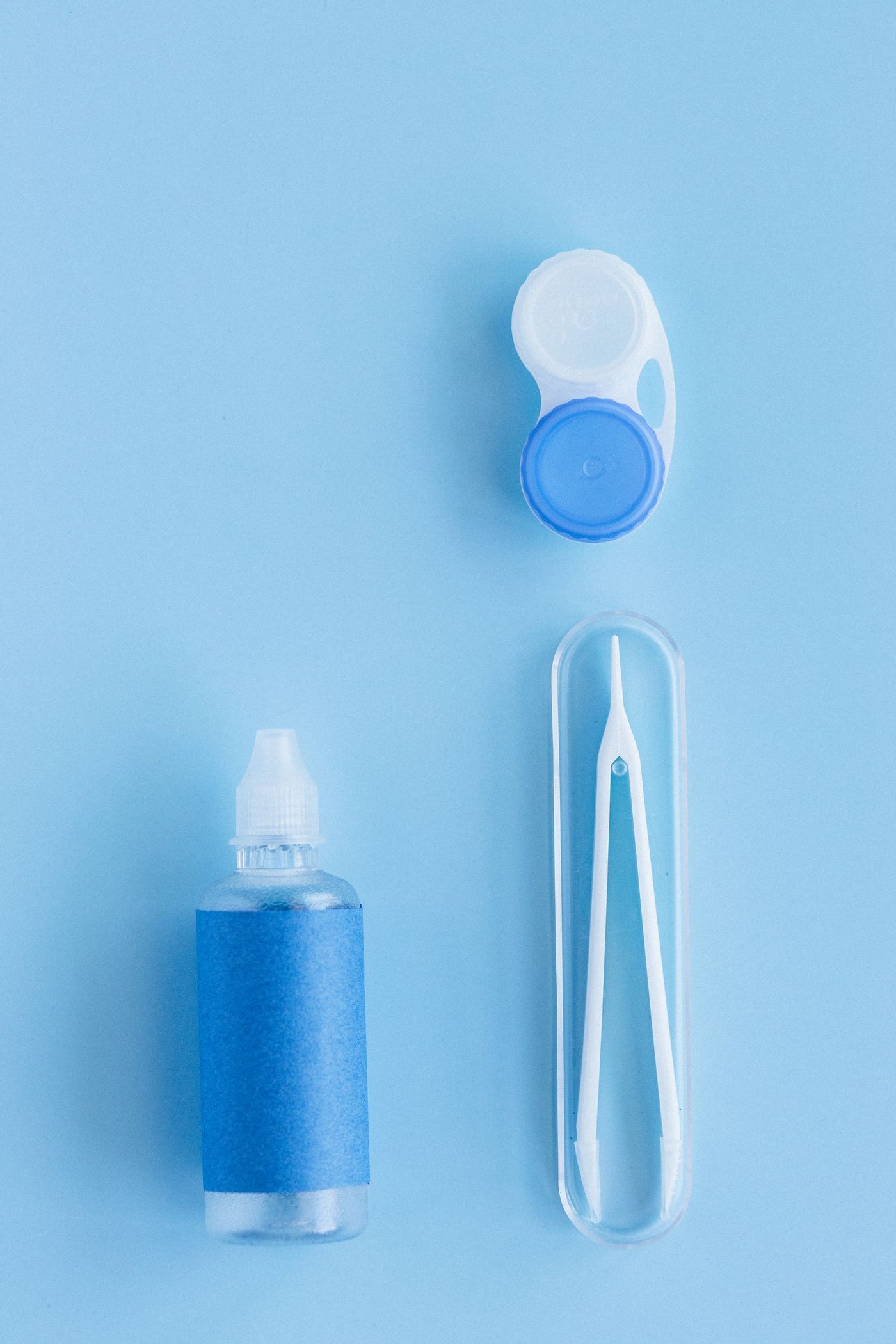
Unopened: room temperature, away from direct sun and heat. Don't freeze them, don't leave them in a hot car. Opened: store in fresh multipurpose solution in a clean case — and refresh the solution if the lenses sit unworn for more than a few days. Solution left standing for weeks stops disinfecting. Replace the case itself every few months; a fresh one like the MOJO lens case costs less than any eye problem it prevents.
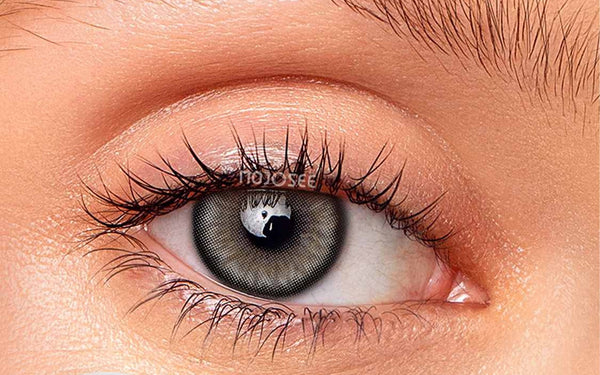
The other half of the equation is starting from a lens built for the full cycle: a yearly pair like Athena Sugar Gray is engineered for twelve months of the storage discipline above — the printed date only holds if the case habits do.

When to toss, whatever the date says
Discard a lens immediately if it's torn or nicked at the edge, feels dry or gritty after cleaning, looks cloudy or has deposits that won't rinse off, or has dried out completely — a rehydrated dried lens is never safe to wear. Discomfort that persists after re-cleaning is the lens telling you it's finished. When in doubt, out. The wider basics live in our safety guide.
How to read the numbers on your vial
Every legitimate lens vial or blister carries two dates that people constantly confuse. EXP (expiry) is about the sealed, unopened package: the sterile solution inside is guaranteed until that date, often several years out. A sealed lens two years before its EXP is factory-fresh. The replacement cycle — yearly, monthly, daily — starts ticking only when you break the seal, and it doesn't pause on days you don't wear them, because the clock is about the lens material aging in and out of solution, not hours on the eye. So a "yearly" lens opened in January is done next January even if you wore it ten times. Two more marks worth knowing: the LOT number (which batch it came from — what a seller checks if you report a problem) and BC/DIA (fit specs, unrelated to freshness). If a vial is missing the EXP or LOT entirely, that's not a lens to put in your eye — that's the counterfeit tell covered in the quality guide.
The two dates, side by side
| Printed expiry | Replacement cycle | |
|---|---|---|
| What it measures | How long the sealed, sterile lens stays good on a shelf | How long the lens is good once opened |
| Where it is | On the seal of each blister or vial | On the box and the product page |
| Typical length | Years | A day, a month, or a year |
| Starts | At manufacture | The moment the seal breaks |
| Which wins | The earlier one, always. A yearly lens with two years on the seal is still retired twelve months after opening. | |
Why a sealed lens expires at all
A sealed lens sits in a small volume of sterile solution. Over years the solution's chemistry drifts, the seal's integrity is not guaranteed forever, and the lens material itself can change shape slightly. The printed date is the manufacturer's guarantee that none of that has happened yet; past it, the lens may well be fine, but nobody is standing behind it — and the thing you would be risking to find out is an eye. The American Academy of Ophthalmology's care guidance treats expiry dates as hard limits for the same reason it treats replacement cycles that way.
Reading the numbers on a vial
A vial or blister carries a batch number, an expiry date, the power, the diameter, and sometimes the base curve. The expiry is the shelf-life clock and is usually printed as a month and year; the lens is good until the end of that month, sealed. The power and diameter should match your order and your prescription — check them before opening, because an opened lens cannot be exchanged. The batch number is what you quote to a seller if something is wrong. Nothing on the vial tells you the replacement cycle; that is on the box and the product page, and it starts when you break the seal.
What to do with lenses that have expired sealed
Bin them. Not because they are certainly unsafe, but because the guarantee that made them safe has lapsed and the thing you would risk to find out is an eye. The cost of a replacement pair is a fraction of the cost of the appointment an infection needs. If you regularly find expired sealed lenses in a drawer, that is a buying-pattern signal: order fewer pairs, more often, or switch the occasional pairs to dailies whose clock never starts until you open them.
Heat, light and the summer car
The one storage condition that ages a sealed lens faster than its date is heat. A box left in a car in summer, on a windowsill, or in a bathroom that steams daily can reach temperatures the packaging was never rated for, and the solution inside changes before the printed date arrives. Room temperature, out of direct sun, is the whole rule; a drawer is ideal.
Colored lenses specifically
The pigment is sealed inside the lens and does not degrade on its own, so a colored lens's shelf life is the same as a clear one's. What is different is what "worn out" looks like once opened: a clear lens goes hazy, a printed lens goes patchy — the print breaks into dots or fades unevenly — and a print that is going means the lens around it is thinning too. A colored lens stored in a case for a year, whatever its cycle, is usually visibly faded by then; that fade is the lens telling you it is finished.
Storage that does not shorten the dates
Sealed lenses: room temperature, out of direct sun, not in a car in summer or a bathroom that steams — heat is the one thing that ages a sealed lens faster than the date allows. Opened lenses: fresh multipurpose solution every time, never topped up; a case rinsed with solution and left open to dry daily and replaced every three months; never water. A lens stored properly reaches its cycle; a lens stored in old solution in an old case is finished long before it.
A lens-by-lens timeline you can actually follow
Daily disposable: sealed, good until the printed date; opened, good until bedtime. Nothing to store, nothing to track. Yearly natural: sealed, good until the printed date; opened, twelve months from that day, with fresh solution and a new case every three months along the way. Write the opening date on the box. Costume pair: same as yearly, but in practice a season — a lens opened for one Halloween and worn again the next has been in service thirteen months, and the print will usually have told you first. If you cannot remember when a pair was opened, that is the answer: it is done.
The one habit that removes the whole question
Buy for the occasions you actually have, not the ones you might. A drawer of sealed pairs bought "in case" is where expired lenses come from, and it is the most expensive way to wear colour. Two pairs at a time — a natural and an occasion — replaced when they are used up, keeps every clock in view and the drawer empty.
FAQ
Can I wear colored contacts after the expiry date if they're sealed?
No. The date marks how long the sealed packaging guarantees sterility. Past it, the solution inside may no longer be sterile, and there's no way to verify by looking.
How long do colored contacts last once opened?
Exactly their replacement cycle — daily, monthly, 6-month or yearly from the day you open them, regardless of how many times they were actually worn.
My lenses were stored in solution for two months. Are they still good?
If they're within their replacement cycle, clean them and soak in fresh solution overnight before wearing. If the solution was never refreshed in that time, or the lenses are past cycle, discard them.
Do lens cases expire too?
Effectively yes — replace your case every one to three months. Cases accumulate biofilm that cleaning doesn't fully remove, and a contaminated case undoes everything else you do right.
Can I use expired contact solution if the bottle looks fine?
No — the expiry on solution is about its disinfecting chemistry, not its appearance. Past date, the preservatives degrade and it stops killing microbes reliably while looking perfectly clear. An open bottle also has its own clock: most manufacturers say discard 90 days after opening regardless of the printed date. Solution is the cheapest part of the whole routine; it's the last place to economize.
My lenses were sealed but stored in a hot car — still good?
Heat is the one storage condition that ages sealed lenses early: high temperatures degrade both the solution and the lens material even with the seal intact. A summer in a glovebox can leave a "valid until 2028" lens dried, warped or swimming in cloudy solution. Store sealed lenses at room temperature, and if a vial arrives or turns cloudy, discolored or low on liquid, discard it — the date only holds if the storage did.
Does the pigment in colored contacts expire?
No — it is sealed inside the lens and does not degrade on its own, so a colored lens has the same shelf life as a clear one. Once opened, the sign of a worn-out colored lens is a patchy or fading print rather than haze.
Which matters more, the expiry date or the replacement cycle?
Whichever comes first. The expiry date governs a sealed lens; the replacement cycle starts the moment the seal breaks. A yearly lens with two years left on the seal is still retired twelve months after opening.
You might also like
Picked to match this guide — every pair in stock now.
 Vika Tricolor Blue Colored Contact Lenses$21.98per pair (2 lenses)
 Polar Lights Blue Gray Prescription Colored $19.98per pair (2 lenses)
 Starry sky Gray Prescription Colored Contact$22.98per pair (2 lenses)
 Polar Lights Brown Prescription Colored Cont$21.98per pair (2 lenses)
Explore more: Colored Contacts for Dark Eyes →