









Do Colored Contacts Damage or Permanently Change Your Eyes?
The two biggest fears, answered straight: colored contacts don't permanently change your eye color, and they don't harm healthy eyes used correctly. The real risks are all about habits.
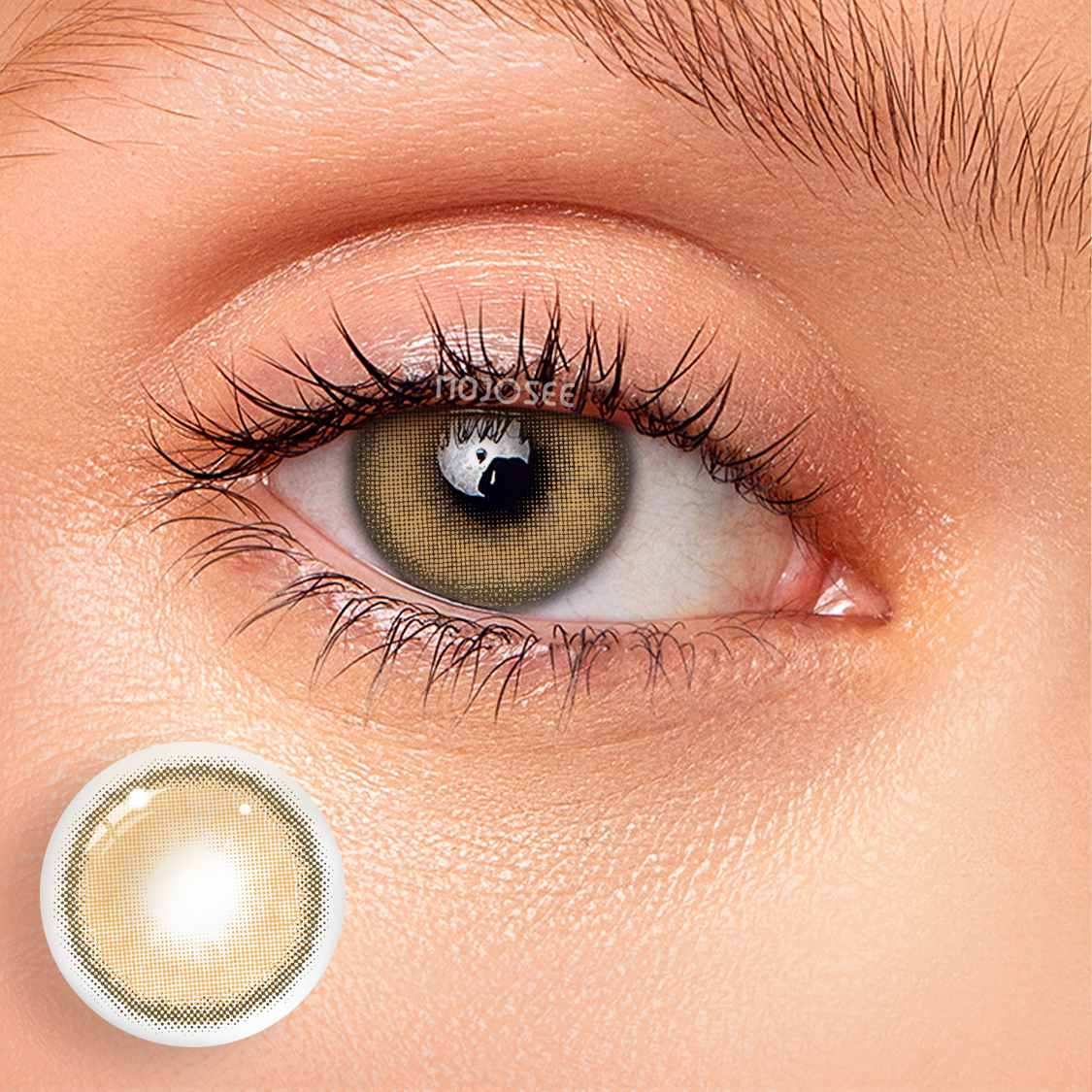
No — colored contacts cannot permanently change your eye color, and worn correctly they don't damage healthy eyes either. Two worries drive a huge share of colored-contact searches: "will they change my eye color forever?" and "will they damage my eyes?" Both deserve a straight answer, because the myths cause needless fear while the real risks — which are entirely about how you use them — get overlooked. Here's the honest picture.
Myth 1: they permanently change your eye color
They don't. A colored contact sits on your eye and comes off with it — your iris underneath is completely unchanged, the same color it always was. Take the lens out and your natural color is exactly there. There is no lens, tint, or wear duration that alters your actual iris pigment; that's simply not how the eye or the lens works. (Procedures that permanently change eye color exist and are a different, riskier medical topic entirely — cosmetic lenses are the safe, reversible, take-it-off-anytime option.)

Myth 2: they damage healthy eyes just by wearing them
Used correctly, no. Colored contacts are the same class of medical device as clear contacts — millions wear lenses daily for decades without damage. The pigment in a quality lens is sealed inside the material, never touching your eye (the sandwiching explained in the quality guide). A healthy eye in a well-made, well-maintained lens is not being harmed.
That's the quiet confidence of a well-made pair — color that reads completely yours while it's in.
DNA Taylor Green is what that confidence looks like in practice: a green built to read as your own color while it is in, and gone entirely when it is out.

The real risks — all of them behavioral
Damage from lenses is almost always about use, not existence. The actual risk list: sleeping in them (oxygen starvation, infection — why), water contact (Acanthamoeba — why), over-wearing past the replacement cycle (cycles), poor hygiene (dirty hands, old solution), sharing lenses, and cheap surface-dyed lenses where pigment can rub the cornea. Every one of these is a choice you control — which means safety is almost entirely in your hands, not in the lens itself.
What "damage" actually looks like (and how to avoid it)
When lenses do harm eyes, it's usually corneal abrasion (a scratch, often from a torn or dirty lens), infection (from water, sleeping, or poor hygiene), or oxygen-related stress (from over-wear). All three are prevented by the same short list: fresh lenses within their cycle, clean hands and solution, never sleep or swim in them, and buy from sources with verifiable specs. Follow that and the risk drops to roughly the same as clear contacts — very low. The full framework is in the safety guide.
When to see a doctor
Lenses are safe, but eyes still deserve attention: any pain, persistent redness, light sensitivity, discharge, or vision change means lenses out and an eye doctor promptly. These are signs to act on regardless of how careful you've been — catching a problem early is what keeps "irritation" from becoming "damage." Routine eye check-ups if you wear lenses often are just good practice.
Where the "permanent change" myth comes from
The fear is worth addressing directly, because it comes from conflating three very different things. Cosmetic contact lenses (what we sell) sit on the eye and come off with it — zero permanent effect, full stop. Iris-implant and keratopigmentation procedures are surgical, permanent, and carry real medical risk — these are what "permanently change eye color" actually refers to, and they're an entirely separate topic from lenses. Genuine permanent changes to your natural eye color are almost always medical warning signs (certain glaucoma drops darkening the iris, or a new color difference between eyes signaling a condition) — not something a cosmetic lens can cause. People blur these together and end up fearing that a costume lens might permanently alter their eyes; it cannot, by simple physics — it's a removable object resting on the surface. If your natural eye color ever actually changes and stays changed, that's a reason to see an eye doctor about what's underneath, and it has nothing to do with any lens you've worn. Lenses are the safe, reversible, take-them-out-anytime option in this whole landscape.
The reversibility is the entire fun: a brand-new eye color by day, your own again by dinner.
Fantastic Baby Kitty Pink makes the point louder — an opaque pink nobody is born with, and still nothing that outlasts the evening.

What the regulators actually say about damage
Neither the FDA nor the American Academy of Ophthalmology says colored lenses damage eyes by being colored. The FDA's decorative lens page attributes the injuries it has documented — corneal scratches, infection, and in the worst cases loss of sight — to lenses that were never fitted, bought without a prescription, or handled badly. The AAO's guidance makes the same point clinically: a lens that does not fit can sit too tightly and starve the cornea of oxygen, and that mechanism, not pigment, is behind most of the damage. Both bodies treat a fitted, prescribed, properly handled colored lens as an ordinary soft lens with a print.
Why the pigment cannot reach your iris
Your iris sits behind the cornea, inside the eye, bathed in aqueous fluid. A contact lens sits on the outside of the cornea, on a tear film. There is a clear, living layer of tissue between the print and the iris at all times, and pigment sealed inside a hydrogel lens does not migrate through it. The colour you see is the print reflecting light from in front of your iris; when the lens comes out, the light hits your own iris again and the colour is gone. Anyone who has removed a lens knows this from experience; the myth survives because "permanent" is a more interesting story than "temporary".
What can change, and for how long
| Change | Cause | Lasts | Serious? |
|---|---|---|---|
| Dryness, mild redness after a long wear | Reduced oxygen under a dense print | Hours | No — a signal to shorten sessions |
| Slightly blurred vision after removal | Corneal swelling from overwear | Hours to a day | Not if it clears; a warning if it recurs |
| Scratch on the cornea | A damaged lens edge, a fingernail, sand under a lens | Days with treatment | Yes — see someone the same day |
| Infection (keratitis) | Water, overnight wear, shared lenses, old cases | Weeks; can scar | Yes — the one that becomes permanent |
| Eye colour change | — | Never | Does not happen |
Every row that can become permanent is a hygiene or handling failure. None of them is "wearing a colored lens".
Where the "permanent change" idea actually comes from
Three real things get folded into one myth. Iris colour can genuinely change with certain glaucoma medications, which darken the iris over months — a drug effect, not a lens effect, and one your prescriber would discuss. Some cosmetic surgeries claim to change eye colour, with serious documented risks, and get reported alongside lenses in the same articles. And a lens worn far too long can leave the cornea swollen and the eye looking different for a day, which people read as change. None of those is a colored contact lens doing anything to the iris, and the last one is a signal to shorten wear, not a change to the eye.
Wearing colour a lot: what actually happens over years
A person who wears colored lenses most days for years, fitted and handled properly, has the same eyes at the end as a person who wore clear lenses for the same time — which is to say, ordinary lens-wearer eyes, with slightly more sensitivity to dryness than a non-wearer and no other change. The people who do not end that way are the ones who slept in lenses, rinsed them in water, or kept a case for a year, and their problem was never the colour.
Children and teenagers
The myth surfaces most around teenagers borrowing costume lenses. The honest concern there is not permanence; it is that a first-time wearer with no fitting, sharing a lens, is running every handling risk at once. A fitted teenager with their own prescribed pair and an adult checking the routine is at ordinary lens-wearer risk. An unfitted one sharing a pair from a costume shop is the case the FDA warnings are written about.
The habits that make the first four rows disappear
Fitted and prescribed, including for plano. Never water — not for rinsing, not for storage. Never overnight. Never shared. Fresh multipurpose solution every time and a new case every three months. Sessions shortened for dense prints, and the lens out at the first discomfort that gets worse rather than better. That is the whole list, and it is the same list as for a clear lens, applied with a little less margin.
The plano trap
The wearers most likely to run the real risks on this page are not daily prescription wearers; they are occasional plano wearers who bought a costume pair without a fitting and have never been shown how to handle a lens. They are more likely to rinse a lens under a tap, more likely to sleep in it after a late night, and more likely to share it. If that describes you, the fix is not to avoid colored lenses — it is to get fitted once, learn the routine once, and buy a daily disposable for the occasions so there is nothing to store. Every permanent outcome in the table above is preventable with those three things.
What to tell a worried parent or partner
The honest sentence is: a fitted, prescribed colored lens that is never rinsed in water, never slept in, and never shared is as safe as a clear one, and cannot change the colour of an eye. The unsafe version is the unfitted pair from a costume shop, and the risk there is infection, not colour. If the worry is permanence, that is the myth; if the worry is infection, that is real and it has a short checklist.
FAQ
Do colored contacts permanently change your eye color?
No. They sit on top of your iris and come off with the lens — your natural eye color underneath is completely unchanged. The effect is 100% reversible; take them out and you're back to normal instantly.
Can colored contacts damage your eyes?
Not when used correctly — they're the same device class as clear contacts. Damage comes from behaviors: sleeping in them, water contact, over-wear, poor hygiene, sharing, or cheap surface-dyed lenses. Avoid those and risk is very low.
Will wearing colored contacts a lot ruin my natural eyes?
Frequent wear doesn't ruin healthy eyes if you follow the rules — daily wear limits, fresh lenses on cycle, clean hygiene, no sleeping or swimming in them. Over-wearing a single pair or sleeping in lenses is what causes problems, not frequency itself.
Are colored contacts as safe as regular contacts?
Yes, when quality and habits match — sealed pigment, verifiable sourcing, and the same care routine. A well-made colored lens is no riskier than a clear one; a cheap surface-dyed one is the exception to avoid.
Explore more: Blue Contacts → · Green Contacts → · Cosplay Contacts →
Can colored contacts change my eye colour permanently?
No. The pigment is sealed inside a lens that sits on the outside of the cornea; the iris is inside the eye behind a layer of living tissue, and nothing migrates across it. Remove the lens and your own colour is back.
What is the one lens problem that can be permanent?
Infection — almost always from water, overnight wear, sharing, or an old case — which can scar the cornea. It is a handling failure, not a colored-lens failure, and it is preventable with the same routine a clear lens needs.
You might also like
Picked to match this guide — every pair in stock now.
 Vika Tricolor Blue Colored Contact Lenses$21.98per pair (2 lenses)
 Polar Lights Blue Gray Prescription Colored $19.98per pair (2 lenses)
 Starry sky Gray Prescription Colored Contact$22.98per pair (2 lenses)
 Polar Lights Brown Prescription Colored Cont$21.98per pair (2 lenses)
Explore more: Colored Contacts for Dark Eyes →


