









Colored Contacts for Small or Hooded Eyes: Sizing That Works
The 15mm haul-video lens looks like a sticker on smaller eyes — aperture math explains why. The sizes that work (14.0–14.2), patterns that flatter, and hooded-lid tricks.
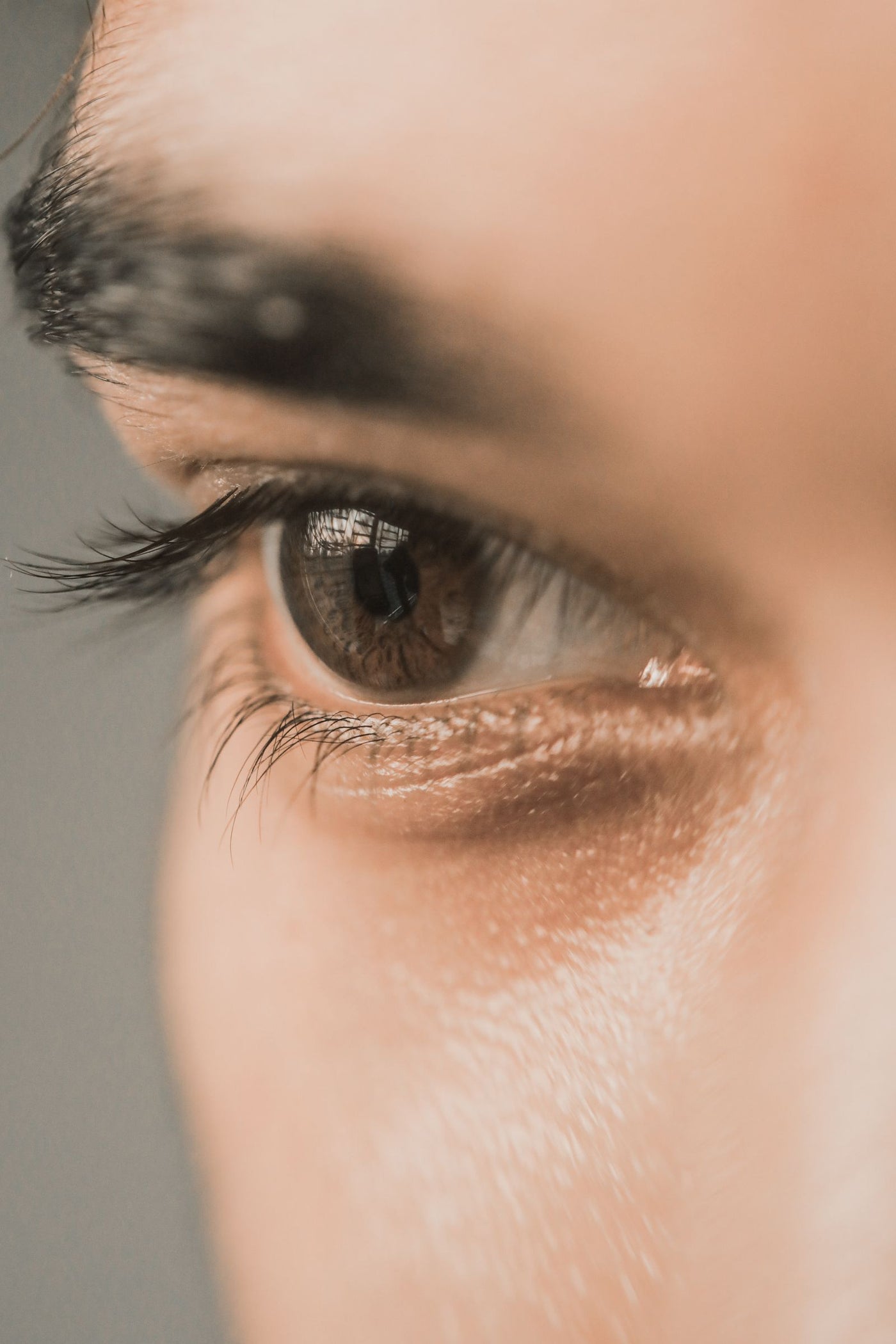
Scroll any lens haul video and the models all seem to have huge doe eyes — then a 15mm "must-have" arrives on a smaller or hooded eye and looks like a cartoon sticker. Sizing is the difference, and small or hooded eyes don't need special lenses; they need the right numbers and one or two placement tricks. Here's the working guide.
Start With the Visual Size You Want
Less enlargement: stay at 14.0 mm — filter by diameter in the diameter collection. More visible enlargement: step up to 14.2 mm. The diameter describes the lens, not whether it fits your eye; fitting measurements and professional advice still matter.
Use the 14.0 vs 14.2 vs 14.5 mm guide to compare visual effect, then confirm the exact specifications and on-eye photos on the individual product page.
The aperture math nobody shows you
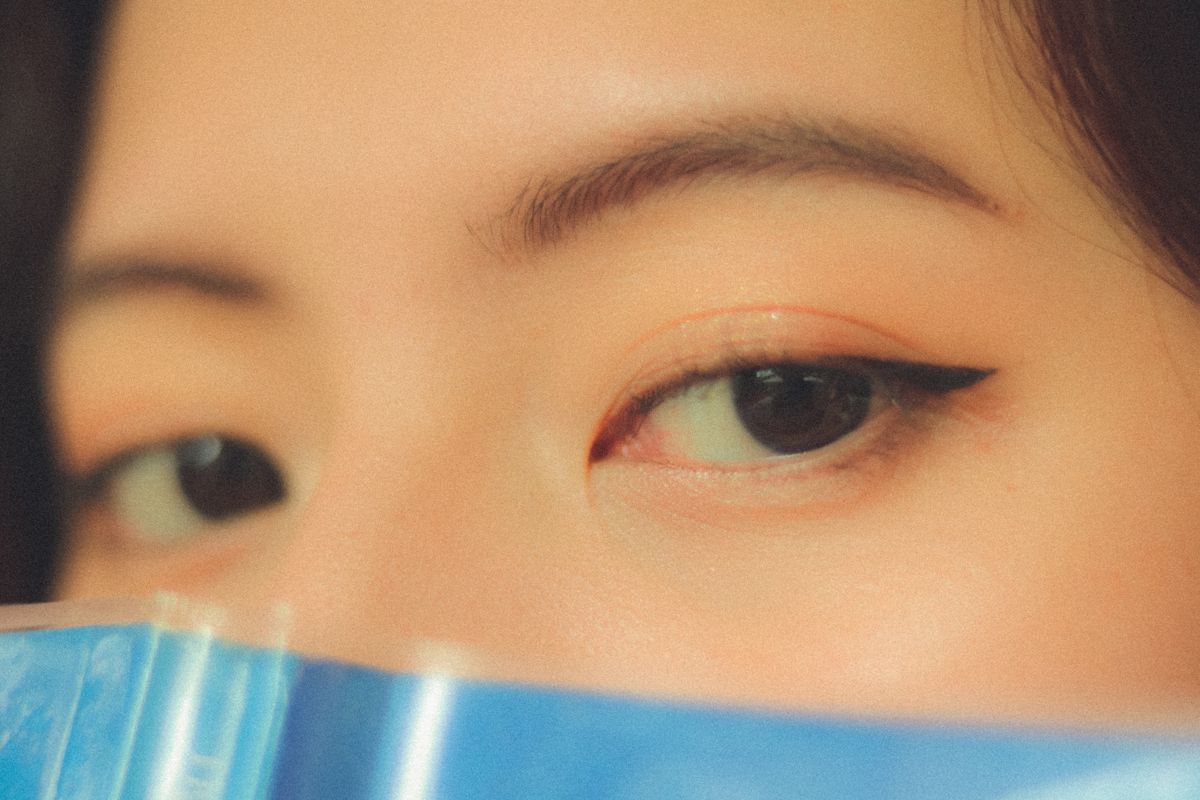
What matters isn't your eyeball (everyone's cornea is around 11–12mm) — it's your visible aperture: how much eye shows between your lids. On wide-open eyes, a 14.5mm lens still leaves white space on both sides; on smaller apertures or hooded lids, the same lens can span lash line to lash line, which is exactly the "doll sticker" effect. The lens didn't change; the frame around it did.
The sizes that work
14.0–14.2 mm is a useful visual starting range when you want less enlargement on a smaller visible eye opening. Diameter affects appearance, but it does not establish whether a lens fits your eye. Compare on-eye photos, check each product's specifications and use professional fitting advice. Treat 14.5 mm and larger as stronger visual enlargement—not a universal fit rule. The complete size rundown with comparisons is in the diameter guide.
Pattern choices that flatter smaller eyes
Defined limbal ring, lighter center: a dark outer ring creates enlargement optically without physical size — you get the bigger-eye read from a 14.2mm lens. Multi-tone designs like Pure Hazel or Athena Sugar Gray do this well. Radial texture over flat color: flat opaque discs emphasize lens edges; iris-like texture hides them. Brightness over size: a lighter color (honey, light gray) opens the eye area more effectively than extra millimeters ever will — see how colors behave on deep irises in the dark eyes guide.

Hooded eyes: two specifics
Hooded lids don't change lens fit — the lens sits on the cornea, under the hood, and wears exactly the same. What changes: the visible band of iris is shorter, so detailed patterns get cropped by the lid — the pattern money is in the lower two-thirds of the lens, another vote for simple multi-tone designs over elaborate prints. And insertion angle: with less vertical opening, come in from below while looking up rather than head-on — the technique section of the insertion guide covers lid control that makes this easy.
New York N Gray suits that geometry well — a cool, natural-reading gray at a diameter that widens the eye without crowding a hooded lid.

Makeup that multiplies the effect
Lens and liner work as a system on smaller eyes: keep liner thin and lift it at the outer corner (thick liner all the way around shrinks the visible aperture and crowds the lens), curl lashes hard and skip heavy bottom mascara, and put a light shimmer point at the inner corner — it extends the bright zone the lens creates. Full lens-plus-makeup workflow: the makeup order guide.
Insertion tricks specifically for hooded and monolid eyes
The generic insertion advice assumes a wide-open eye; smaller apertures and hooded lids need a few adjustments that make it genuinely easy. Anchor the upper lid through the hood. Instead of grabbing lashes, press your fingertip flat against the lid just below the brow bone and lift firmly upward — this clears the hood out of the way, which lashes-only grip can't do. Come in from below, looking up. With less vertical opening, a head-on approach triggers more blinking; place the lens on the lower white while looking up, then release and look down. Use the mirror on the counter, not in front of your face. Looking slightly down into a flat mirror opens a hooded eye more than looking straight ahead. Don't fight a watering eye — pause and breathe. Hooded eyes water more during the learning phase; a slow exhale as you place the lens calms the reflex. None of this is about anatomy being a barrier — hooded and monolid eyes wear lenses exactly as comfortably once they're in; it's purely the insertion angle that needs customizing. A week of practice with these adjustments and it's a five-second job like anyone else's.
The sizes, with what is actually in stock
For a smaller or hooded eye the diameter decision is the whole decision, so here is the catalogue by size at the time of writing. "Share with powers" is the proportion of designs at that size with corrective powers; prices per pair, one order is two lenses.
| Size | On a smaller eye, reads as | In stock | Price per pair | Share with powers |
|---|---|---|---|---|
| 14.0mm | your eye, in colour — the safe default | 99% | $8.88 – $34.98 | 18% |
| 14.2mm | a visible lift; the ceiling for most hooded eyes | 97% | $18.98 – $34.98 | 12% |
| 14.5mm | an enlargement the lid partly hides — photos only | 95% | $9.90 – $34.98 | 22% |
The catalogue is weighted toward 14.5mm, which is the size a smaller eye should avoid for everyday wear — so filter for 14.0 and 14.2mm before you look at colour. The same design often exists at two sizes under the same name.
Two pairs built for a smaller eye


Both are in-stock 14.0mm designs at the time of writing with a defined outer ring — the feature that gives a smaller iris a crisp edge instead of a washed one. The dark-eyes collection sorts the rest by availability; use the size line.
Why hooded lids make the ring matter more
A hooded lid covers the top of the iris, so the part of the lens people see is the lower two-thirds. A lens with no outer ring loses its edge exactly where the lid meets it and reads as a coloured smear; a lens with a defined ring keeps a crisp lower edge and the iris reads as round even when the top is hidden. That is why the ring is not an aesthetic choice on a hooded eye — it is the thing that keeps the eye looking like an eye.
Insertion on a hooded or smaller eye, step by step
- Lift the hood, not just the lid. Use the middle finger of your free hand to pull the brow and the hooded skin up together against the bone; pulling only the lash line leaves the hood in the way.
- Pull the lower lid down with the ring finger of the inserting hand, so the whole iris is exposed.
- Look up, not at the lens, and place it on the lower white rather than aiming for the iris; release the lower lid first, then the upper.
- Blink slowly and let it slide to centre. On a smaller eye a lens that is slightly off-centre shows a crescent at the edge instantly, so check in a mirror before you finish.
The first attempts run long. By the end of a week it is a thirty-second habit, and it is the same habit whether the lens is 14.0 or 14.2mm — which is one more reason not to buy 14.5mm for the practice.
The three sizes on a smaller eye, side by side
Put the same shade at 14.0, 14.2 and 14.5mm on a smaller or hooded eye and the difference is not subtle. At 14.0mm the iris keeps its own proportion to the visible white and the eye reads as itself in colour. At 14.2mm the iris fills slightly more of the aperture — a rested, brighter read that most hooded eyes can carry. At 14.5mm the iris fills most of the aperture, the visible white nearly disappears, and the hood clips the top of the print, so the eye reads as a dark, enlarged half-disc. That last read is the "doll's eye" people warn about, and on a smaller eye it arrives one size earlier than on a large one. Buy 14.0mm, and 14.2mm only when you have seen 14.0mm on your own eye.
Colour choices that suit a smaller eye
Size is the first decision; shade is the second, and it works differently on a smaller iris. A very dark print shrinks the visible iris further and reads as a smaller eye; a lighter shade with a defined outer ring does the opposite — the ring keeps the edge crisp and the lighter centre reads as a larger, brighter iris without any change in diameter. On a dark brown base that means a mid brown, a warm gray or a hazel one to two shades lighter than your own, not a black-rimmed dark brown and not a pale gray that loses its edge under the hood. The two cards above are chosen on exactly that basis.
Makeup that works with the lens instead of against it
On a hooded eye, heavy liner on the upper lid disappears under the fold and drags the eye down; the lens's ring is doing the framing job liner would have done. Keep the upper lid soft, put the definition on the lash line and the outer lower lid, and curl the lashes — that opens the aperture so more of the lens shows. Skip a dark lower liner entirely: it shrinks the visible iris and undoes what the lens is for.
Ordering, and the practice week
We ship standard only — 14 to 20 days door to door, with tracking issued about five days after you order — so for a specific date count backwards three weeks and add a week of practice. On a hooded or smaller eye the practice is not optional: the insertion is a different motion, and the centring that a larger eye forgives, a smaller one shows.
Powers, and the size line on your prescription
A meaningful share of designs at both natural sizes carry corrective powers, from 0.00 to -8.00, so a glasses-wearer with a smaller eye is not stuck with plano. Match the DIA line on your prescription to the product page first, then filter for power; the selector on each page is generated from stock and is the authority for that design. If your prescription says 14.0mm, that is the size for everyday wear — not the 14.5mm the photographs were shot in.
FAQ
What diameter contacts are best for small eyes?
There is no single best diameter for every small or hooded eye. Compare 14.0 and 14.2 mm for visual enlargement, then use the DIA and other fitting specifications with advice appropriate to your eyes.
Do enlarging circle lenses work on hooded eyes?
Hooded lids can hide part of a large printed pattern, which changes the visual proportion. This does not determine medical fit. Compare on-eye photos and consider a smaller visual diameter or a defined limbal ring if you want a less cropped effect.
Will colored contacts show if my eyes are small?
A printed colour can still be visible, but the amount of pattern seen depends on your iris, lid opening, fit and lighting. Product photos are a guide rather than a guarantee.
How do I put in contacts with hooded or monolid eyes?
Firm lid control matters more: pin the upper lashes against the brow bone (through the hood), pull the lower lid down, look up, and bring the lens in from below. It's technique, not anatomy — a week of practice levels the field.
What is the best contact lens diameter for small or hooded eyes?
14.0mm for everyday wear — it stops at the natural iris edge and the only thing that changes is colour. 14.2mm is the ceiling for most hooded eyes; 14.5mm is an enlargement the lid partly hides and belongs to photographs, not daily wear.
Do enlarging lenses make small eyes look bigger?
Less than the photographs suggest. A hooded lid hides the top of the lens, so the enlargement reads as a wider lower iris rather than a bigger eye, and at 14.5mm it can read as a doll's eye. A 14.2mm lens with a defined ring gives more of the effect people actually want.
You might also like
Picked to match this guide — every pair in stock now.
 Vika Tricolor Blue Colored Contact Lenses$21.98per pair (2 lenses)
 Polar Lights Blue Gray Prescription Colored $19.98per pair (2 lenses)
 Starry sky Gray Prescription Colored Contact$22.98per pair (2 lenses)
 Polar Lights Brown Prescription Colored Cont$21.98per pair (2 lenses)
Explore more: Colored Contacts for Dark Eyes →


