








Can You Wear Colored Contacts While Pregnant? What Changes and What Doesn't
Pregnancy changes a lot, including your eyes. Colored contacts are usually still fine — but dryness, fit and even your prescription can shift. Here's what to expect and when to give them a rest.
Pregnancy reshuffles your whole body's chemistry, and your eyes are on the list — which is why "can I still wear colored contacts while pregnant" is such a common search. The reassuring headline: for most people, yes. The useful detail: several things change, and knowing them keeps you comfortable instead of confused. (Nothing here is medical advice — your eye doctor and OB have the final word; this is the lay of the land.)
Why pregnancy affects your eyes at all
Hormonal shifts and fluid retention change the eye's surface and shape slightly. Three practical effects show up: more dryness (hormones reduce tear quality), slight fit or comfort changes (mild corneal swelling can make lenses feel different), and occasionally a temporary prescription shift. None of these are dangerous for lens wear; they just change how the lenses feel.
Dryness is the big one
Pregnancy dryness is the most common reason a comfortable lens suddenly isn't. It's not that colored contacts became unsafe — your tear film changed underneath them. The fixes are the standard ones, just needed more often: contact-safe rewetting drops, shorter wear windows, and a humidifier in dry rooms. The full playbook is in the dryness guide, and if dry days pile up, switching those days to fresh daily disposables often helps a lot.
Fit and vision may drift — don't over-correct
If your lenses feel slightly off or your vision shifts, resist the urge to immediately reorder a new power. Pregnancy-related changes are usually temporary and settle after birth (and after breastfeeding for some). Most eye doctors advise against finalizing a new prescription during pregnancy for exactly this reason. If you're choosing colored contacts with power, it's fine to keep your pre-pregnancy number and simply pause if things feel unstable — the vertex and power basics are in the prescription guide.
Hygiene matters a little more
The core rules don't change but deserve extra diligence: clean hands, fresh solution nightly, never sleep in them, never touch water (why). If your eyes are drier, they're marginally more prone to irritation, so a scrupulous routine pays off. Costume and big-diameter lenses cover more surface and dry faster — save those for short, special occasions rather than long days.
If you want the simplest version of that hygiene math, go daily-disposable for these months: a pair like the LA GIRL Green daily means a sterile lens every single wear, no case, no solution routine to keep honest.

When to just take a break
Give lenses a rest if your eyes are persistently dry, red or uncomfortable, or if vision feels unreliable — glasses for a stretch is a perfectly good answer, and colored contacts will be waiting after. And anything beyond ordinary dryness — pain, light sensitivity, sudden vision changes — is a same-day call to your eye doctor, pregnant or not (the general framework is in the safety guide).
Trimester by trimester — what tends to change when
Pregnancy eye changes aren't constant; they shift across the three trimesters, and knowing the pattern helps you anticipate rather than worry. First trimester: often little change, though early hormonal shifts and morning sickness dehydration can start the dryness some people notice. Second trimester: dryness and mild fit changes are most commonly reported here as fluid retention and hormones ramp up — the "my lenses feel different" phase for many. Third trimester: fluid retention peaks, so any corneal-shape and comfort changes are usually most noticeable now; some people find lenses uncomfortable enough to switch to glasses for the final stretch. Postpartum: most changes reverse within weeks to a few months (sometimes longer while breastfeeding), which is exactly why eye doctors advise against locking in a new prescription during pregnancy — you'd likely be correcting a temporary state. None of this is dangerous for lens wear; it's about comfort, and the fixes are the ordinary ones (drops, shorter wear, dailies) applied a bit more often. If anything beyond ordinary dryness shows up, that's a same-day call regardless of trimester.
What the ophthalmologists say
The American Academy of Ophthalmology's page on pregnancy and the eyes covers the changes that matter here: hormonal shifts alter the tear film and can thicken the cornea slightly, which is why lenses that fitted perfectly in the first trimester can feel tight or dry in the third, and why vision can drift a little across the nine months. None of that is a reason to stop wearing lenses; it is a reason to expect the fit to change, to not chase the drift with a new prescription too early, and to take dryness seriously rather than push through it. Colored lenses follow the same rules as clear ones, with one difference — the printed layer holds moisture a little less well, so a dryness problem shows up in a colored lens first.
Colored lenses specifically, trimester by trimester
| Stage | What tends to change | Colored-lens adjustment |
|---|---|---|
| First trimester | Often nothing; some early dryness | Wear as usual; keep rewetting drops close |
| Second trimester | Tear film thins; a lens that was fine feels dry by afternoon | Shorter sessions; switch to dailies if a yearly lens starts to feel gritty |
| Third trimester | Cornea may thicken slightly; fit can feel tight; vision may drift | Occasions rather than every day; do not re-prescribe for the drift yet |
| After delivery and breastfeeding | Changes reverse over weeks to months | Wait for things to settle before a new fitting; then colour as normal |
Daily disposables are the sensible pregnancy lens
Two of the three things that go wrong in pregnancy — dryness and a shifting fit — are easier on a lens that is thrown away after one wear. There is no deposit build-up to make a dry eye worse, no case to keep clean while you are tired, and no sunk cost to make you push a tight lens through a long day. If you are going to wear colour during pregnancy, dailies at 14.0 or 14.2mm are the version that gives the least trouble.
A shorter routine for tired weeks
Lens hygiene fails in pregnancy for a boring reason: the routine is long and you are exhausted. Shorten it rather than skip it. Dailies remove it entirely. If you are on a longer-cycle lens, the minimum that keeps a lens safe is: hands washed, lens out, a rub with fresh multipurpose solution, into a case filled fresh, lid on. Thirty seconds. What cannot be shortened is the "never water" rule and the "never sleep in them" rule — both matter more, not less, when the tear film is already thin.
If a lens starts to feel tight
A lens that fitted fine and now feels like it is gripping the eye is the corneal change the AAO describes, and the answer is not to push through it. Take it out, give the eye a day, and if the next wear is the same, that is a conversation with your prescriber about diameter rather than a reason to buy a different colour. A tight lens restricts oxygen to the cornea; it is the one symptom in this article that gets worse quietly.
The signs that mean stop and be seen
Pregnancy is also a time when a few eye symptoms deserve a same-day appointment regardless of lenses — persistent blurred vision, double vision, flashes or spots, or sudden swelling around the eyes can be signs of blood-pressure problems that need checking. Those are not lens problems and a lens should not be blamed for them or allowed to mask them. Lens-specific reasons to stop are the usual ones, with less margin: pain, redness that worsens after the lens is out, light sensitivity, or cloudiness that stays. Lens out, stays out, eye care professional today.
Colour choices that are easier on a dry eye
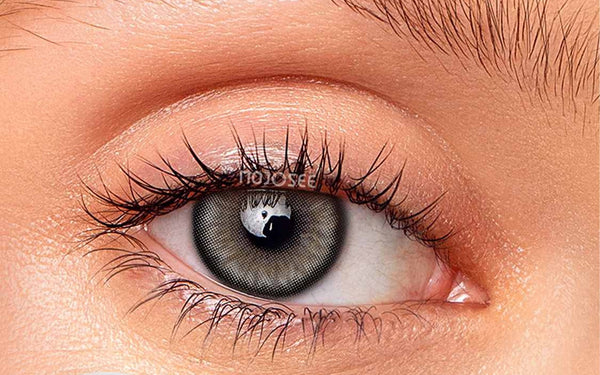
Print density and diameter both affect how a lens sits on a thin tear film, and pregnancy is the time to pick the gentler option in each. A 14.0mm lens covers less of the eye than a 14.5mm one and moves less; a natural design with a fine outer ring carries less pigment than a full costume print and dries more slowly. If you want colour through the third trimester, a natural brown, gray or hazel at 14.0mm on a daily is the combination that gives the least trouble, and it is also the one that reads as your own eye in the photographs you will actually keep.
After the baby: when to restart
The corneal and tear-film changes reverse over weeks to months, and breastfeeding can extend the dry phase. The practical sequence is: clear lenses first, when they feel normal again for a full day; then a colored daily for an occasion; then, if your vision has settled, a new fitting before buying a season's worth of anything — the prescription you were fitted with before pregnancy may no longer be the right one. There is no rush, and the lenses will still be there.
Questions to bring to your prescriber
- Is my current diameter still the right fit, or has the cornea changed enough to matter?
- Should I be on dailies for the rest of the pregnancy?
- My vision has drifted — do we correct it now or wait until after delivery?
- Is there anything about my pregnancy that makes lenses a bad idea for now?
Those four cover almost everything in this article, and the answers are specific to you in a way a web page cannot be.
FAQ
Is it safe to wear colored contacts while pregnant?
For most people, yes — pregnancy doesn't make lenses unsafe. It can make them less comfortable via dryness and minor fit changes. Follow your eye doctor's guidance and pause if your eyes are unhappy.
Why are my contacts suddenly uncomfortable during pregnancy?
Hormonal changes reduce tear quality and can slightly swell the cornea, so a lens that fit fine now feels dry or off. It's usually temporary — manage with drops and shorter wear, or switch to dailies.
Should I get a new prescription while pregnant?
Most eye doctors advise waiting — pregnancy vision changes are often temporary and settle afterward, so a new prescription now may be wrong in a few months. Keep your current power and pause if needed.
Can I wear colored contacts while breastfeeding?
Generally yes — the same dryness caveats can linger while breastfeeding for some. Comfort is the guide: if your eyes feel good, wear them; if dry, manage or rest.
Are daily disposable colored contacts better during pregnancy?
For most people, yes — no deposit build-up to worsen a dry eye, no case to keep clean, and no sunk cost to push a tight lens through a long day. Dailies at 14.0 or 14.2mm give the least trouble.
Which eye symptoms in pregnancy need a same-day appointment?
Persistent blurred or double vision, flashes or spots, or sudden swelling around the eyes — these can signal blood-pressure problems and are not lens issues. Separately, lens-related pain, worsening redness, light sensitivity or cloudiness that stays after removal: lens out and see an eye care professional today.
You might also like
Picked to match this guide — every pair in stock now.
 Vika Tricolor Blue Colored Contact Lenses$21.98per pair (2 lenses)
 Polar Lights Blue Gray Prescription Colored $19.98per pair (2 lenses)
 Starry sky Gray Prescription Colored Contact$22.98per pair (2 lenses)
 Polar Lights Brown Prescription Colored Cont$21.98per pair (2 lenses)
Explore more: Colored Contacts for Dark Eyes →