








Werewolf Eyes: Wolf Contact Lenses for the Turn

Every werewolf movie saves its budget for one shot: the moment human eyes stop being human. The face can stay intact — it is the iris that announces the turn, shifting to amber or ice-gray a scene before the fur arrives. That is why wolf eye contacts are the highest-leverage piece of any werewolf costume: one small change at the center of the face does what an hour of prosthetics tries to do. Here is how to pick the right wolf eye, and what to know before the full moon.
What makes an eye look lupine
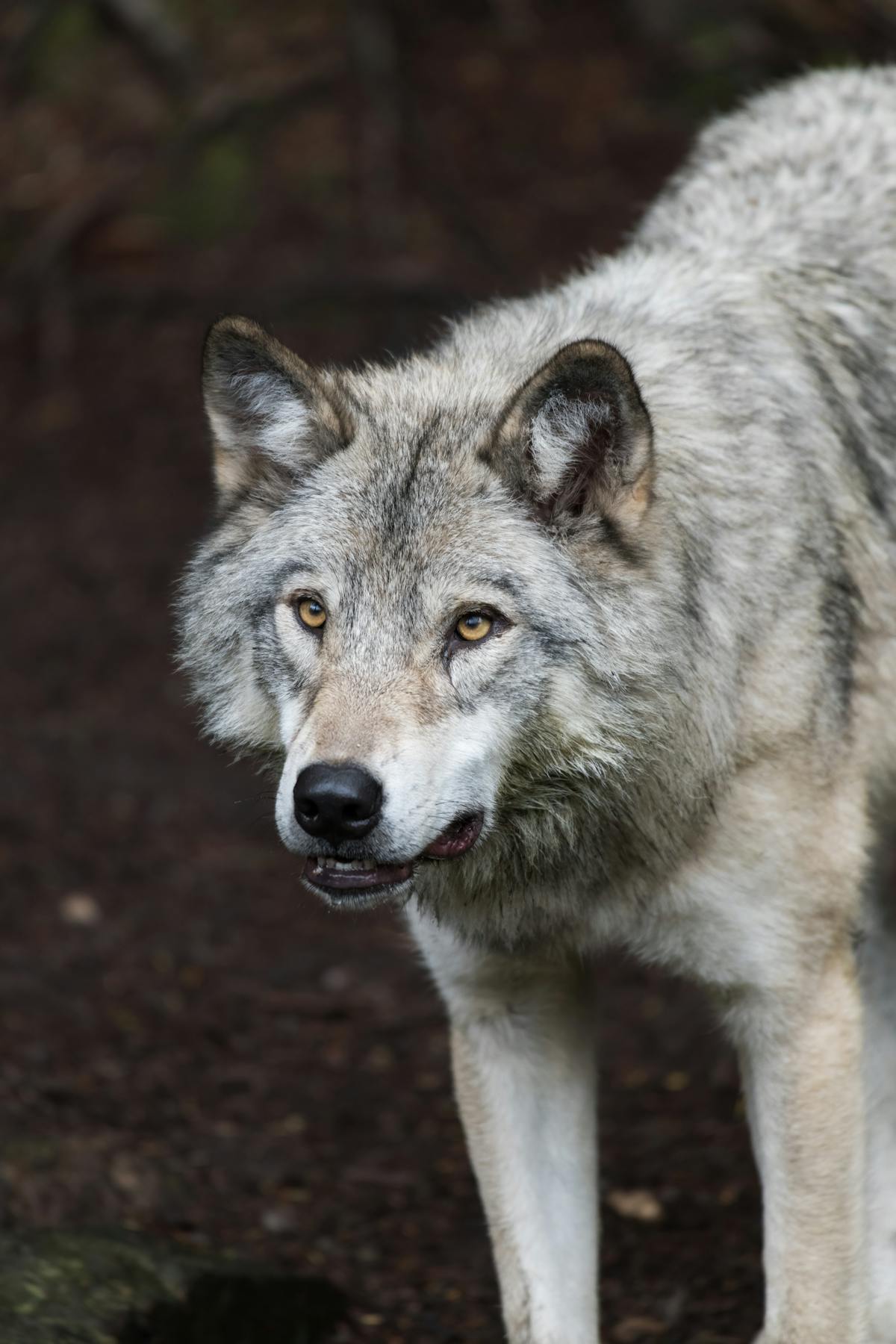
Real wolves have three signatures: a pale iris (amber, gold or gray), a dark limbal ring holding the color in, and a tight, focused pupil. Human eyes are usually darker and softer at the edges, so lenses that copy those three traits instantly read as animal — even before makeup. The pale-iris-dark-ring combination also happens to photograph brilliantly on deep brown eyes, because the printed color fully covers the natural iris and the contrast does the work.

Amber: the classic turn
Amber-gold is the color the genre trained us to fear. A warm, hot iris with a dark rim reads as mid-transformation — still walking upright, already hearing heartbeats. It is the strongest choice for classic werewolf builds, beast-mode cosplay, and any costume where the reveal happens in dim party light, because amber catches warm light and appears to ignite. Pair it with heavy brow shadow and let the eyes carry the scene.

Gray: the winter wolf
Gray wolf eyes trade heat for distance. The pale, storm-colored iris is the direwolf look — arctic, watchful, a little heartbreaking — and it is the one wolf eye you can genuinely wear outside of October. On dark brown eyes the gray covers cleanly and reads as a striking natural color at arm's length, then goes feral the moment someone catches the dark rim and tight pattern up close. If your costume is more myth than monster, start here.

Green: the cursed variant
Green werewolf eyes belong to the cursed and the bitten-last-night. Less traditional than amber, the toxic green iris suggests something went wrong with this particular wolf — magic, sickness, or a full moon that never quite sets. It plays perfectly against forest-toned costumes and pairs with green or black wigs for a look that reads supernatural rather than zoological.

Beyond wolves: snake and leopard
The same pale-iris logic powers the rest of the predator shelf. Snake-green with a slit pupil swaps mammal for reptile in one blink; leopard brown keeps things feline and warm. If your group is doing a whole bestiary this Halloween, mixing predator eyes across the pack looks far better in photos than five identical ambers.
The reptile end of that shelf has its own worked example: see the men’s snake look with wet hair and green slit eyes.

Selling the transformation
Three costume notes that separate a good wolf from a guy in lenses. Darken and roughen the brows — wolf eyes under groomed brows read as fashion, not fur. Shadow the eye socket so the pale iris sits in darkness, the way animal eyes catch light from inside a shape. And for photos, one hard light source at 45 degrees gives the iris a hunting-animal flare; our photography guide breaks down the setup. Still deciding between creature looks? The color-to-costume match guide and the witch eye guide cover the rest of the monster roster.
One amber eye: the mid-turn trick
Half the fun of a werewolf is the moment between forms, and a single lens tells that story better than a pair: one human eye, one already gold. Single-lens wear of a plano cosmetic lens is completely routine — order one, keep the other eye bare, and let the asymmetry do the acting. It is also the budget version of the costume, and if your eyes carry different prescriptions, singles solve that too: each eye orders its own power from the same product page. Save the matched pair for the full-moon final form.
The wolf-eye options side by side
Four designs in the catalogue read as lupine, and they are not interchangeable — they differ in pupil shape, diameter and how far away the effect still works. Everything here is in stock at the price shown for one pair (two lenses).
| Design | Color | Pupil | Diameter | Price | Reads from |
|---|---|---|---|---|---|
| Wolf Eyes | Fire amber-red | Round, jagged rim | 14.0 mm | $24.98 | Across a room |
| Wildness Wolf Gray | Cold gray | Round | 14.5 mm | $22.98 | Conversation distance |
| Green Werewolf | Jagged green | Round | 14.5 mm | $19.99 | Across a room |
| Wildness Snake Green | Yellow-green | Vertical slit | 14.5 mm | $26.98 | Close up and on camera |
The 14.0 mm on Wolf Eyes is deliberate and worth understanding: a smaller lens leaves more of your own sclera visible around the iris, which is what makes an amber eye look feral rather than doll-like. The 14.5 mm designs enlarge slightly, which suits the gray winter-wolf reading better than it suits the fire-eyed one.
Choosing by your own eyes and your costume
Dark brown eyes. All four prints above are opaque, so all four work. The mistake is reaching for a sheer amber "enhancement" tint because it looks more natural in the vial — over a dark iris it produces a muddy brown with a warm edge, not a wolf eye. Opacity is the whole mechanism, and the disappearing-on-dark-eyes explainer covers why.
Light eyes. Amber over blue or green drifts yellow-green, which reads more reptile than wolf. Either lean into that with the slit-pupil snake design, or pick the gray, which is the one shade that lands the same way on every base color.
Full-mask costumes. If your build includes prosthetics or a muzzle appliance, only the eye is visible and the print has to carry everything — go amber, go 14.0 mm, and skip the gray, which disappears against latex.
Half-turn builds. A partial transformation is the one case where mismatched eyes are correct rather than a mistake, and the mid-turn trick below is built on exactly that.
What goes wrong with wolf eyes
These are the failure modes that turn a good costume into a flat photo. All of them are decided before you order.
Buying a slit pupil for a wolf. Wolves have round pupils. Cats, snakes and lizards have slits. A vertical slit on a werewolf build is the single most common canon error in this category — it reads as a lizard person in a fur coat. Save the slit for the snake and leopard variants, where it belongs.
Amber under warm party light. Tungsten and orange uplighting wash amber toward the same color as the room, and the effect flattens exactly when you most want it. Amber wants cool or neutral light; under warm light the gray design actually holds its shape better, which is the opposite of what most people expect.
Expecting the jagged rim to show in every photo. The jagged limbal edge on Wolf Eyes and Green Werewolf is what sells the transformation, and it lives at the outer edge of the iris — so a half-closed eye, a downward glance or heavy lashes hide it. Shoot slightly from below with the eye wide; the lens photography guide covers the angle.
Treating gray as a costume lens only. The reverse error: the gray is subtle enough to wear off-duty, and people buy it for one night and never touch it again. It is the most reusable pair in this list.
Leaving it too late. Wolf and werewolf designs sell through earlier than most Halloween stock because they double as generic fantasy eyes for conventions. Ordering in the last week of October means taking whatever colour is left.
The numbers
One unit is one pair, which is two lenses. A single-character wolf build costs $19.99–$26.98 all in. A couple build — one amber, one gray — clears $49 and ships free inside the US (elsewhere the threshold is $69; under it, shipping is $10.99), which is why the two-pair order is the most common one in this category.
Diameters run 14.0–14.5 mm, all well inside normal cosmetic-lens territory; none of these are sclera lenses, so none of them need the special handling a 22 mm design does. If you want the full eye-white takeover for a monstrous build, that is a different product class entirely and lives with the sclera designs.
For Halloween, standard delivery runs 14–20 days door to door, so the order-by date is September 30. Full country-by-country cutoffs are in the order deadline guide. Add a week on top if you have never worn lenses before, so the first attempt is not on the night itself.
One more number worth knowing before you commit: wear time. None of these designs block the pupil, so they are comfortable for an evening in the way a mesh or blackout lens is not — but "comfortable" still assumes clean hands going in, solution in your pocket, and the lenses out before you sleep. If the night runs long, the thing that ends it is dryness rather than the print, and a party venue with a smoke machine dries lenses faster than an ordinary room. Carrying a 60 ml bottle of solution costs nothing and is the difference between rescuing a lens in a bathroom and binning it.
Wolf eyes versus the other animal effects
The amber wolf is the warm, feral end of the animal-eye family. Next to it sit two neighbours people often confuse it with. The slit-pupil designs — snake, lizard, cat — trade warmth for wrongness: the vertical pupil is unsettling in a way a round amber eye never is, and it photographs best in macro rather than at costume distance. The big-cat prints, meanwhile, keep the round pupil but swap the jagged rim for a spotted or streaked iris, which reads as predator without reading as transformation.
Put plainly: choose amber for a werewolf, gray for a winter or dire wolf, jagged green for a cursed or supernatural variant, and a slit only when the creature you are playing actually has one. The pattern guide maps the print types across the whole catalogue if you are building an original creature rather than a canon one.
FAQ
Do wolf eye contacts work on dark brown eyes?
Yes — these are opaque printed designs, so the pale amber or gray fully covers a dark iris. The contrast between pale color and dark limbal ring is exactly what makes the effect read as animal.
Can I wear gray wolf eyes as an everyday lens?
The gray designs are the most wearable of the set — at conversation distance they read as a bold natural gray. Amber and green are firmly costume territory.
Can you see normally through them?
Yes. The print surrounds a clear central zone, so straight-ahead vision stays clear. As with any bold costume lens, do a practice wear before the event and skip them for driving at night.
Are werewolf contacts safe?
Same rules as any soft costume lens: clean with fresh solution after each wear, never share them with the pack, never sleep in them, and replace on schedule. US buyers need a prescription even for 0.00 plano lenses.
What should I pair wolf eyes with?
Rough brows, socket shadow, and warm dim lighting. The lenses do the transformation; the makeup just frames it. Fangs optional, but the eyes must land first.
Explore more: Halloween & Goth → · Gray → · Green →
Do wolves have slit pupils?
No — wolves have round pupils, like dogs and humans. Vertical slits belong to cats, snakes and lizards. This matters when you are picking a lens, because a slit-pupil design on a werewolf build reads as the wrong animal to anyone who looks closely.
Which wolf eye color is most accurate?
Amber is the canonical werewolf eye across most film and game depictions, and it is the one that carries a transformation at a distance. Gray reads as a real wolf rather than a werewolf — colder, more animal, less supernatural. Jagged green is not canon to any one franchise; it is the cursed or magically-turned variant.
What diameter should werewolf contacts be?
14.0–14.5 mm, which is standard cosmetic-lens territory. Smaller leaves more white showing around the iris and looks feral; larger enlarges the eye and softens the effect, which works for a winter wolf but fights an aggressive amber. You do not need a sclera lens for a werewolf unless the build calls for a fully blacked-out or fully colored eye.
Can I wear one wolf eye and one normal eye?
Yes, and for a half-turn build it is the strongest choice — one amber eye against your own is the visual shorthand for a transformation in progress. Both eyes still need the same care routine, and the single lens still comes as part of a pair, so you will have a spare.
When should I order wolf contacts for Halloween?
By September 30 on standard shipping, which runs 14–20 days door to door. Amber and jagged designs sell through earlier than average because they double as convention lenses, so the date is a real constraint rather than a soft one.
You might also like
Picked to match this guide — every pair in stock now.
 Biohazard Infected Vein Colored Contact Lens$29.98per pair (2 lenses)
 Lord of Faceless Ghost Swirl Colored Contact$29.98per pair (2 lenses)
 Ryomen Sukuna Prescription Cosplay Contact L$34.98per pair (2 lenses)
 Mavuika Prescription Cosplay Contact Lenses $34.98per pair (2 lenses)
Explore more: halloween → · Cosplay Contacts → · COSPLAY →


