







Witch Eyes: Choose Green, Purple or a Slit Pupil
Build a green or purple witch-eye look from the costume story, not a colour label. Compare three fantasy designs, image evidence and fitting rules.
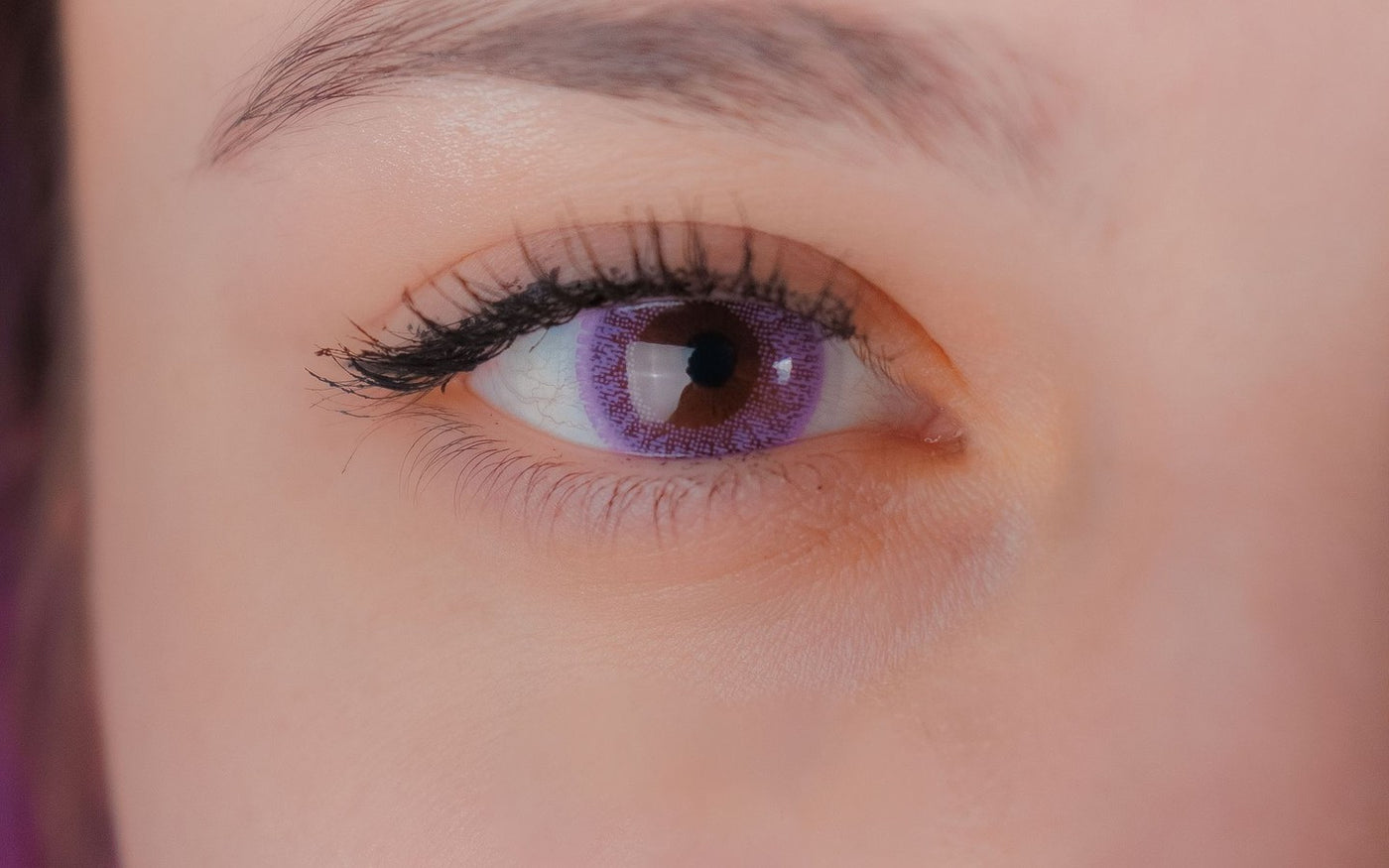
What colour are a witch's eyes? There is no single canonical witch eye. For an original costume, green reads earthy or feral, purple reads theatrical or arcane, and a slit pupil changes the creature more than a colour swap alone. Choose the character's mood first, then choose a lens print that supports it. If you are recreating a named character, use that character's official reference for colour, pupil shape, and symbols. A generic “witch” label cannot replace those details. The purple lens shown in this guide's independent stock cover is a visual reference, not a Mojosee product result.
The common buying mistake is to pick the most vivid catalogue photo and only afterwards ask whether it belongs with the makeup. A green iris with a dark jagged edge can make a forest creature feel predatory. A clear, round purple iris can feel more like a spellcaster. A vertical slit pushes toward reptile or familiar imagery. These are styling readings, not medical or performance claims. Natural eye colour, lighting, and camera processing change the result, so compare the exact listing images and avoid assuming a stock portrait is a controlled product demonstration.
Build the eye from the costume story
Imagine three silhouettes before choosing a product. The first is a woodland witch: brown or moss clothing, simple skin makeup, and an eye that carries a green accent without needing neon face paint. The second is a midnight spellcaster: dark fabric and a violet or amethyst iris that remains visible when the rest of the palette is restrained. The third is a transformed creature: pronounced liner, textured skin or scales, and a slit-pupil graphic. Each can be effective, but mixing all three can make the costume hard to read.
Try this sequence on paper or in a camera test: identify one dominant colour, choose one eye shape, then add one makeup motif. Green and purple can share a palette when one is the accent; they can also compete when both are highly saturated. Review your reference under the light you expect to use. Purple may photograph differently under warm bulbs than under daylight, and green stage lighting can make a neutral eye look tinted. Do not mistake the light effect for proof of lens colour.
The photograph below shows an independent witch makeup scene under green light. The makeup and lighting create the mood. It does not show the expected appearance of any Mojosee lens and does not establish that the model wears contacts.

Three different ways to use green and purple
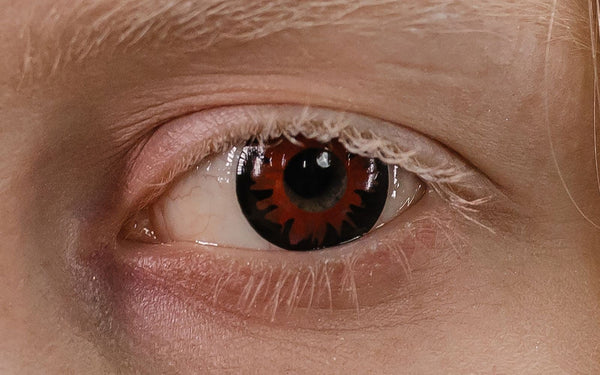
For a feral woodland look, the Green Werewolf listing shows a green iris print with a darker, jagged edge. That edge can support rough textures, smudged liner, or a torn cloak. It does not require copying a named character. The printed design is stronger than a subtle daily colour lens, so use the actual product photos to decide whether the drama fits your scene. A fit for your eye must still be confirmed professionally; colour cannot tell you whether a base curve or diameter is right.
Green Werewolf is one specific catalogue design for this stronger green direction.

A purple eye changes the tone without changing the pupil shape into a creature's slit. That can be useful when the outfit already has a strong silhouette. Shizuku Purple's current thumbnail shows a violet graphic iris around a round central opening. The print in the independent cover photo is different; do not use it to predict this SKU's coverage or shade on dark eyes. Hold a fabric swatch near your face in daylight and indoor light, then compare the listing photos. The purpose is to decide whether your palette needs a cool accent, not to prove a lens will match a particular hex colour.
Shizuku Purple is a stronger violet print to inspect for the arcane version of the look.

The third route changes eye shape. Lizard Eye Green uses a vertical slit graphic in its listing image, which belongs to a reptile or transformed-witch scene more naturally than to a quiet herbalist. The slit is a print and may rotate as a soft lens moves; do not promise that it will stay perfectly vertical in every pose. It also does not make the lens a safer fit. If your reference calls for round pupils, a vivid slit will be a visible mismatch even when the green shade is close.
Make a photograph of the costume without lenses and look at it at phone-screen size. If the eye area already has an intricate symbol or heavy glitter, another detailed print may make it harder to read. Place loose glitter away from the lash line and lens. The eye should give the character one clear cue, not become a catalogue of effects. For a slit-pupil transformation, Lizard Eye Green is the product detail page to compare.

How to judge the photos honestly
Separate three kinds of evidence. The product thumbnail shows the print. An on-eye product photograph shows that print on one photographed wearer under one set of light and editing choices. A free stock image shows a general style or colour mood, with no promise that its model wears a Mojosee pair. None of them is a clinical fit test or a controlled comparison on your eyes. This distinction is especially important on a dark brown iris, where the apparent colour may depend on print coverage and lighting. Avoid a blanket “green always shows better than purple” rule.
Look at the inner pupil opening, the outer print edge, and any product warning before price. The total lens diameter, or DIA, measures the whole lens, not the coloured area. It cannot by itself tell you whether the effect will be larger, more comfortable, or suitable. Our diameter guide explains the distinction. If the print covers the pupil, the resulting sight question is separate from colour: do not use a vision-obscuring effect for driving or tasks that need normal vision.
Fit, clean handling, and a removable look
Decorative lenses, including zero-power pairs, require an eye-care professional's prescription in the United States. The FDA's decorative-contact guidance is explicit about this. A known glasses prescription or a similar number on another lens does not establish fit. Ask the fitter about the exact product you intend to wear. If you need correction, do not assume every costume design comes in your power or treats astigmatism; see the astigmatism guide for that decision path.
Plan a look you can remove. Wash and dry hands before touching a lens; use the prescribed solution and care routine; keep lenses away from water; and bring backup glasses if you need them. The CDC's care guidance covers those practices. The stock care image below shows a lens and accessories as context, not a recommendation to use the pictured tweezers or solution with your prescribed product. Do not share lenses with someone else to try a second costume.

If a lens causes pain, redness, blur, or an unexpected change in vision, remove it and contact your eye-care provider. A label such as yearly replacement is about the replacement schedule and does not tell you how long to wear a lens at one party. The replacement guide separates those clocks. For a first costume lens, the first-wear guide explains a clean setup before makeup.
FAQ
Should witch eyes be green or purple?
Either can work for an original design. Green suits forest or creature cues; purple suits an arcane or royal palette. Use an official reference for a named character, because the character's actual pupil shape and symbols may matter more than the broad colour.
Do purple witch contacts work on dark brown eyes?
Compare the actual print and on-eye listing photographs. This article cannot guarantee a specific shade or coverage on your dark iris. Indoor light can also change how purple photographs, so judge the whole costume in its intended lighting.
Will a green slit-pupil lens stay vertical?
Soft lenses can move or rotate. A slit makes orientation noticeable, so do not assume every photograph will show a perfectly vertical line. A persistent orientation problem is a fitting question for your eye-care professional, not a reason to self-adjust the lens specification.
Can I use a plano witch lens without an eye exam?
In the United States, no. Decorative plano lenses still need an eye-care professional's prescription and fitting for the exact product. “Zero power” only means there is no vision correction.
Can I wear makeup glitter near a coloured lens?
Keep loose cosmetic particles away from the eye and lens. If makeup or debris gets under a lens, remove it according to your fitter's instructions; do not push through irritation to keep the costume intact.
Where can I compare other eye moods?
Use the green Halloween and purple Halloween collections for colour directions, then inspect each actual product page. For a red, gothic character, the vampire-eye guide addresses a different design problem.
You might also like
Adjacent fantasy designs to compare after an exact-lens fitting. Full-pupil prints can affect vision; read each listing notice.
 Shizuku Purple Colored Contact Lenses for Men$26.98per pair (2 lenses)
 Witch Nebula Gray Colored Contact Lenses$26.98per pair (2 lenses)
 Black Out Pure Black Blackout Colored Contact Lenses – Solid Black Eye$28.00per pair (2 lenses)
 Lizard Eye Brown Colored Contact Lenses – Orange Slit Pupil Reptile Eye$34.98per pair (2 lenses)
Explore more: Green Halloween Contacts → · Purple Halloween Contacts → · Witch →