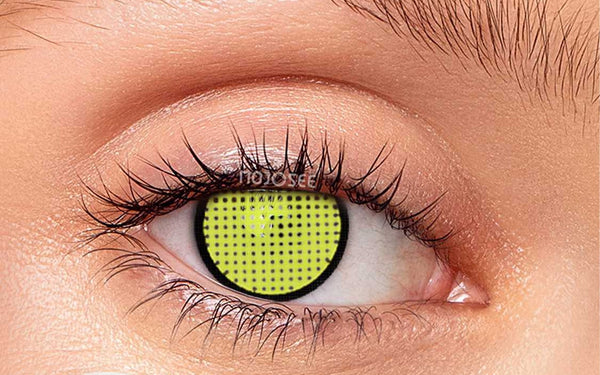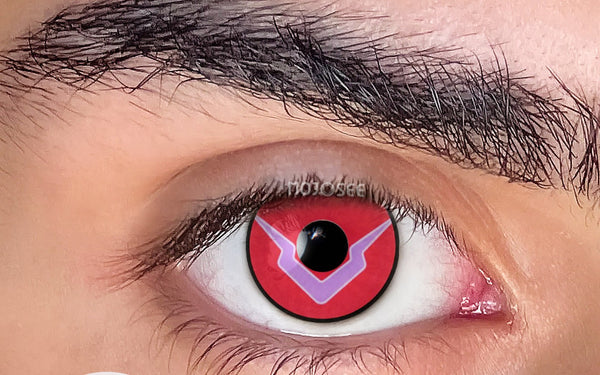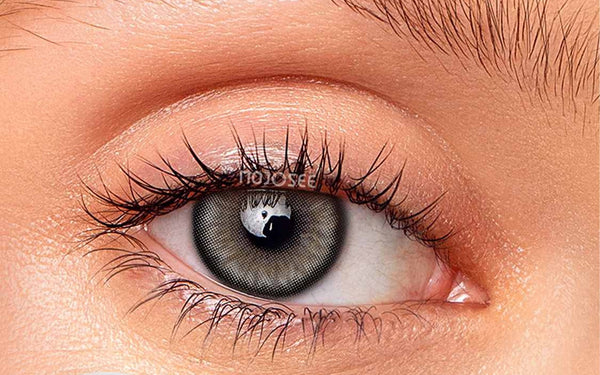









Sclera Contacts: The Complete First-Timer's Guide to Full-Eye Lenses
Sclera lenses cover the whole visible eye — maximum horror impact, real trade-offs. What they feel like, how vision changes, insertion at 22mm, and the honest rules.
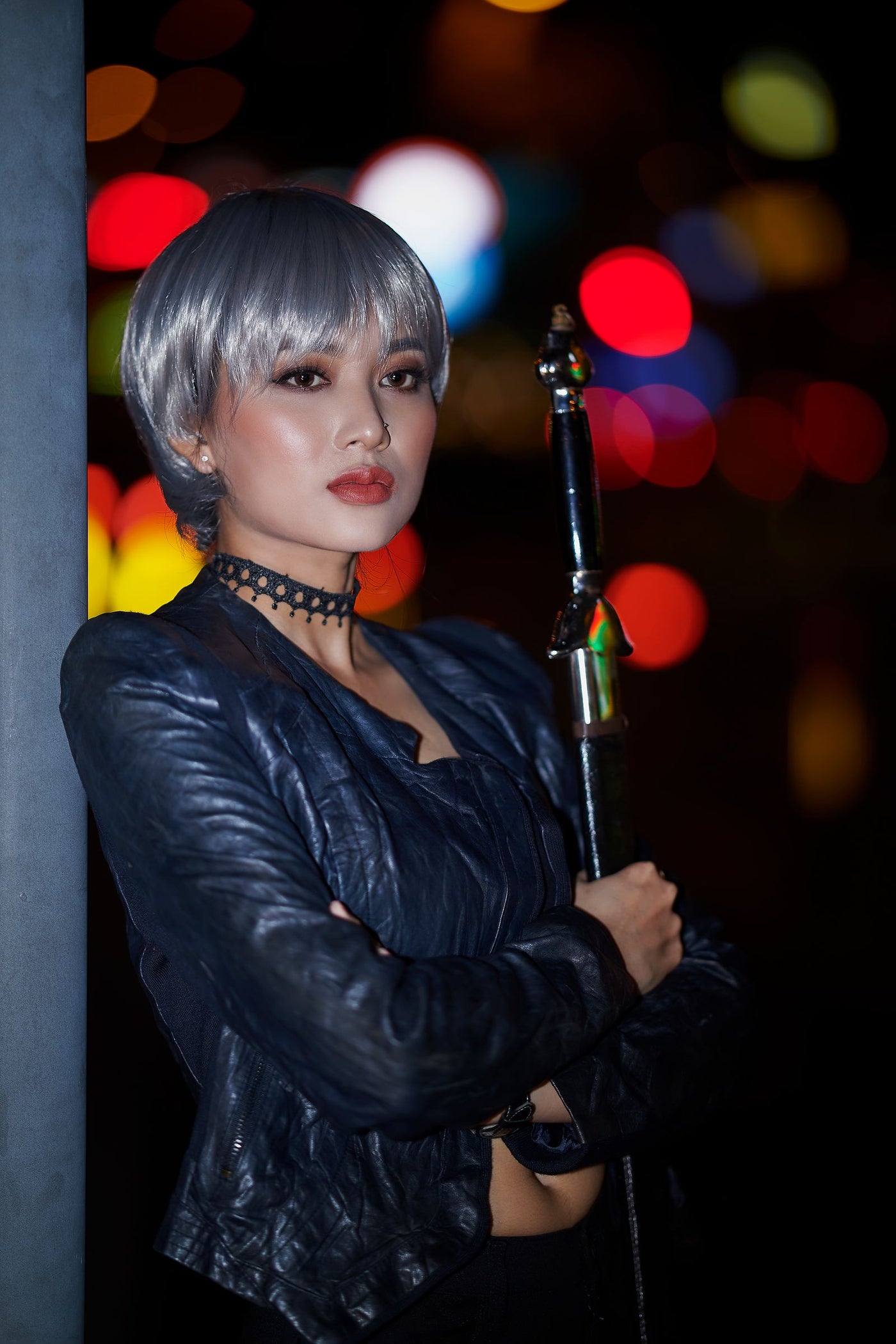
Sclera lenses — the 22mm giants that black out or recolor the entire visible eye — are the single most dramatic thing you can do to a costume. They're also a genuinely different sport from regular colored contacts: different insertion, different vision, different wear limits. This is the honest, complete guide before you commit to a pair from the sclera collection.

What you're actually buying
A regular colored contact is ~14.2mm and sits on your cornea. A sclera lens is ~22mm and vaults over the cornea to rest on the white (the sclera itself). That size is why the effect is total — no human eye visible at all with a blackout-style pattern scaled to full coverage — and why everything else about them is more demanding. There is no subtle sclera lens; you're buying maximum impact and paying for it in logistics.

What wearing them actually feels like
Honest answers: insertion takes practice — the lens is bigger than your eye opening, so it goes in like a shoehorn maneuver: look far up, tuck the bottom edge under the lower lid, then release the upper lid over the top. First attempts take minutes, not seconds; practice twice at home before costume day (general technique foundation: the insertion guide). You will feel them — not pain, but constant presence, unlike good corneal lenses that vanish. Vision dims — the clear zone is small and your peripheral brightness drops noticeably; plan to be escorted in crowds and never drive in them. Wear time is short: treat 3–4 hours as the ceiling, with rewetting drops on hand — sclera lenses cover so much surface that tear exchange is limited. The dryness toolkit in the dryness guide is mandatory equipment, not optional.
Who should skip sclera (this year)
First-time lens wearers — run a season of regular costume lenses first; sclera is a terrible learning environment. Dry-eye-prone wearers — the short wear window shrinks further. Anyone whose costume day involves driving between venues — the vision trade-off is real. If that's you, a regular-size blackout or button-eye approach delivers 80% of the horror at 20% of the difficulty.

Costume day logistics
Insert sclera lenses before face paint and prosthetics (clean hands, clean mirror, no latex dust in the air yet) — the lens-first rule from the makeup order guide matters double under SFX makeup. Pack the case, solution and drops; plan lens removal at the 3–4 hour mark regardless of how the party's going — set an alarm. Photography note: sclera lenses are the one style that looks better under harsh, flat con lighting (there's no iris detail to lose), and they're the centerpiece of every shot — the photo guide covers the rest.
The pre-event practice run you can't skip
Sclera lenses are the one lens type where "wing it on the day" genuinely goes wrong, so build in a practice run at least a few days before your event. Here's what the rehearsal teaches you that reading can't. Insertion time: your real first-attempt time (often 10+ minutes per eye), so you know how early to start on event day. Your comfort ceiling: wear them 1–2 hours at home to find where dryness sets in — that number tells you when to schedule your removal, before you're miserable in costume. Vision reality: walk around your home in them to feel the dimmed, tunnel-ish vision so it doesn't startle you in a crowd. Removal: practice the rehydrate-then-slide-out technique calmly, because a stuck 22mm lens at the end of a long night with tired eyes is exactly when panic causes injury. Cosplayers who rehearse have smooth event days; cosplayers who don't end up either abandoning the lenses in the bathroom an hour in, or worse, clawing at a dry one. Two hours of practice earlier in the week is the entire difference. Full first-timer framework above; safety basics in the safety guide.
Sclera, blackout, mesh or white — which effect do you actually need?
A lot of people arrive at sclera lenses because they searched for "black contacts" and landed on the most extreme thing on the page. Sclera is not always the right answer, and it is the most demanding option on this list. Here is the honest comparison before you spend $70–$90.
| Effect | Size | What it covers | Difficulty |
|---|---|---|---|
| Sclera | 22.0mm | Iris and the white of the eye | Hard — needs a practice run |
| Blackout | 14–14.5mm | Iris only, solid black | Same as a normal lens |
| White-out | 14–14.5mm | Iris only, blank white | Same as a normal lens |
| Mesh | 14–14.5mm | Iris, with a visible screen over the pupil | Same as a normal lens |
The practical rule: if the camera will be close and the costume is a creature, a demon or a full-body horror build, sclera earns its cost. If you are going to a party where people will see you from across a room, a 14.5mm blackout lens reads almost as strongly in photos, costs a third as much, goes in like any other lens, and you can wear it all evening instead of for three hours.
Insertion, step by step
This is the part that ends most first attempts. A 22mm lens is wider than your eye opening, so you cannot do the usual drop-it-on-the-iris motion — the lens has to be tucked under the lids. Give yourself a clear half hour the first time, and do it over a clean flat surface, not a sink with an open drain.
- Set up first. Wash and dry your hands. Put the lens bowl-side-up on a fingertip and fill the bowl with saline until it is slightly domed. That fluid cushion is what stops the air bubble that makes a sclera lens pop straight back out.
- Open both lids properly. Middle finger of your free hand pulls the upper lid up against the brow bone; ring finger of the inserting hand pulls the lower lid down. You need the whole eye exposed, not a squint.
- Look down, not at the lens. Tilt your chin up and roll your eyes downward. This exposes the upper sclera, which is where the lens edge goes first.
- Tuck the top edge under the upper lid, then lower the rest onto the eye and release the lower lid while you keep looking down.
- Blink slowly, several times. The lens settles and centres itself. If you see a bubble or feel a hard edge, take it out, refill with saline and repeat — do not rub it into place.
First attempts commonly run over ten minutes per eye. That is normal and it is not a sign the lens is the wrong fit. What is not normal: sharp pain, a lens that will not centre after several tries, or vision that stays cloudy after blinking. Any of those means take it out.
Picking by costume
All four of these are 22.0mm, plano 0.00, and in stock as of this writing. Every one ships as a single pair — two lenses.


If none of those is your costume, the full sclera collection has the rest, and everything at 22.0mm is grouped by diameter rather than by effect.
Cleaning and storing them between wears
A sclera lens is not disposable at this price, so it lives in a case between events — which means the care routine matters more than it does for a daily.
Use multipurpose contact lens solution, never water and never saliva. Tap water is the one rule people break, and it is the rule behind the rare infections that make the news. Rub each lens gently in the palm of your hand with solution for about twenty seconds per side, rinse with fresh solution, then store it in a case filled with fresh solution — not topped up from yesterday.
Because these are so much larger than a normal lens, a standard flat case is a tight fit and the edge can crease. A deeper barrel-style case is worth the few dollars. Change the solution in the case every few days even if you have not worn them; change the case itself every three months.
Store them away from heat and sunlight, and check the edge before every wear. A nick or a permanent crease means that lens is finished — a damaged edge sitting on the sclera is how you scratch an eye. Sclera lenses are also not indefinitely reusable. Whatever replacement window applies to the design you bought, count it from the first time you opened the vial rather than from the day the parcel arrived — the clock starts when the seal breaks, not when you start wearing them.
Ordering in time for Halloween
This is the part that quietly ruins costumes. We ship standard only — 14 to 20 days door to door, with tracking issued about five days after you order. Standard is the only service we offer, so the date has to be counted backwards.
Standard delivery: 12–20 days. Leaving it to mid-October means the lenses may arrive in the same week as the event, which is exactly when you do not want to be attempting a first insertion. The four-country deadline guide has the same maths for the UK, Canada and Australia.
One more scheduling note: the full-coverage effects run lowest on stock. At the time of writing the 22mm range is about 70% in stock and sclera about 76%, against 100% for blackout and vampire lenses. If your costume depends on a specific sclera effect, order that lens first and fill in the rest of the look later.
What they cost, and why they cost that
Sclera lenses run $72.98 to $120.00 a pair across our 22mm range — the entry-priced designs sit in the 22.0mm collection, while the sclera collection starts at $84.98, against $12–$35 for a normal colored lens. The gap is not a costume-season markup. A 22mm lens is a physically larger moulded piece with print that has to stay registered across a much bigger surface, and each design is produced in small runs because the demand is seasonal and specific. There is no volume to spread the tooling across the way there is for a brown 14.2mm lens that sells all year.
What that means for your decision: the cost per wear is high and it will not come down. If you expect to wear the effect once, at one event, and the camera will not be closer than a few feet, a 14.5mm blackout at a third of the price is the better buy and nobody in the photos will know. If you are building a costume you will wear across a convention weekend and a photoshoot, the 22mm lens is the thing people will remember about it.
Taking them out
Removal catches people out more than insertion does, because by then the lens has been on a drying eye for hours and it is sitting flatter against the sclera than it was when you put it in.
Put in rewetting drops first and blink for a few seconds — do not skip this. A dry sclera lens does not want to move, and pulling on it is how you scratch something. Then look up, pull the lower lid down, and slide the lens downward onto the lower white with a fingertip. Once part of the edge lifts clear, pinch it gently between finger and thumb and lift it away. Never pinch at it while it is still centred on the cornea.
If it will not budge, stop, add more drops, and wait a minute. It will come. The one thing not to do is keep working at a dry lens because you are tired and want the costume off.
FAQ
Can you see out of sclera contacts?
Yes — through a clear central zone. Expect dimmer, tunnel-ish vision with reduced peripheral brightness. Fine for a party you walk through; disqualifying for driving.
How long can you wear sclera lenses?
3–4 hours is the sensible ceiling, with rewetting drops along the way. They cover far more eye surface than regular lenses, so dryness accumulates much faster.
Are sclera contacts safe?
From a legitimate seller, properly cleaned, worn within the short window: yes, as an occasional costume piece. Every rule from regular lenses applies harder — never sleep in them, never share, never touch water (safety basics).
Do sclera lenses come in prescription?
Almost universally plano (0.00) only. Glasses over sclera lenses for the walk, or accept soft vision for the photos — most cosplayers do the latter and pose near their handler.
Are sclera contacts hard to put in?
Harder than regular lenses — they're bigger than your eye opening, so insertion is a deliberate tuck-and-release maneuver that takes practice. Rehearse at home a few days before your event; first attempts often run 10+ minutes per eye before the technique clicks.
How much do sclera contacts cost?
$72.98 to $120.00 a pair in our range, against $12–$35 for a standard colored lens. The premium is the moulding and the small production runs, not a seasonal markup.
Can you wear sclera lenses if you have small eyes?
Yes. A smaller palpebral opening makes insertion slower, not impossible — the lens tucks under the lids rather than sitting between them. Allow more time and use the saline-filled-bowl method rather than trying to force the edge in dry.
How do you take sclera contacts out?
Rewetting drops first, then look up, pull the lower lid down and slide the lens downward onto the lower white before pinching the lifted edge. Never pinch at it while it is still centred on the cornea, and never work at a dry lens.
You might also like
Picked to match this guide — every pair in stock now.
 Biohazard Infected Vein Colored Contact Lens$29.98per pair (2 lenses)
 Lord of Faceless Ghost Swirl Colored Contact$29.98per pair (2 lenses)
 Ryomen Sukuna Prescription Cosplay Contact L$34.98per pair (2 lenses)
 Mavuika Prescription Cosplay Contact Lenses $34.98per pair (2 lenses)
Explore more: halloween → · Cosplay Contacts → · Sclera Contacts →