







Gray Contacts for Men: Natural Picks That Don't Look Fake
Why gray lenses look fake on men — too light, too flat, too big — and the picks that don't, sorted from office-safe smoke grays to full wolf-eye statement.
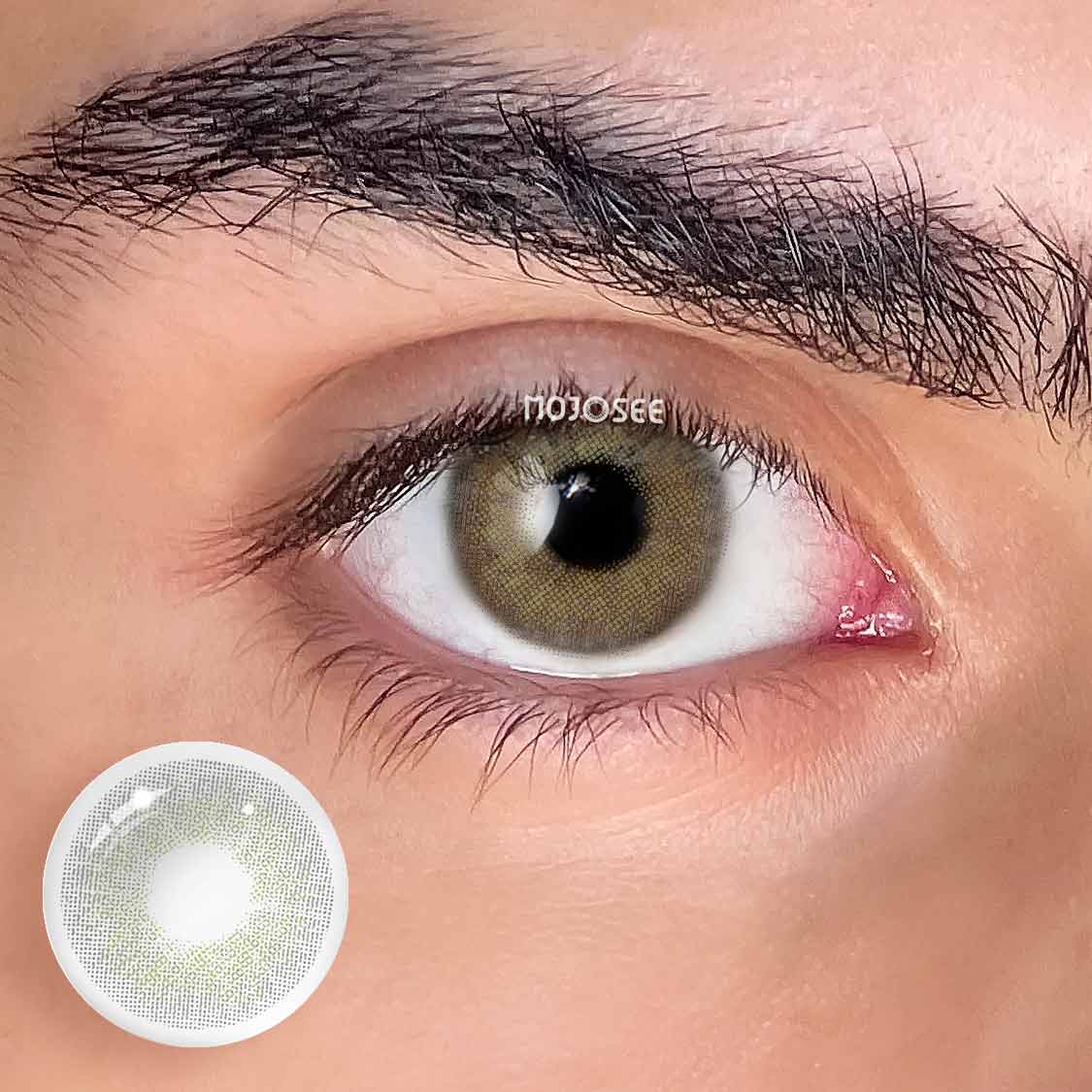
Gray is the men's lens color for one reason: it changes your eyes without announcing itself. No glamour connotation, no obvious "wearing contacts" tell — done right, gray reads as genetics. Done wrong, it reads as a costume. The difference is almost never the color itself. Here's what actually separates natural from fake, and the picks that stay on the right side.
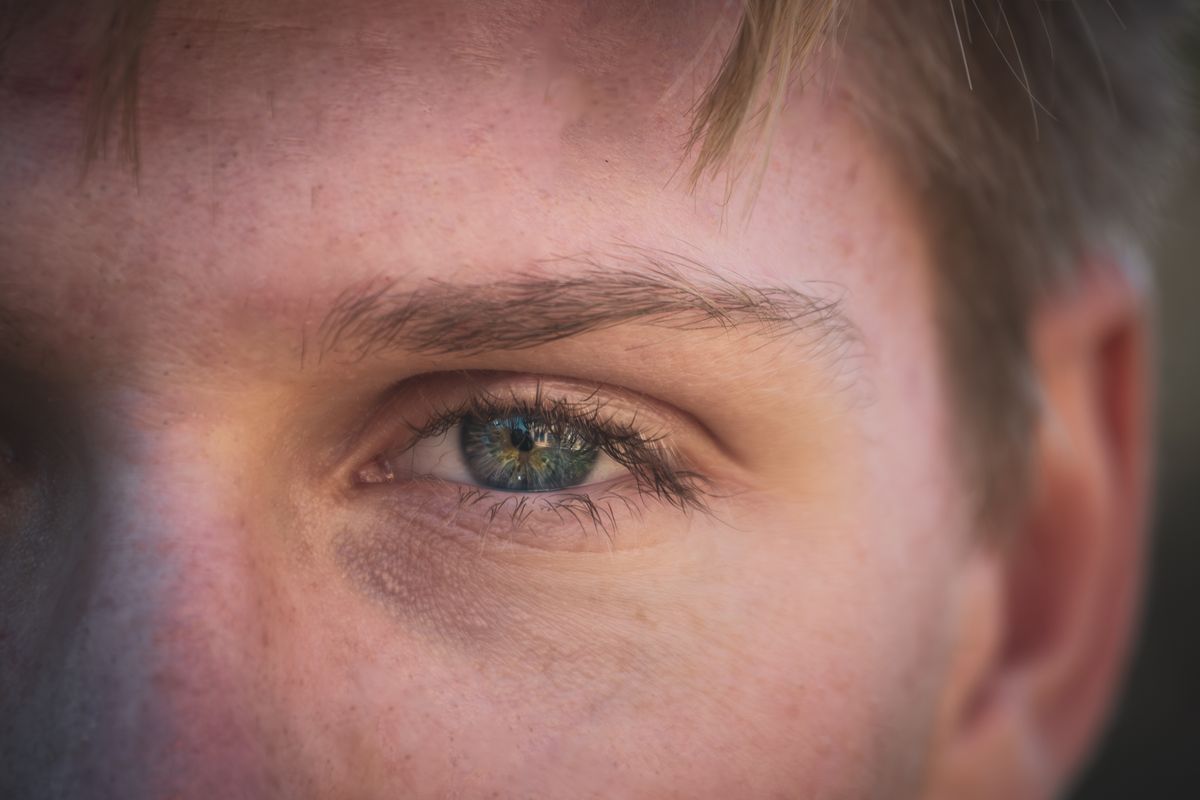
What makes a lens look fake on men
Three things, in order. Too light: a near-white gray over a dark iris looks backlit — pick grays with a smoke or graphite base, not silver. Too uniform: real irises have radial texture; flat single-tone lenses photograph like stickers. Too big: enlarging diameters built for dolly-eye looks widen the iris beyond natural male proportions. Stay at a natural diameter and most of the "obviously fake" risk disappears. The full checklist is in why colored contacts look fake.
The natural tier: office-safe grays
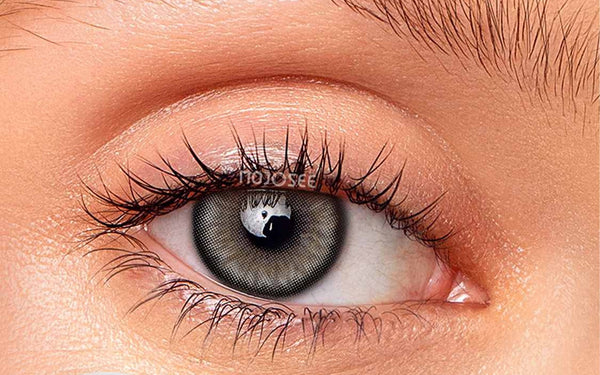
Cloud Gray and Siri Gray are the quiet picks — smoke-toned, textured, close to a naturally light gray-brown eye. If you want the change visible only in good light and at close range, start here.

See it worn: a first gray pair worn by a guy, unedited.
The noticeable tier: still real, clearly lighter
Polar Lights Gray adds a cool, luminous cast that people clock as "striking eyes" rather than "contacts." Hidrocor Ice goes a step lighter with no limbal ring — a favorite for photos, still plausible in person on medium and deep skin tones where the contrast reads well.

The statement tier
Wolf Gray is the husky-eye look — pale, high-contrast, intentionally arresting. Nobody will think it's subtle; that's the point. Weekend and stage territory.

Fit, power and where to browse
All of the above cut for male eyes in the men's gray collection; most come in prescription strengths — the men's prescription range filters those directly. Comparing colors beyond gray? The men's colored contacts guide covers the whole spectrum, and the full men's collection is the browse-everything option.
Which gray: matching the shade to your coloring
"Gray" spans a wide range on men, and picking the right one for your coloring is the difference between "sharp" and "obviously contacts." Warm or olive skin, dark hair: a smoke or steel gray with depth — flat pale silver fights your warmth and reads fake, while a deeper smoke gray provides striking contrast that still looks plausible. Cool or fair skin, light hair: you can carry a lighter, cooler gray that would overwhelm darker coloring — this is the one case where a brighter silver-gray works. Any coloring, maximum stealth: a gray with a subtle blue or green undertone reads as "unusual natural eyes" rather than a color change. The universal rules hold regardless of shade: natural diameter, defined-but-soft limbal ring (not a hard black circle), and visible texture over a flat disc. Pair with your hair and wardrobe the same way you'd choose a watch — a smoke gray with charcoal or navy tailoring is the single most effective men's lens-and-outfit combination there is. Start smoke, adjust lighter or cooler only if your coloring genuinely calls for it.
The men's gray range, by the numbers
Gray is the colour most men start with because it changes the eye without changing its warmth — it reads as lighter, not as a different colour family. These are the live figures for the men's gray collection at the time of writing; prices are per pair, one order is two lenses.
| In stock | 98% of the range |
| Price per pair | $18.98 for a standard lens; the top of the band ($120.00) is 22mm sclera, not a more expensive gray |
| Sizes | 14.0mm, 14.2mm, 14.5mm, 22.0mm |
| Designs with powers | 7 of the range (12%) — see the men's prescription collection for the full powered list across colours |
| Shades present | gray, blue, yellow, purple |
Why gray works on a dark brown iris when blue does not
The physics is simple. A blue print over a dark brown iris has to fight the warmth underneath, and a translucent blue loses — it turns muddy. A gray print has no warmth to fight; it sits over brown as a neutral, so even a moderately opaque gray reads as a clean colour change. That is why gray is consistently the strongest cool-toned result on dark eyes, stronger than blue, and why it is the safe first purchase for a man who is not sure how a lens will look on him.
It also explains the tiers in this guide. A light gray with a dark outer ring reads as a real light eye. A mid gray reads as "your eyes, lit". A flat gray with no ring reads as a lens, because there is no edge to make the iris look like it belongs.
Two starter grays, with live prices


Both are the cheapest in-stock grays in the men's range at the time of writing. The full men's gray collection has the rest, sorted by what is available.
Size before shade
The thing that makes a gray lens look fake on a man is almost never the gray. It is a 14.5mm lens on a face that needed 14.0mm. Enlargement reads as a doll's eye on a man far faster than it does on a woman, because the rest of the face is not styled to support it.
For an everyday gray: 14.0mm, at the natural iris edge, no enlargement. For photographs where a brighter eye is the point: 14.2mm. Leave 14.5mm to costume and anime, where it belongs. The men's gray range spans all three, and several shades exist at more than one size — check the size line before you look at the colour.
The three tiers, with what each actually contains
Natural tier — 14.0mm, mid to dark gray, defined outer ring. This is the office pair. In the men's gray range the entry point is $18.98, and the designs at that price are the plain, ringed grays that this tier is built from. Read as: your eyes, lighter.
Noticeable tier — 14.0 to 14.2mm, light gray or blue-gray, ring still present. Clearly a light eye, clearly still a human one. Most of the range's powered grays sit here, which makes it the practical tier for a glasses-wearer who wants the change to be visible. Read as: light eyes, and people will say so.
Statement tier — 14.5mm and up, pale or patterned gray, and the 22mm sclera designs that top the price band at $120.00. Costume, anime and photographs only. Read as: a lens, on purpose.
The shades present across the range at the time of writing are gray, blue, yellow, purple — the non-gray names are the blue-gray and violet-gray blends that sit in the second tier. The collection page sorts by what is in stock.
A note on the price band
The men's gray range runs $18.98 to $120.00 a pair, and the spread misleads people in both directions. The top is 22mm sclera — a different product for a different purpose — and has nothing to do with the quality of a $18.98 everyday gray. Within the everyday tiers the spread is narrow and reflects print complexity and corrective powers, not lens quality. A first pair at the bottom of the band is the right buy.
Matching the gray to your colouring
Gray is not one colour, and the wrong temperature is the most common reason a gray looks pasted on. Cool skin — pink or neutral undertone, ash or black hair — takes a true blue-gray cleanly. Warm skin — golden or olive undertone, warm brown or black hair — needs a gray with a hint of brown or green in it, or the eye looks like it belongs to a different face. Deep skin takes the widest range: a mid gray with a strong outer ring reads as a real light eye, and the contrast does the work that makeup would do on a lighter face.
If you are unsure, a warm mid gray at 14.0mm is the pair that fails least often. It reads as a lighter version of your own eye rather than as a new colour.
Gray versus the other men's colours
Against brown: brown is the invisible upgrade — a lighter brown reads as your eyes lit from inside and nobody identifies a lens. Gray is the visible one. Choose brown if the goal is "nobody should know", gray if the goal is "lighter eyes".
Against blue: on dark brown eyes gray wins on clarity every time, because it has no warmth to fight. Blue needs a dense opaque print to read cleanly, and a dense blue on a man reads as costume unless the size is 14.0mm and the shade is muted. The men's blue range is about as deep as the gray one, but depth is not the same as suitability.
Against green: muted green is the one other natural colour that works on men without reading as costume, and it gives more contrast than gray on a warm face. It is the second pair, not the first.
Care for a gray lens specifically
Light-coloured prints show deposits sooner than dark ones. A gray lens that has been worn a few times without a proper clean goes cloudy at the edge, and a cloudy gray looks like a cataract rather than a colour. Multipurpose solution every night, a rub-and-rinse rather than a soak, and a new case every three months keep the print clear. If that routine is not going to happen, buy the daily version and throw it away.
Wearing gray to work
A 14.0mm gray with a defined outer ring is the most office-safe colored lens there is. In daylight it reads as a light eye; under office lighting it reads as a slightly cool eye; nobody who did not know you before will register a lens. If a colleague does notice, it will be because the size was wrong, not because of the gray. Keep it to 14.0mm and match the shade to your colouring: cooler skin takes a true gray, warmer skin takes a gray with a hint of brown or green in it so the eye does not look like it was pasted on.
FAQ
Do gray contacts look natural on men with dark eyes?
Yes, if the lens is opaque enough to cover a dark iris and the tone is smoke rather than silver. Textured, multi-tone grays with a defined edge read as real; flat pale grays don't.
What diameter should men choose?
Natural-range diameters. Enlarging lenses are designed for a wide-eyed cosmetic effect that reads feminine and artificial on most male faces. Every lens page lists its diameter in the specs.
Will people notice I'm wearing colored contacts?
At the natural tier, usually not — expect "did you change something?" at most. Noticeable and statement tiers are visible by design; the question is whether they look like lighter eyes or like lenses, and that's a quality-and-fit issue.
Can I get these with prescription power?
Most men's gray styles come in minus powers as well as plano. Check the power selector on each product page, or shop the prescription collection directly.
Do gray contacts look good on men?
Yes — gray is the most-wanted and most flattering men's color. Match the shade to your coloring: smoke or steel gray for warm/olive skin and dark hair, a lighter cool gray only for fair coloring. Keep it natural-diameter with a soft rim.
Which gray contact is most natural for men?
A smoke gray with a subtle blue or green undertone reads as "unusual natural eyes" rather than a color change — the stealthiest option. Flat pale silver is the one to avoid on most men; it fights warm coloring and reads fake.
Can men wear gray contacts to work?
Absolutely — a natural smoke gray reads as striking-but-plausible eyes through a video call or a meeting, with none of the "costume" energy a bold color carries. It's one of the safest professional-setting lens choices.
How much are gray contacts for men?
From $18.98 a pair for a standard lens. The upper end of the men's gray range reaches $120.00, which is the 22mm sclera design, not a dearer shade of gray. One order is one pair, meaning two lenses.
Why does gray show on dark brown eyes better than blue?
A gray print has no warmth to fight against, so it sits over a dark brown iris as a clean neutral change. Blue has to overpower the brown underneath and a translucent blue loses that fight and turns muddy. Gray is the strongest cool-toned result on dark eyes.
You might also like
Picked to match this guide — every pair in stock now.
 Starry sky Gray Prescription Colored Contact$22.98per pair (2 lenses)
 Polar Lights Blue Gray Prescription Colored $19.98per pair (2 lenses)
 Smoky Smokey Prescription Colored Contact Le$21.98per pair (2 lenses)
 DNA Taylor Blue Gray Wildcat Blue Prescripti$26.98per pair (2 lenses)
Explore more: Men's Gray Contacts → · Men's Cocktail → · Men's DNA →