









Can You Store Colored Contacts in Water? No — Do This Instead
Not tap, not bottled, not boiled, not for one night. Why water and soft lenses don't mix, the ranked real options when you're out of solution, and the $2 habit that fixes it.
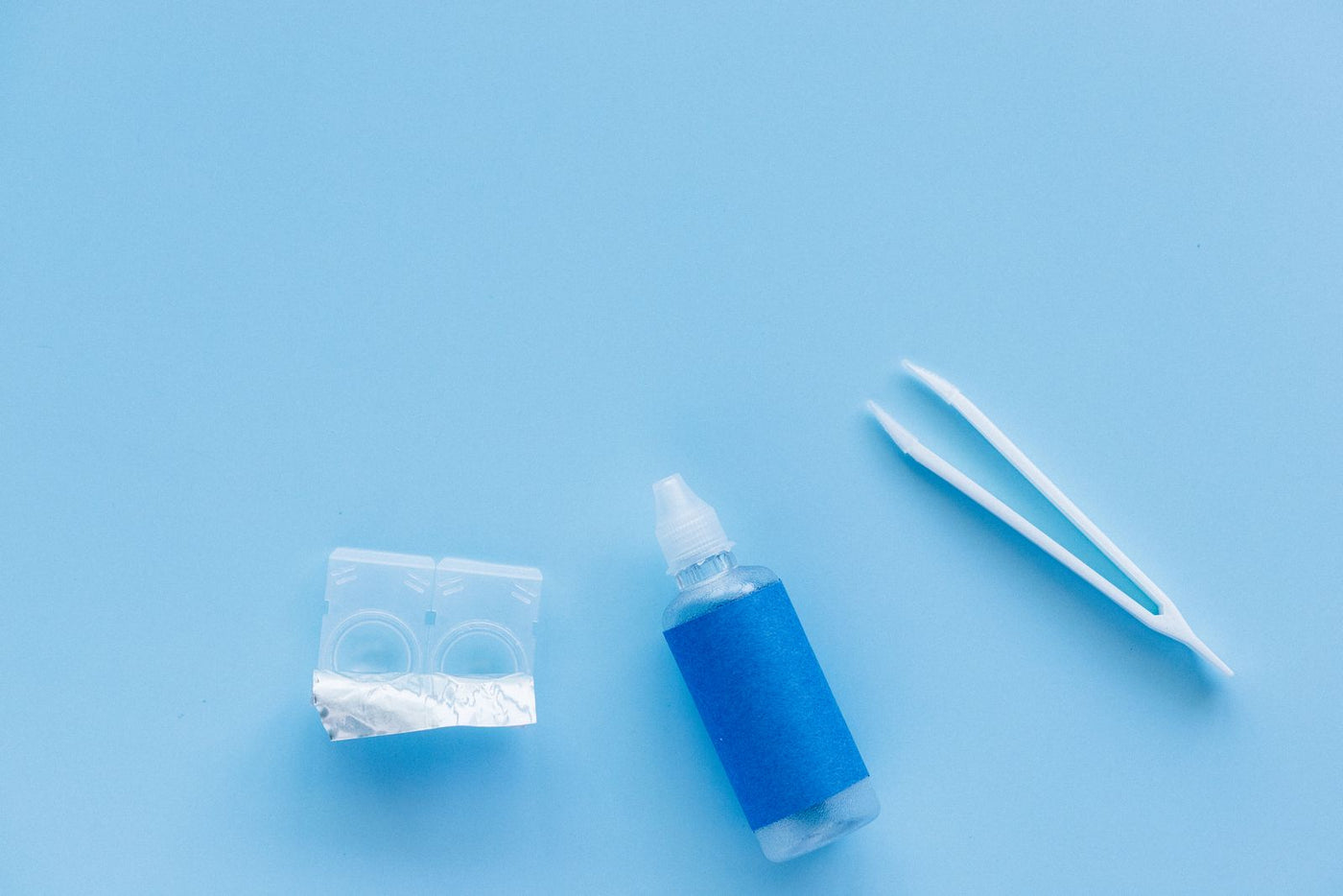
No. Not tap water, not bottled water, not boiled-and-cooled water, not "just for one night." Water and soft contact lenses are a genuinely dangerous combination — and because "can I store contacts in water" spikes in searches every weekend at 1 a.m., here's the complete answer: why water fails, what to do when you're caught without solution, and the two-dollar habit that ends the problem forever.
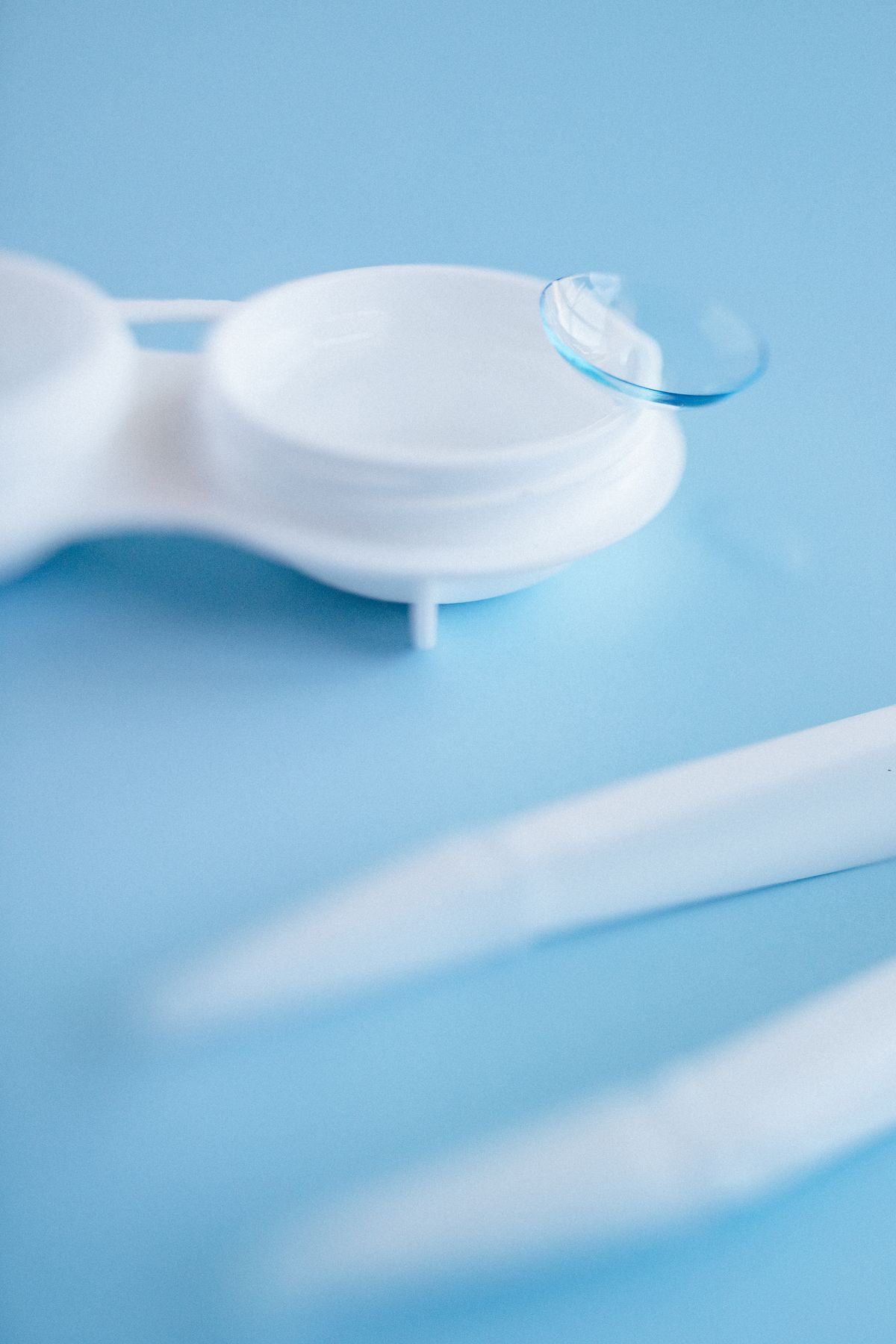
Why water is worse than nothing
Three separate problems stack up. Water isn't sterile. Tap and bottled water contain microorganisms — including Acanthamoeba, an organism found in tap water that causes a rare but devastating eye infection strongly associated with water-and-lens contact. Boiling helps with bacteria but does nothing about the next two problems. Water has the wrong chemistry. Soft lenses are calibrated to saline's salt balance; in plain water they swell, distort and can tighten on the eye. Water doesn't disinfect. Even in the best case, you've stored your lens overnight in a petri dish and disinfected nothing.
Saliva, for the record, is worse on every axis. Never.
Caught without solution: your real options, ranked
Option 1 — buy solution. Any 24-hour pharmacy, supermarket or gas station stocks travel-size multipurpose solution. This is almost always possible and always the right answer.
Option 2 — sterile saline as a bridge. Sealed sterile saline (the single-use vials sold for eye rinsing) can hold a lens overnight without damaging it — but saline does not disinfect. Lenses stored in saline get a full rub-and-rinse in real multipurpose solution before they touch your eye again.
Option 3 — sacrifice the lens. If it's genuinely solution or nothing: throw the pair away. A replacement pair costs a fraction of treating any eye infection, and this is exactly the math that matters at 1 a.m. Check what a fresh pair actually costs in the collection — it's a cheap lesson.
What is never on the list: water, saliva, redness drops, or leaving them in and sleeping (that one has its own guide).
The habit that ends this problem
Every "lenses in water" story starts with being away from home unexpectedly. The fix is a permanent travel kit: a spare lens case pre-filled with fresh solution, living in your bag or car. Refresh the solution weekly (standing solution loses disinfecting power — covered in storage and shelf life). Alternative: keep a pair of daily disposables like DNA Taylor dailies in your bag — end of night, lenses go in the bin instead of a case.
Already stored them in water? Read this
Discard the lenses. Genuinely — the swelling alone changes the fit, and no amount of after-the-fact disinfecting reliably undoes a night in tap water. If you already wore water-stored lenses and your eye is red, painful or light-sensitive, see an eye doctor promptly and tell them about the water contact; it changes what they check for.
The three places this actually happens
Nobody plans to store lenses in water — it's always a specific situation, and naming them helps you pre-empt it. The sleepover / unplanned overnight: you're staying somewhere without your kit. Fix: a permanent travel case with solution in your bag, or dailies you can just bin. The bathroom drop: a lens falls out at a sink and the reflex is to rinse it under the tap. Don't — rinse it in solution or sacrifice it; tap water is exactly the exposure to avoid. The festival / hotel abroad: no solution nearby and tap water you shouldn't trust anyway. Fix: pack more than you think and default to dailies for travel. In all three, the winning move was made before the moment — the person who never faces the water question is the one carrying a spare case or a strip of dailies. Solve it at packing time, not at 1 a.m.
Why the eye-care bodies are so absolute about this
Storing a lens in water is the one contact lens mistake that shows up in almost every serious case report, and the reason is a single organism: Acanthamoeba, a free-living amoeba found in tap water, wells, and most untreated water. In the eye it causes a form of keratitis that is painful, slow to diagnose, resistant to the drops used for ordinary infections, and — in the cases that go wrong — ends in a corneal transplant. A soft lens soaked in water and then worn is the textbook route in.
Both the FDA and the American Academy of Ophthalmology put "never use water" at the top of their lens-care guidance, and neither carves out an exception for one night, boiled water, or "just to keep them from drying out". That absolutism is deliberate. The organism does not need a long soak, and the lens does not need to look dirty.
Water, saline, solution: what each one actually does
| Liquid | Kills organisms? | Safe for storage? | Notes |
|---|---|---|---|
| Tap water | No | No | Carries the organism in. Also not the right salinity, so the lens swells and warps. |
| Boiled and cooled water | Partly | No | Boiling kills bacteria but not reliably the cysts; recontaminates from the container; still the wrong salinity. |
| Distilled water | Not applicable | No | Sterile in the bottle, not once opened; zero salt, so the lens absorbs it and deforms. |
| Saline (sealed, sterile) | No | Rinsing only | Right salinity, no disinfectant. Fine for a rinse or a few hours in an emergency, not for overnight storage. |
| Multipurpose solution | Yes | Yes | Disinfects, cleans and stores. The only liquid designed for the job. |
| Hydrogen peroxide system | Yes | Yes, with the neutralising case | Strongest disinfection; must fully neutralise before the lens goes near an eye. |
The pattern: only the last two rows disinfect, and only those two are storage. Everything above them is a way of making a lens look wet.
Colored lenses are slightly worse in water, not better
People sometimes assume a costume lens is "tougher" because it is thicker. It is thicker — the printed layer adds material — and that is the problem. A denser lens absorbs water more slowly and releases it more slowly, so a colored lens that has spent a night in tap water holds that water against the cornea for longer once it is worn. Water also lifts pigment: a colored lens stored in water often comes out with a faded or patchy print, and the patches are where the lens has thinned.
The practical rule is the same as for a clear lens, with less margin for improvising: if you have no solution, the lens is finished for the night.
What "finished for the night" actually costs
This is the calculation that makes the decision easy. A pair of colored lenses on this site runs roughly $17 to $35. A course of treatment for an amoebic infection runs weeks to months, and the outcomes that go wrong are permanent. There is no version of the maths where soaking a lens in water to save the pair comes out ahead.
If the situation repeats — you travel, you stay over unexpectedly, you forget the solution — the fix is not a better emergency plan. It is switching to daily disposables for those occasions, so there is never a lens that needs storing.
The three ways this actually happens, and the fix for each
Almost every water-storage incident is one of three scenarios, and each has a cheap fix that does not involve improvising.
Staying over unexpectedly. The lens has to come out to sleep, there is no solution, and the bathroom tap is right there. Fix: a travel-size bottle of multipurpose solution and a spare case in the bag you always carry. It weighs nothing and it removes the decision entirely.
Travelling and running out. The bottle is empty on day five of a trip. Fix: any pharmacy, supermarket or airport shop sells solution; if it is late at night, the lens comes out and stays out until the morning. One evening in glasses is the cost.
Trying to save a pair for a costume the next day. The lens is expensive or hard to replace, so it goes in a glass of water "just overnight". Fix: buy costume lenses far enough ahead to have a spare pair, and treat the first pair as disposable if it ever meets water. A spare pair is cheaper than the outcome this scenario produces.
What multipurpose solution actually does
It helps to know why the right liquid works, because it makes the wrong ones obviously wrong.
A multipurpose solution does three separate jobs. It is isotonic — the same salt concentration as tears — so the lens keeps its shape rather than swelling in fresh water or shrivelling in something saltier. It contains a disinfectant that kills bacteria and, over the recommended soak time, the cysts that water carries. And it contains a surfactant that lifts the protein and lipid film your eye deposits on the lens during wear, which is what makes a lens feel gritty by the end of a long day.
Water does none of those. Saline does the first. Boiled water does none of them and adds a hot container's worth of new contamination. That is the whole argument, and it is why the answer to "can I use X instead" is almost always no.
Is a lens ever salvageable after water?
Honestly: a lens that has been stored in water — soaked for hours — is not. Discard it. The organism's cysts adhere to the lens surface and a normal disinfecting soak is not designed to strip an established load.
A lens that has been splashed — a drop of tap water on it during insertion, a rinse under the tap by mistake for a second — is a judgement call, and the conservative answer is still to discard it if it is a daily, and to run a full disinfecting soak (the complete time on the bottle, not a quick dip) before wearing it again if it is a monthly. If in doubt, the pair is the cheaper loss.
The case matters as much as the liquid
A clean solution in a dirty case is only half the job. Cases grow a biofilm that ordinary rinsing does not remove, and the organisms in it transfer to every lens stored there afterwards.
- Empty the case, rinse it with fresh solution — not water — and leave it open to air-dry every day.
- Never top up old solution. Empty and refill.
- Replace the case every three months, or immediately if it has ever held water.
- Keep it out of the bathroom sink area, where it collects splashes.
If a case has had water in it even once, the honest move is to bin it. They cost almost nothing; the lens that goes into it next does not.
FAQ
Can I store contacts in water for just one night?
No. One night is exactly how the bad outcomes happen: the lens swells, nothing is disinfected, and waterborne organisms get overnight access. Use sterile saline as a bridge or discard the pair.
What about boiled and cooled water?
Boiling addresses some microorganisms but leaves the chemistry problem untouched — the lens still swells and distorts, and there's still zero disinfection. Still no.
Is saline solution the same as contact solution?
No. Saline matches the salt balance (safe to store a lens in briefly) but contains no disinfectant. Multipurpose solution stores and disinfects. Saline is a bridge; multipurpose is the destination.
How long can lenses stay in a sealed case with solution?
Solution keeps disinfecting for about 30 days in a closed case; past that, re-clean and re-soak in fresh solution before wearing. Details in do colored contacts expire.
Is contact solution just salt water I can make at home?
No — don't make your own. Multipurpose solution is sterile and contains disinfectants plus buffers matched to the eye; homemade saline (salt in water) is neither sterile nor disinfecting and reintroduces the exact contamination risk you're trying to avoid. It's a few dollars for a bottle at any pharmacy — never worth improvising.
Can I store colored contacts in saline overnight?
Sterile saline is the right salinity but does not disinfect, so it keeps a lens from drying out without making it safe. A few hours in an emergency, then a proper disinfecting soak before the lens is worn; not an overnight habit.
Does water damage colored contacts?
Yes, cosmetically and structurally. Water is the wrong salinity, so the lens swells and warps, and it lifts pigment so the print comes out faded or patchy. A lens that has been stored in water should be discarded, not rinsed and reused.
How much does a replacement pair cost compared with the risk?
Colored lenses on this site run roughly $17 to $35 a pair. The infection that water exposure risks is treated over weeks to months and the worst outcomes are permanent. The pair is always the cheaper loss.
You might also like
Picked to match this guide — every pair in stock now.
 Vika Tricolor Blue Colored Contact Lenses$21.98per pair (2 lenses)
 Polar Lights Blue Gray Prescription Colored $19.98per pair (2 lenses)
 Starry sky Gray Prescription Colored Contact$22.98per pair (2 lenses)
 Polar Lights Brown Prescription Colored Cont$21.98per pair (2 lenses)
Explore more: Colored Contacts for Dark Eyes →


