







Are Colored Contacts Safe? Materials, FDA Clearance & Prescriptions Explained
Colored contacts are safe when four conditions are met. Here is what FDA clearance really means, why a prescription matters even at 0.00 power, and the red flags that identify unsafe sellers.
Short answer: yes — colored contacts are safe when they are properly made, properly fitted, properly cleaned, and replaced on schedule. Every documented horror story traces back to breaking one of those four conditions. This guide explains each one in plain language.
What "FDA-cleared" actually means
In the United States, all contact lenses — including purely cosmetic ones with no power — are Class II medical devices. Manufacturers must obtain FDA clearance (typically via the 510(k) pathway) for a lens material and design before it can legally be sold. Clearance means the material has been reviewed for biocompatibility and oxygen transmission; it is not a marketing sticker.
< Ask any seller — us included — which specific product filings its lenses are sold under rather than accepting a blanket claim. Be precise about language when you shop anywhere: "FDA approved" is a stronger claim than the clearance pathway most soft lenses actually use, and a seller using regulatory words loosely is telling you something about their rigor.Why you need a prescription for 0.00 lenses
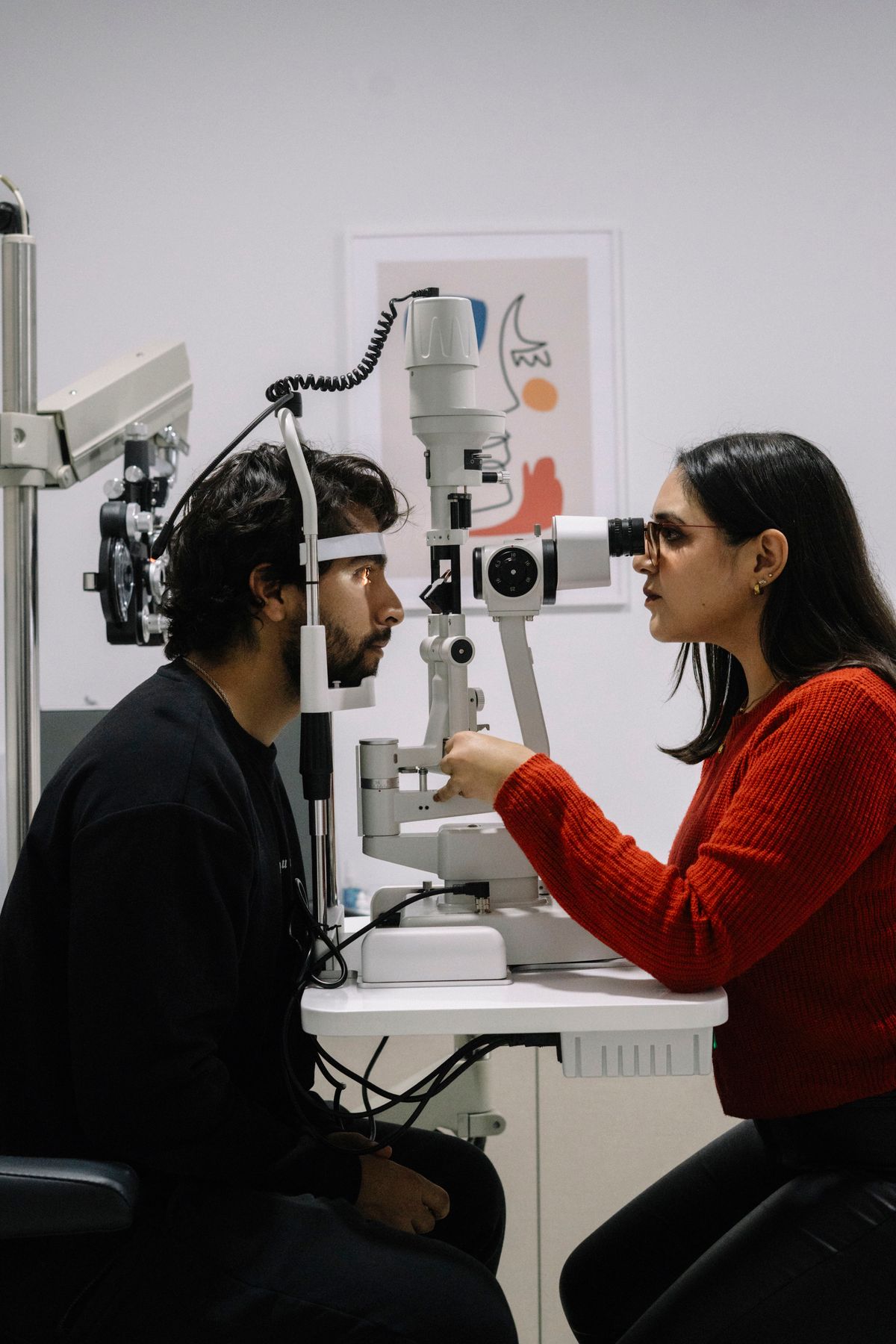
A prescription is not about vision correction — it is about fit. An eye exam measures your base curve and corneal diameter; a lens that mismatches them can restrict oxygen or abrade the cornea no matter how good the material is. US federal law requires a valid prescription for every contact lens sale, plano included. Any US-facing store that lets you check out without acknowledging this is cutting a corner that is not theirs to cut.
The real risks — and the habit that prevents each one
| Risk | Cause | Prevention |
|---|---|---|
| Microbial keratitis | Water contact, dirty hands, old solution | Fresh solution every time; never rinse in tap water; wash hands |
| Hypoxia (oxygen starvation) | Overwear, sleeping in lenses | Respect daily wear limits; remove before sleep |
| Abrasion / poor fit | No fitting exam, wrong base curve | Get the exam; buy to your prescription |
| Infection from sharing | Swapping lenses with friends | Never. Not once, not "just for the photo" |
Materials and replacement cycles, honestly
Most cosmetic lenses are soft hydrogel lenses, the same family used in soft lenses for decades. The pigment is sandwiched inside the lens, not printed on the surface touching your eye. Replacement cycles range from daily disposables to yearly lenses; the cycle starts when the vial is opened, not when you wear them. A yearly lens worn once a month still expires after twelve months. Replacement cycle and diameter are listed on every Mojosee product page; material and water-content figures are being re-verified against supplier documentation and should not be used for fitting decisions — your prescriber's measurements are what count.
Red flags when buying colored contacts online
- No prescription requirement or acknowledgment for US customers
- No material, base curve or replacement-cycle information on product pages
- "Approved" used as a blanket marketing phrase
- Lenses photographed only on light irises, sold to everyone
- Prices that only make sense if quality control does not exist
Sensible wear rules
Build up wear time over the first week. Keep a rewetting drop handy. Remove lenses before showering or swimming. If an eye goes red, painful or light-sensitive, remove the lens and see an eye-care professional — do not wait it out. Effect lenses (mesh, sclera, blind whites) have shorter session limits covered in the Halloween guide.
The risk ladder — what's actually dangerous vs merely suboptimal
"Safety" isn't one switch; it's a ladder, and knowing which rung a habit sits on helps you spend caution where it counts. Genuinely dangerous (never do): water contact in any form, sleeping in lenses, sharing lenses with anyone, and wearing undated no-name lenses — these four account for the overwhelming majority of serious lens injuries. Risky over time (stop doing): over-wearing past the replacement cycle, topping up old solution instead of replacing it, keeping the same case for months, and pushing wear past the 8–10 hour comfort ceiling. Suboptimal but survivable (improve when you can): occasionally inserting with imperfectly dried hands, skipping a rub-and-rinse night, wearing lenses through a dusty commute. People burn energy worrying about rung three while doing rung one habits casually — flip that. If you only enforce four rules with zero exceptions, make them the top four, and let perfection on the rest arrive gradually.
What the FDA and the AAO actually say
The two bodies that matter here are the U.S. Food and Drug Administration, which regulates contact lenses as medical devices, and the American Academy of Ophthalmology, the professional body for eye surgeons. Their positions are worth reading directly rather than through a retailer's summary — including ours.
The FDA's page on decorative lenses makes one point before anything else: every contact lens must be prescribed by a doctor, decorative ones included, and a lens sold without a prescription is being sold illegally. It goes on to list the places it considers unsafe to buy from — costume shops, beauty supply stores, street vendors, and websites that do not ask for a prescription — and the injuries it has documented from lenses bought that way: scratches to the cornea, infection, and in the worst cases permanent loss of sight.
The AAO's guidance on costume and cosplay lenses covers the same ground from the clinical side, with the practical detail that a lens which has not been fitted can sit too tightly on the eye and starve the cornea of oxygen, which is the mechanism behind a lot of the damage. Neither organisation says colored lenses are dangerous in themselves. Both say the danger is in skipping the fitting and the prescription.
Your rights as a buyer are set out by the Federal Trade Commission's Contact Lens Rule, summarised on the FTC consumer site: after a fitting, your prescriber has to give you a copy of your prescription without you asking, and you are free to fill it wherever you like. That is the rule that makes buying colored lenses online legal in the first place — and the same rule is why a seller that never asks for a prescription is outside it.
Safe, unsafe, and the grey area in between
It helps to put the actual risk in order, because "colored contacts are dangerous" and "colored contacts are fine" are both said with confidence and both are wrong as blanket statements.
| Situation | Risk | Why |
|---|---|---|
| Fitted by an eye care professional, bought with a prescription, cleaned and replaced on schedule | Low | This is the case every regulator describes as safe. Colored lenses are soft lenses with a print; the print does not change the safety profile when the fit is right. |
| Prescription lenses worn longer than the day allows, or slept in | Moderate | Oxygen to the cornea drops with the lids closed. Most infections in lens wearers trace to overnight wear or rinsing in tap water. |
| Lenses cleaned or stored in water, saliva, or old solution | High | Tap water carries organisms that can cause keratitis. This is the single habit that produces the worst outcomes. |
| Shared lenses, or a pair passed between friends for a costume | High | Transfers bacteria directly to the eye; the fit is also wrong for at least one of the two people. |
| Novelty-shop lenses with no fitting, no brand, and no prescription asked | Highest | Unknown fit, unknown material, unknown handling. This is the category the FDA warnings are written about. |
Notice where a properly bought colored lens sits on that ladder: the top row. The habits, not the colour, move you down it.
What we do and do not claim
A store selling colored lenses should be able to say plainly what it is and is not telling you. So, plainly:
- We require a prescription for US orders, including for plano 0.00 lenses, because the law does. If you have never been fitted, get fitted first — the parameters on your prescription are what make the rest of this page apply to you.
- We do not call our lenses "approved". The FDA clears contact lenses; it does not approve them, and clearance attaches to a specific product filing, not to a shop. A retailer that stamps the word across its whole catalogue is telling you something about its accuracy.
- Material and moisture figures on product pages are under re-verification. We are checking every listed value against supplier documentation and will not defend a number we cannot trace. Until that is done, fit to your prescriber's measurements, not to a spec line on a web page.
- Corrective powers exist on a minority of designs. Across the catalogue roughly one design in six carries powers, mostly from 0.00 to -8.00; the rest are plano. The power selector on each product page is generated from stock, so it is the authority for that design.
Replacement schedules, honestly
Every lens has a replacement window — daily, monthly, or longer — and the window starts when the seal on the vial or blister is broken, not when you first wear it. A lens opened in September for one party and worn again at New Year has been "in service" for four months, whatever the box says.
Daily disposables carry the least risk because there is no storage step at all: one wear, then the bin. Longer-cycle lenses are safe when the cleaning routine is real — fresh multipurpose solution every time, a case replaced every three months, and no topping up. If you know you will not keep to that routine, buy dailies for the event and spend the difference on not thinking about it.
Two things end a lens early regardless of the schedule: a nick or a permanent crease in the edge, and a print that has started to break up. Check both before every wear. A damaged edge against the cornea is how a costume becomes a clinic visit.
Symptoms that mean take them out now
Mild dryness after a few hours is normal and rewetting drops handle it. The following are not normal, and the right response to every one of them is: lens out, do not put it back in, and if it has not settled within a few hours, see an eye care professional the same day.
- Pain — not scratchiness, pain. A lens should never hurt.
- Redness that gets worse rather than better after the lens is removed.
- Light sensitivity you did not have before you put the lens in.
- Vision that stays cloudy after blinking, or after the lens is out.
- Discharge of any kind.
Infections that are caught on the first day are usually treated with drops. The stories that end badly are almost always people who pushed through the pain because the event was not over yet.
FAQ
Are colored contacts safe for dark eyes specifically?
Yes — iris color has no bearing on safety. Opacity affects only the visual result, covered in our dark-eyes color guide.
Can colored contacts damage your eyes permanently?
Properly fitted, cleaned and scheduled lenses have decades of safe-use history. Permanent damage cases overwhelmingly involve counterfeit lenses, water exposure, or ignoring pain.
How long can I wear them per day?
Most wearers do 8–10 comfortable hours with regular colored lenses. Start with 2–4 hours on day one and build up.
Do colored contacts feel different from clear ones?
No — same materials, same care. The pigment layer is embedded and never touches your cornea.
Are colored contacts safe for teenagers?
Age isn't the issue — habits and sourcing are. A teenager who washes hands, follows wear limits and never sleeps or swims in lenses is safer than an adult who does none of that. Two teen-specific notes: first lenses should come with an eye-care professional's fitting where required locally, and costume-shop impulse lenses (undated, unbranded) are exactly the product class behind most teenage lens injuries. Verified specs + good habits work at any age.
Are colored contacts legal to buy online in the US?
Yes, with a valid prescription — the FTC Contact Lens Rule gives you the right to a copy of your prescription and to fill it with any seller. A site that sells lenses without asking for one is operating outside that rule, and the FDA lists such sellers among the places it considers unsafe.
What does "FDA cleared" mean for colored contacts?
That a specific lens product has been through the FDA's device clearance process. It is not a stamp that applies to a whole shop or catalogue, and "approved" is not the term the FDA uses for contact lenses at all. A retailer that uses it loosely is telling you something about its accuracy.
Can I store colored contacts in water overnight if I run out of solution?
No. Tap water is the habit most strongly linked to the serious infections in lens wearers. If you have no solution, the lens is finished for the night — throw it away rather than risk the eye.
You might also like
Picked to match this guide — every pair in stock now.
 Vika Tricolor Blue Colored Contact Lenses$21.98per pair (2 lenses)
 Polar Lights Blue Gray Prescription Colored $19.98per pair (2 lenses)
 Starry sky Gray Prescription Colored Contact$22.98per pair (2 lenses)
 Polar Lights Brown Prescription Colored Cont$21.98per pair (2 lenses)
Explore more: Colored Contacts for Dark Eyes →